

5 Popular Medical Shows, Ranked From Least To Most Accurate By A Real Doctor
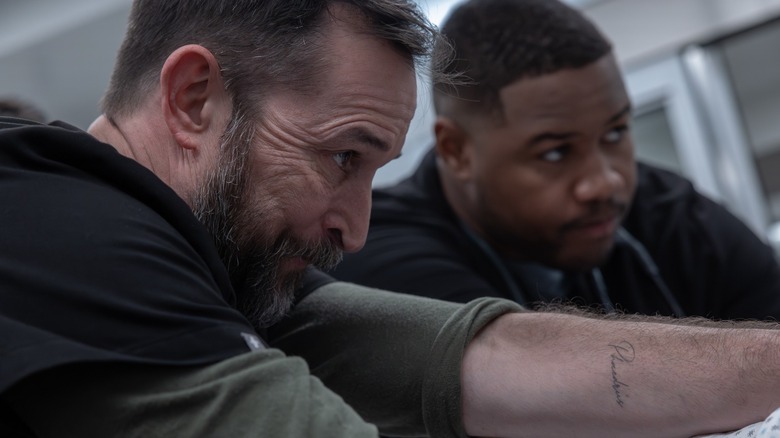
Television is, ultimately, about escapism. When you watch something like "Game of Thrones" or "The White Lotus," you're attempting to be transported to a different time or place, presumably. Still, there are so many medical dramas on the small-screen. Are any of them medically accurate?
I wanted to know which medical shows skew towards ridiculous camp and which ones are hard-hitting portraits of what it's really like to work in a hospital, so I reached out — once again — to Dr. Mary Siki, one of my very best friends and college cohorts who happens to be partway through her surgical residency at Washington University in St. Louis. Dr. Siki, who's studying to become a cardiothoracic surgeon and research expert through a general surgery track at this world-class facility, is also pretty well-versed in medical TV shows. (I do not know how she finds the time.) After asking Dr. Siki about the accuracy of "The Pitt" — a series that will come up again on this list — I decided it might be fun to ask her about other shows and see what she had to say.
Reader, it was fun! Dr. Siki ranked five shows for us, from least to most medically accurate, and they're all such popular shows that you've definitely seen at least one (or maybe all) of them. Whether you're well-versed in medical terminology or you're not sure if the human heart is on the right or left side of the body, you might learn something from Dr. Siki's ranking of which TV shows are the most medically accurate. (Also, your heart's on the left.)
5. Grey's Anatomy
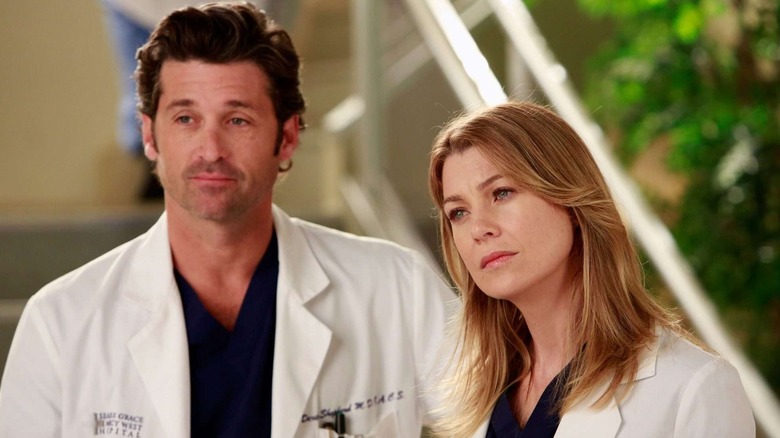
Those of us who love the long-running medical drama "Grey's Anatomy" know that it's nothing more than a ridiculous romp — and, honestly, soap opera — that just so happens to be set in a hospital, and Dr. Mary Siki agrees.
"One of my favorite shows for entertainment value. One of the least medically accurate shows around," she said of the Shonda Rhimes series that's largely known for killing its own physicians in increasingly stupid ways. "Cutting LVAD wires and still having a job afterwards? I mean, come on. That resident would be out of a job and likely have criminal charges brought against them," she continued, referencing the infamous Season 2 storyline where surgical intern Dr. Izzie Stevens (Katherine Heigl) cuts an LVAD wire to steal a transplanted heart for her patient and lover Denny Duquette (Jeffrey Dean Morgan).
That's not the biggest issue Dr. Siki has with "Grey's Anatomy," though — it's the fact that the doctors all pair up in unbelievably unrealistic ways, like when intern Dr. Meredith Grey (Ellen Pompeo) starts dating attending neurosurgeon Dr. Derek Shepherd (Patrick Dempsey, who left the show in Season 11). "Besides the medical inaccuracies, the interpersonal relationships between attendings, residents, and patients are astounding," Dr Siki said. "Is it unheard of for a resident and an attending to have intimate relationships? No. But the HR department at this hospital either needs to be audited for negligence or given a significant raise for dealing with all of the violations happening within the workplace."
If you've never watched "Grey's Anatomy," she's spot-on with this assessment. The HR violations on this show are an actual nightmare, not to mention the increasingly absurd diagnoses. (Bomb in a body cavity, anyone?)
4. House M.D.
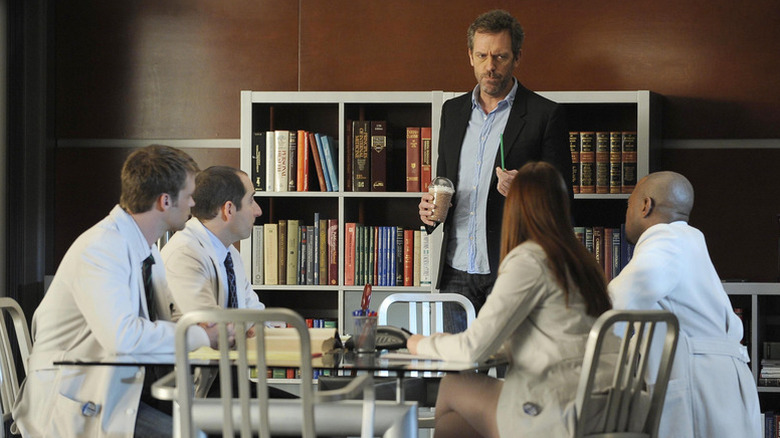
Right on the heels of "Grey's Anatomy," we have "House M.D.," David Shore's series led by Hugh Laurie as the irritable but brilliant Dr. Gregory House. The whole conceit of this show is that House leads a team of diagnosticians at a fictional New Jersey hospital, and alongside his cohorts, House is constantly diagnosing people with the wildest, weirdest diseases and afflictions. Dr. Mary Siki said the very core of this show is actually where the problems start.
"In medicine, we're taught the adage, 'When you hear hoofbeats, think horses not zebras,'" Dr. Siki said, referencing a saying that's commonly attributed to a famous University of Maryland physician named Theodore Woodward. "This show teaches you the opposite — it's pretty much always the zebra diagnosis (and never Lupus)," she continued, though she said it "made for interesting television and was fun to rewatch" while she studied for USMLE Step 1, the first exam that helps a doctor become board-certified ... because that's the exam that focuses on what Dr. Siki calls "zebra diagnoses."
Once again, Dr. Siki also honed in on the wildly inappropriate behavior perpetrated by the doctors ... on House's direct orders. Again if in real life HR — or the Occupational Safety and Health Administration — knew that House made his fellows dig through patients' houses for clues, I doubt that would be allowed to continue," she said, referencing something that happens alarmingly often on the show. "Except it probably would, given he doesn't really give a f*** about the rules," she joked.
Ultimately, Dr. Siki said that "House" follows more of a procedural structure, which just ... makes it less realistic. "The show has a predictable cadence, much like the 'Law & Order' universe that I love, but is also unrealistic in medicine, sometimes we just really don't know the answer to what is making someone sick," she clarified. Makes total sense, as rough as that is.
3. ER
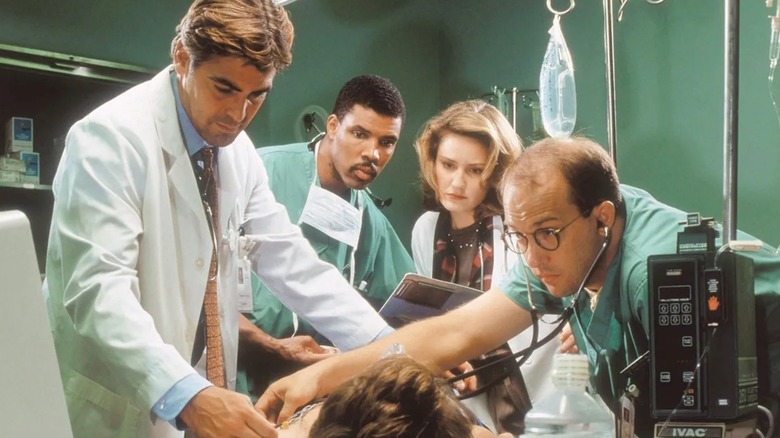
The grandaddy of modern medical dramas, "ER" — created by "Jurassic Park" and "Westworld" author Michael Crichton — set the standard for basically every other series on this list, but it also lands firmly in the middle of the pack. "ER," which put stars like George Clooney, Noah Wyle, and Maura Tierney on the map, just to name a few, takes place in a chaotic Chicago emergency room. According to Dr. Mary Siki, it does a decent job but misses the mark in a few different ways.
"This show is solidly middle on accuracy," Dr. Siki said of the series, which kicked off its run in 1994 before concluding 15 seasons later in 2009. "I think it's a pretty good medical drama for its era, but there are definitely some poor displays of emergency department procedures with unrealistic effects," she said of the cases, some of which are definitely a little absurd. (Also, consider this was a network show; what they could realistically show was somewhat limited. "I do think they do a good job on the chaotic nature of the emergency department," Dr. Siki continued.
She also noted that, while "ER" did go over-the-top from time to time, the series was pretty good at showing what it's like to work as a doctor or a nurse in a busy hospital. "They also do a decent job at displaying the interpersonal relationships and the toll the job has on their life outside of the hospital," she said. If you haven't binged all of "ER" yet, you're in for a treat.
2. Scrubs
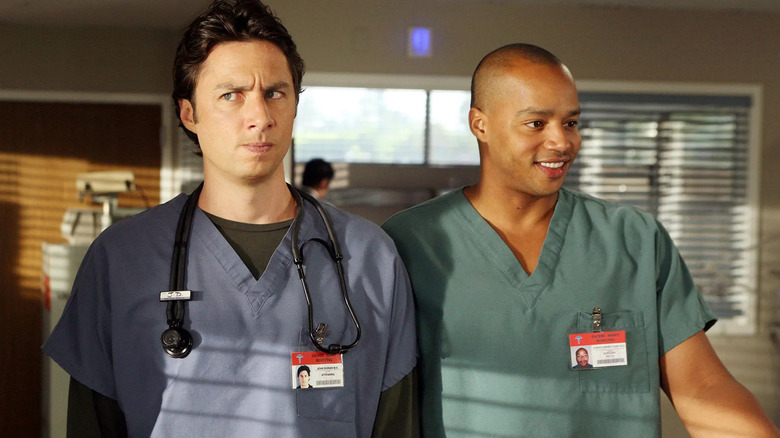
You might be surprised to see "Scrubs," the medical comedy created by Bill Lawrence, this high up on this list, but I'm not! Dr. Mary Siki put this second, and she's not even the only physician I've talked to who's praised exactly how real "Scrubs" is. (In the show's pilot, Zach Braff's "newbie" Dr. John "J.D." Dorian" hides in a closet to avoid an emergency page and eats food off of a coma patient's tray; these are, apparently, details taken from real doctors' experiences.)
'"A delightful show all around, though I'm choosing to ignore one season for the purposes of this list," Dr. Siki said, referring to the show's oft-maligned ninth season (which was sort of meant as a reboot and is, in fact, terrible). "The show does an incredible job at showing how relationships build in residency, with attendings and mentors, co-residents, nurses, and support staff who really help raise you into the physician you eventually become." Even as a non-doctor, she's spot-on about this; "Scrubs" goes to great lengths to point out that nurse Carla Espinosa (Judy Reyes) is an invaluable mentor when J.D. is a young doctor.
Dr. Siki continued, saying that a lot of the cases are pretty true to life as well. The patient story lines are realistic and the residents actually face consequences for their mistakes, although they are usually quite small in the grand scheme of mistakes to be made," she said before praising John C. McGinley's delightfully abrasive character. "Also, Dr. Cox is the best," she concluded. Dr. Siki didn't address the reboot that premiered in 2026, but it's also pretty delightful!
1. The Pitt
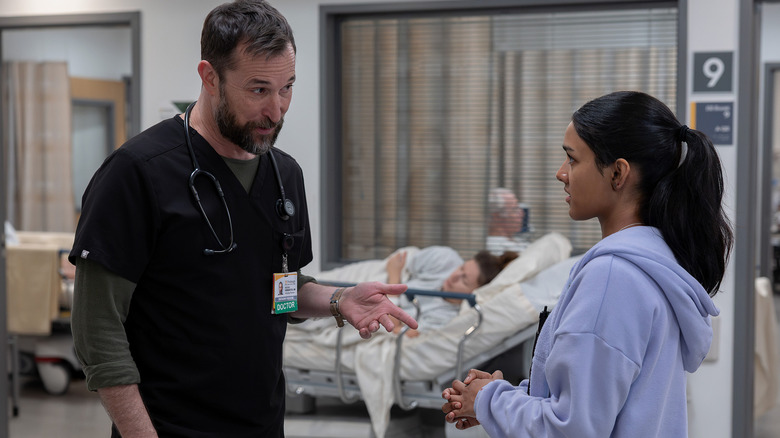
As I previously mentioned, I already spoke to Dr. Mary Siki about the award-winning HBO Max original "The Pitt," which premiered in 2025 and was created by R. Scott Gemmill alongside his "ER" friends John Wells and Noah Wyle. Wyle, of course, stars in the series — set in "real time" in a busy and frantic Pittsburgh emergency room — as Dr. Michael "Robby" Robinavitch, an overworked doctor who, along with his colleagues, tries his best to endure a difficult life as a trauma doctor.
"Very few notes," Dr. Siki confirmed. "The procedures are realistic in appearance and appropriateness for the situation," she said — which makes sense, because the effects and prosthetics in "The Pitt" are amazing. "The interpersonal dynamics are spot on," Dr. Siki added, pointing to workplace friendships and relationships like the central one between Robby and his right-hand woman, charge nurse Dana Evans (Katherine LaNasa). She did have one quibble, though. "Sometimes the dialogue can get a little preachy or heavy-handed regarding some of the current events or real life struggles facing the healthcare system, but I think overall they are well woven into the storylines," she said.
It's totally unsurprising that "The Pitt" landed at the top of this list, but here's the thing: all of these shows are worth watching for one reason or another. If you want the most realistic look at medicine, though, "The Pitt" is streaming on HBO Max.