

5 Beloved '80s Westerns That Don't Hold Up Today
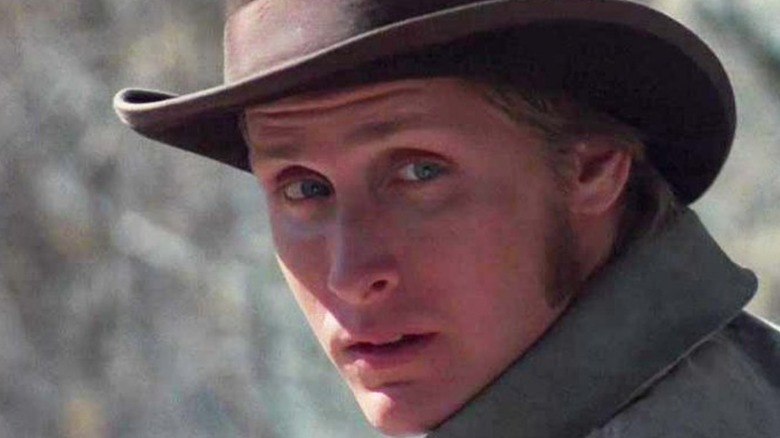
Though the genre had faded in prominence at the time, there were a still number of stellar Western movies in the 1980s. The genre films released throughout the decade often took a more nuanced and self-aware approach to common Western tropes. The '80s also saw a growing number of modern Westerns, translating classic archetypes into a contemporary setting. Even with Westerns seemingly in decline, plenty of genre movies received critical and commercial success in the '80s.
However, several '80s Westerns haven't particularly aged well over the years. Though they may still have vocal fans today, these movies are very much products of their era that struggle to endure like so many memorable counterparts. For some, the passage of time has brought shifting cultural sensibilities affecting their perceived quality, while others have since been overshadowed by superior movies in the genre. Here are five beloved '80s Westerns that don't hold up today despite their prior success.
Tom Horn
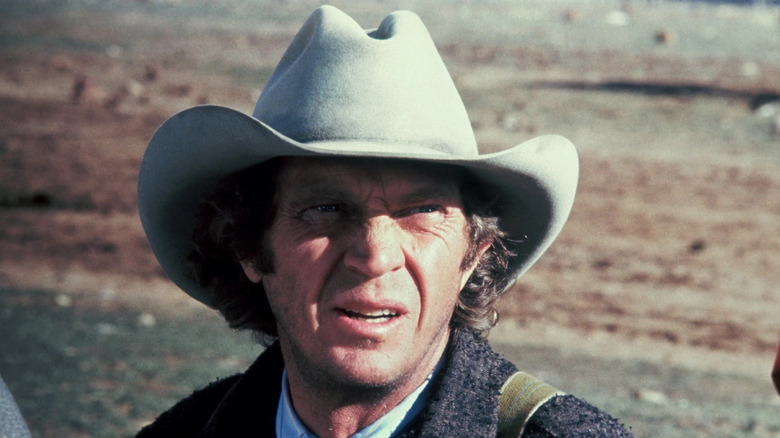
While it may not be counted among the best Steve McQueen movies, 1980's "Tom Horn" did earn around $12 million on a reported production budget of $3 million. McQueen plays the titular real-life frontiersman, with the movie based on Horn's memoirs, at the twilight of the Wild West. Horn begins working for powerful ranchers to take on cattle rustlers, only for his violent methods to unnerve the locals. Worried about their image by association with Horn's growing unpopularity, the ranchers decide to secretly turn against him.
In the years following its release, "Tom Horn" is mainly known as the penultimate movie McQueen made prior to his death eight months after its release. That said, the film's modest success and its reappraisal following McQueen's passing doesn't account for the fact that the movie itself is a boring slog to get through. Though the role calls for a world-weary performance from McQueen, his diminishing health is visible, lacking his usual understated charisma and relatively moribund in action sequences. A lethargic mess, McQueen deserved as a better coda to the genre that made him a global superstar.
Bronco Billy
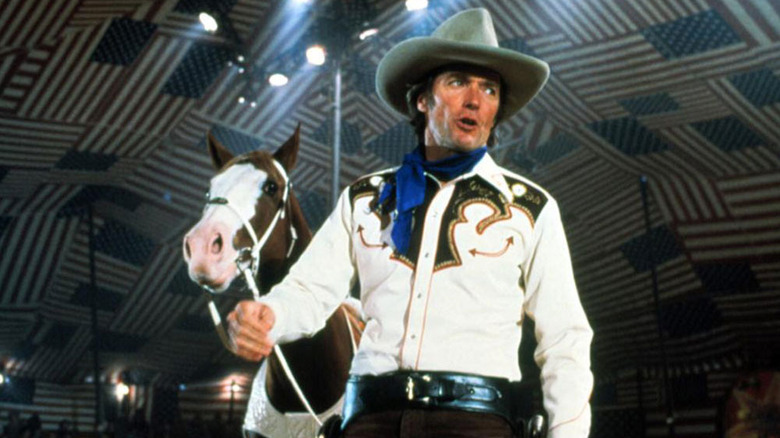
Clint Eastwood's directorial career flourished in the '70s and '80s, kicking off the latter decade with 1980's "Bronco Billy." Eastwood stars as the eponymous protagonist, who runs a struggling Wild West show where he also specializes as a trick marksman. Joining the eclectic ensemble is Antoinette Lily (Sondra Locke), a woman jilted and robbed by her fiance, leaving her hungry for revenge. As Antoinette gets to know Billy and his traveling troupe, the unlikely couple begin to fall in love.
"Bronco Billy" was another modest box office genre success released in 1980, albeit being a modern Western. The movie was the fourth collaboration between real-life couple Eastwood and Locke and their strangest — wild considering that two of the other projects involve Clint teaming up with an orangutan. "Bronco Billy" is a Western-tinged romantic comedy without any real emotional investment in its characters and its numerous plot contrivances too ridiculous to ignore. 1980 also saw the release of Eastwood and Locke's "Any Which You Can" and, God help me, that's the superior comedy of the year for them.
Urban Cowboy
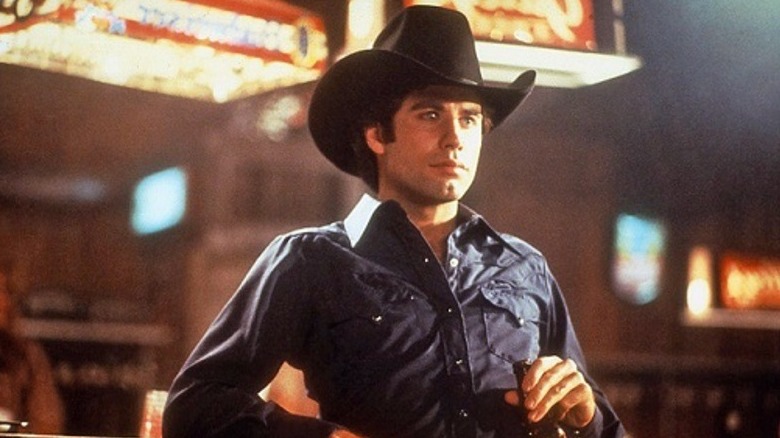
John Travolta was still riding high off of "Saturday Night Fever" and "Grease" when "Urban Cowboy" came out in 1980. Another contemporary Western, Travolta stars as Bud Davis, a temperamental young man working at a Texas oil refinery. Shortly after relocating to town, Bud meets and marries a woman named Sissy (Debra Winger), though he is prone to intense jealousy that escalates into abusive and controlling behavior. Fed up with Bud's nonsense, Sissy strikes up a relationship with recent parolee Wes Hightower (Scott Glenn). As a feud develops between the two men, Bud and Sissy evaluate if they want to reconcile or move on separately.
"Urban Cowboy" is by no means one of John Travolta's most disastrously received movies, but also not among his strongest work. As good as Travolta's chemistry is with Winger, Scott Glenn outshines him, though even the movie's plot does his character wrong by the end. Overshadowing everyone is the proto-pop country music soundtrack, but even that is a product of its era. A melodrama that wastes no time diving into the domestic turmoil but can't figure out where to go next, "Urban Cowboy" is a glorified rustic soap opera.
Three Amigos
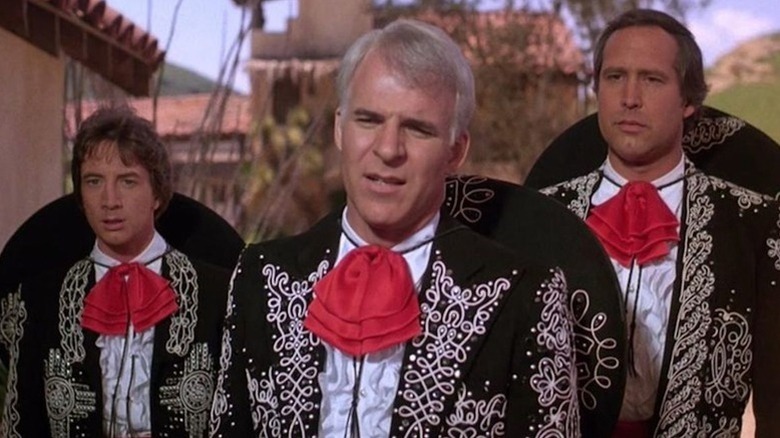
Though admittedly the most controversial inclusion on this list, 1986's "Three Amigos" doesn't hit the same way it did 40 years ago. Set in 1916, the movie has a trio of silent movie stars — Lucky (Steve Martin), Dusty (Chevy Chase), and Ned (Martin Short) — mistaken for actual expert gunfighters. This leads to the actors being hired by a Mexican village to defend them from roving bandits, as a clear nod to "The Magnificent Seven." Though the group is exposed as only being shallow Hollywood figures, they decide to step up and become real heroes, even if it costs them their lives.
As with any comedy, one's appreciation for "Three Amigos" varies wildly based on the viewer's individual sense of humor. To its credit, the movie wisely positions Steve Martin front and center, but Chevy Chase is much more taciturn and disaffected than his more effective '80s comedies. One of the movie's core elements is its send-up of singing cowboy movies from the '30s and '40s, something that comes off as more of a momentum-killer than laugh-inducing now. A Western comedy that just doesn't have the same energy that its leads would suggest, at least "Three Amigos" brought Martin and Short together for an enduring hilarious partnership.
Young Guns
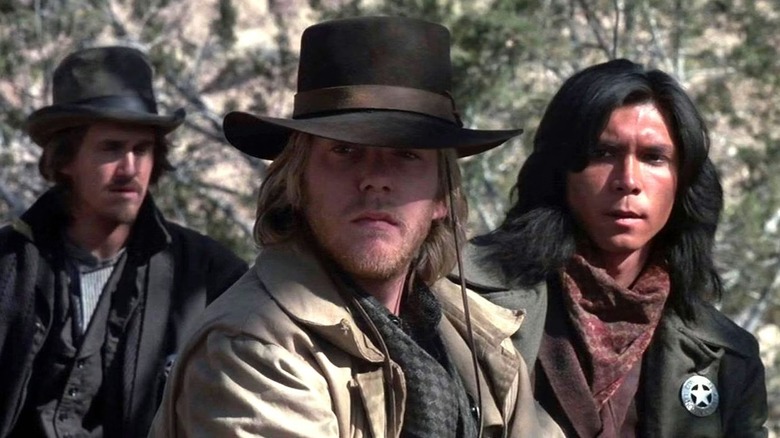
"Young Guys" is another '80s Western that has its fair share of vocal fans, but has appeal very much rooted in being a product of its time. A Western based on a true story, albeit loosely for stylish creative license, the 1988 movie centers on hot-headed gunslinger Billy the Kid (Emilio Estevez). After Billy's compassionate boss John Tunstall (Terence Stamp) is murdered by rival ranchers, Billy leads his colleagues on a violent crusade against them and anyone in league with them. This makes the ensemble wanted men, though the group usually stays one step ahead of their tireless pursuers.
With its soaring electric guitar flourishes and young male stars bro-ing out together, "Young Guns" feels like a Western for the "Top Gun" generation. But beyond its overt attempt to make a hip Brat Pack Western, the movie fails to make its quick-draw protagonist even remotely likable or sympathetic. Estevez plays Billy like a stuck-up with a six-shooter who does whatever he wants and it somehow usually ends up working out for him. This all apparently worked for '80s audiences because it earned enough to get a sequel in 1990, but "Young Guns" has all the depth of a string of music videos.