

Star Trek Creator Gene Roddenberry Once Made A Rule Named After Isaac Asimov
We may receive a commission on purchases made from links.
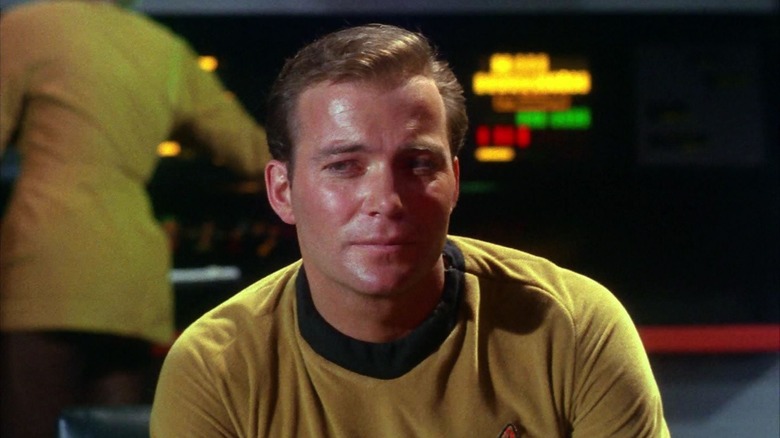
"Star Trek" went off the air on June 3, 1969 after three seasons. As all Trekkies can tell you, the series struggled in the ratings through its initial run, and was only saved for its third season via a specially orchestrated letter-writing campaign (by the stalwart early Trek adopter Bjo Trimble). It wouldn't be until the early 1970s, when it was being heavily rerun in syndication, that the show's true cult would begin forming in earnest. Series creator Gene Roddenberry wouldn't create another TV series until 1973.
Of course, from 1969 to 1973, Roddenberry didn't just sit around twiddling his thumbs. After the cancelation of "Star Trek," he decided to quickly lick his wounds, and then get back on the science fiction horse. Roddenberry had been a professional TV writer since the mid-1950s, when he penned scripts for shows like "Highway Patrol" and "Have Gun—Will Travel." "Star Trek" came over a decade into his career, so he wasn't exactly ready to hang up his space hat.
In 1973 and 1974, he created "Genesis II" and "The Questor Tapes," two high-concept shows that, quite sadly, never made it past the pilot phase. Both shows aired only as TV movies, but they both showed promise. It was during the pitch sessions for these shows that Roddenberry invented a new pitching principle that would, he felt, give a clear indicator whether a pitched series would be a success or not. In short, if the "learned" studio heads said it wouldn't work, then he knew it was going to be entertaining.
Roddenberry named this principle "Asimov's Rule" after his friend, celebrated sci-fi author Isaac Asimov. Roddenberry wrote a letter to Asimov in 1973 revealing his coinage of the term, and one can read that letter in David Alexander's 1994 biography "Star Trek Creator."
Gene Roddenberry invented Asimov's Rule, a rule that equated a show's success with studio enthusiasm
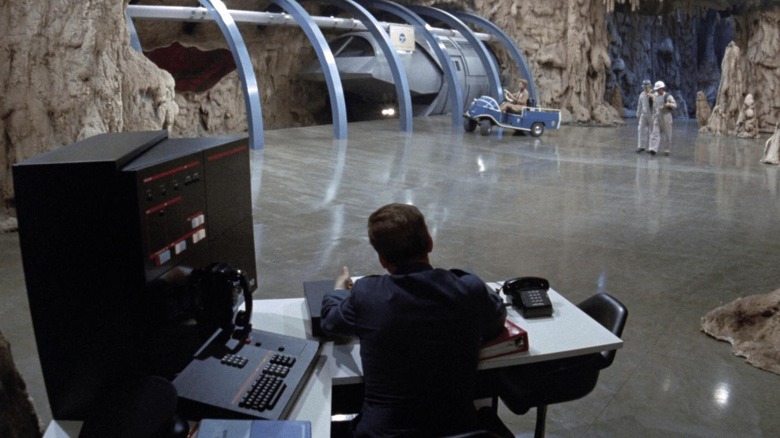
To give a brief rundown: "Genesis II" follows a modern-day scientist (Alex Cord) after he chemically puts himself in stasis and awakens in the year 2133, right after World War III. Humanity has split into factions, with peaceful scientists on one side and dangerous mutants on the other. "The Questor Tapes" was set in the present, and followed an android (Robert Foxworth) with gaps in his memory. He sought his creator, hoping to find him before a bomb in his chest exploded. They're both okay ideas for long-running TV shows.
The letter Gene Roddenberry wrote to Isaac Asimov came after "Genesis II" had been made, and "The Questor Tapes" was still being assembled. Incidentally, we once ranked all of Roddenberry's non-"Star Trek" projects. In his letter, he said:
"I have just invented for used in a TV series presentation something called 'Asimov's Rule,' since I am too modest to attribute anything so clever to myself. It goes: 'The innovative quality and entertainment potential of any sci-fi outline is inversely proportional to the number of learned persons who insist it won't work.'"
Roddenberry immediately chased that letter, though, with a second letter correcting his semantics; he meant to write "directly proportional" and not "inversely proportional." In brief, if you pitch a high-concept TV series to a studio, and they all say that it won't work, then it means it's a creative, entertaining idea. It seems that Roddenberry shared this "rule" with the same studio heads he was pitching to, and they all loved it. "You have no idea how many people are going around Hollywood today quoting you," he wrote to Asimov.
Roddenberry playfully stole ideas from Isaac Asimov for The Questor Tapes
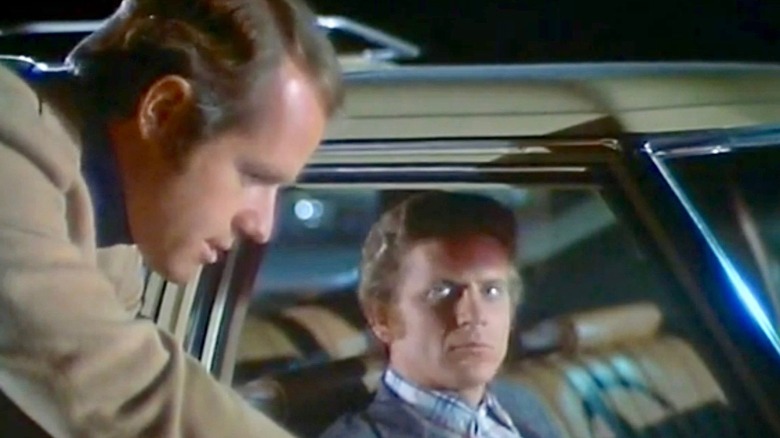
Gene Roddenberry was, at that time, developing "The Questor Tapes," as he has informed Isaac Asimov that he had just been entreated by a studio to "work on something with a robot as the lead character." But Roddenberry amusingly noted that he was unable to steal anything from the two (unnamed) books that Asimov had lent him. Asimov, of course, knew about robots, having written the celebrated story collection "I, Robot," published in 1950. In those stories, Asimov codified his laws of robotics, a series of commandments that would have to be programmed into the brains of all artificial life forms, if humans wanted to avoid a robot murder spree. The first law, as all sci-fi fans can tell you, dictated that a robot cannot harm a human.
That's what Roddenberry was referring to when he wrote that he "found little to steal [...] other than the fact he can't hurt a human being, which I actually stole from someone who stole it from you." Roddenberry added, optimistically, that "someday, someone will invent a human being who can't hurt a human being, but who would believe it?" Roddenberry had utopian aspirations.
Neither "Genesis II" nor "The Questor Tapes" took off, and neither did Roddenberry's other pilots "Planet Earth" and the supernatural horror series "Spectre." In 1979, he found some success again with "Star Trek: The Motion Picture," and then, eight years later, handed "Star Trek" to a new generation with "Star Trek: The Next Generation."
Roddenberry and Asimov died six months apart in 1991 and 1992.