

Forrest Gump Has A John Carpenter Sci-Fi Bomb To Thank For Some Of Its Special Effects
We may receive a commission on purchases made from links.
John Carpenter is a refreshingly candid man. He can be hard on other people's films (like Coralie Fargeat's Oscar-nominated "The Substance"), but he will take his own work to task if it fails to meet his high standards. He was especially disappointed with his remake of "Village of the Damned," and he's spoken at length about the brutal production of "Memoirs of an Invisible Man." The latter project never stood a chance.
"Memoirs of an Invisible Man" was undone the day Chevy Chase's agent at William Morris handed him an unfinished manuscript of Harry F. Saint's sci-fi novel of the same name. The year was 1986, and Chase was on a box office winning streak that had started with 1983's "National Lampoon's Vacation." He was starting to segue from cads to dads, though he was still effective as a womanizing protagonist in films like "Fletch" and "Spies Like Us." Comedy-wise, his chops were as sharp as ever, and while there was constant talk of his poor on-set behavior, all that mattered was the box office.
While he knocked out more hits to appease the studios (e.g. "¡Three Amigos!" and "National Lampoon's Christmas Vacation"), Chase grew more obsessed with "Memoirs of an Invisible Man." He envisioned it as an opportunity to play a more serious character who struggles with the "peril of being invisible — not the fun or joy of it" (as Fangoria quoted him saying in 1992). Screenwriter extraordinaire William Goldman was hired to accommodate the star, but three drafts later Chase balked.
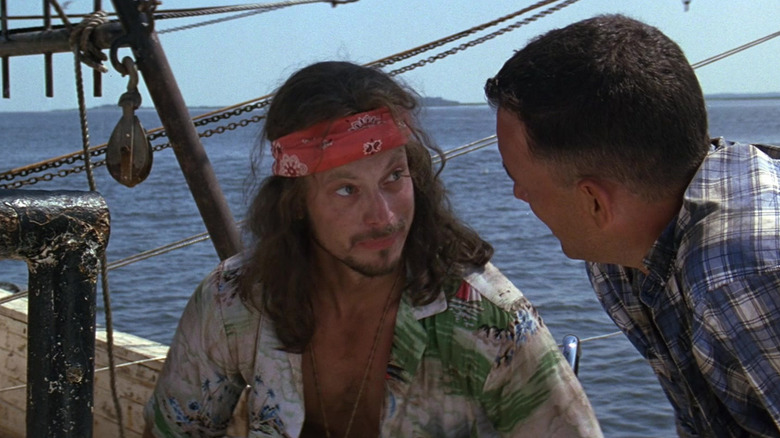
Other writers came and went, but the project finally gained traction when Carpenter came aboard. It proved to be a nightmare production... although it did lead to the development of the visual effects technology that took Lieutenant Dan's (Gary Sinise) legs away in "Forrest Gump!"
Memoirs of an Invisible Man flopped so Forrest Gump could run, Forrest, run

In Gilles Boulenger's 2003 book "John Carpenter: The Prince of Darkness," Carpenter said "Memoirs of an Invisible Man" was his attempt to capture the buoyant, suspenseful energy of Alfred Hitchcock's "North by Northwest." But even this was too comedic for Chevy Chase, who probably resisted any Cary Grant comparisons given that he'd notoriously tried to out the legendary actor in his lifetime. Still, Carpenter has owned this failure. He knows he should've tried to make the film funnier and probably could've fought harder against Chase's instincts to craft a moody, noirish meditation on the "peril" of invisibility, whatever that is.
The biggest frustration for Carpenter, however, was that he'd been tasked with essentially doing an ILM test-run for blockbusters to come. "Memoirs of an Invisible Man" was released in February 1992, eight months after "Terminator 2: Judgment Day" revolutionized CGI with the liquid metal wonder of the T-1000. And while his effects team made huge technical advancements, they wouldn't be fully applicable until 1994's "Forrest Gump." Per Carpenter:
"We broke some new ground in 'Memoirs of an Invisible Man.' The CGI effects in 'Forrest Gump' [e.g. the removal of Gary Sinise's character] were first developed in 'Memoirs of an Invisible Man.' The shot of the invisible man playing tennis was extraordinary [...] We really had to work at it. It seemed to be very simple [on paper], but a partially invisible building and how it would look from inside out was really a brainteaser for us."
The peril of spending $40 million on a film top-lined by an A-list comedy star who didn't want to be funny (while being invisible for huge chunks of the movie) resulted in an undeniable flop. "Forrest Gump," meanwhile, fared much better.