

5 Movies That Roger Ebert Was Completely Wrong About
I should begin this article by acknowledging that Roger Ebert, a film critic, can't really be "wrong" about his own opinions. His reviews are marvelously written, and he was always pointedly articulate about why he felt certain ways about certain movies. If he laughed during "Cop and a Half," he would have to say so. If he was moved to exhilaration by "Prometheus," he would write it. And if he hated a classic film that everyone else seemed to like, then he was always sure to carefully explain why. Ebert taught us all that great films can come from anywhere, to give every movie a fair shake (even the ones that look bad), and, most importantly, that a critic is worth nothing without their honesty.
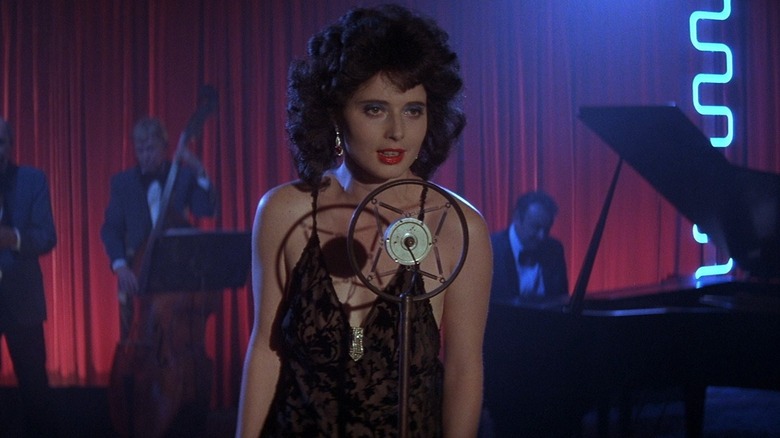
That said, I wholly disagree with Ebert on the following movies. There were many, many times in Ebert's career when he was presented with a sharp, dark, exciting piece of art, and he found only faults and irresponsible messages. He did this with many of my favorite films, and, like so many of us, I dreamed of meeting Ebert to debate him. I would, of course, begin by saying that he is a titan in the field of criticism and that I admire his writing and all he taught me about movies. But I would then proceed to tell him that he wasn't hip enough to appreciate the brilliance of John Carpenter's "In the Mouth of Madness," a film he only awarded two stars.
Below are five movies that I disagree with Ebert over. Four of them are films I love that he reviewed negatively, while one is a film he rather enjoyed and that I (and maybe the rest of the world) utterly hated. Let's get to bickering.
Godzilla (1954)
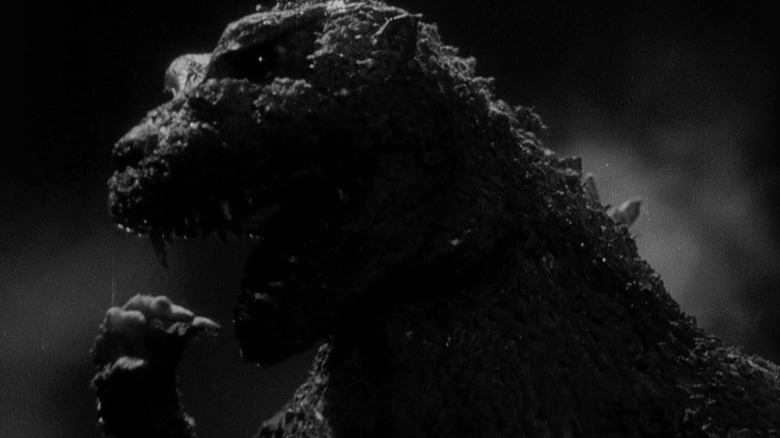
Ishiro Honda's "Gojira" was released in Japan in 1954, but it didn't make its way to the United States until 1956 under the title "Godzilla, King of the Monsters!" It was infamously re-cut to include new footage of actor Raymond Burr to make it more accessible to U.S. moviegoers who weren't used to seeing Japanese films. Regardless, it launched an extremely popular franchise of kaiju movies that provided popular culture with one of its more salient metaphors for nuclear devastation. The original cut of "Gojira" wouldn't be made available in the U.S. for many years. In 2004, Toho remastered it just in time for its 50th anniversary and released it in theaters stateside for the first time ever.
Roger Ebert saw it, and, perhaps weirdly, was unimpressed. Indeed, he wasn't the only critic who felt that way about Honda's "Godzilla." Ebert had no patience for giant monsters and found the sight of Godzilla stomping around on miniature Toho sets absurd to behold. As he wrote in his one-and-a-half-star review: "Regaled for 50 years by the stupendous idiocy of the American version of 'Godzilla,' audiences can now see the original Japanese version, which is equally idiotic, but, properly decoded, was the 'Fahrenheit 9/11' of its time."
Ebert also argued that the movie's special effects were bad for their time, writing, "Godzilla at times looks uncannily like a man in a lizard suit, stomping on cardboard sets, as indeed he was, and did." He added that 1933's "King Kong" was more convincing visually, and while he recognized its cultural value, he felt that "Godzilla" itself was shabby. "This is a bad movie, he wrote, "but it has earned its place in history."
I would argue that it's a good movie, and that's why it earned its place in history.
Blue Velvet (1986)
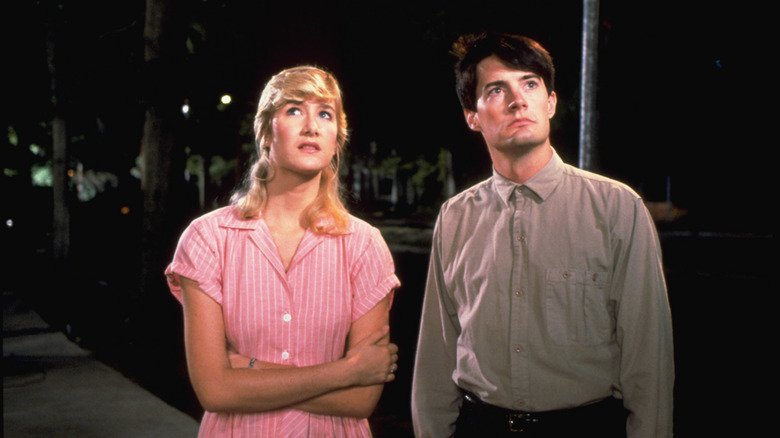
Roger Ebert never heard the end of this one. When David Lynch's "Blue Velvet" was released in 1986, some critics were struck by its confusing bleakness, violence, and surreal performances. It told the tale of Jeffrey (Kyle MacLachlan), a fresh-faced college kid who finds a severed ear in a field, leading him to investigate kidnapping and sexual sadism lurking in the shadows of his otherwise placid small American town. The crime lord Frank Booth is portrayed in the film by a truly twisted Dennis Hopper in a performance for the ages. "Blue Velvet" felt like a finger in the eye of the Conservative United States, revealing that the pastoral 1950s postwar suburbs dreamed up by the Reagan administration was a front for rot, murder, and sexual extremities inside the human soul.
Ebert infamously gave the film one star, however, feeling that it was too arch to accommodate any kind of emotional honesty. The scenes of sexual despair were "so strong that they deserve to be in a movie that is sincere, honest and true," Ebert wrote. "But 'Blue Velvet' surrounds them with a story that's marred by sophomoric satire and cheap shots. The director is either denying the strength of his material or trying to defuse it by pretending it's all part of a campy in-joke."
Ebert was also unimpressed with the message of "Blue Velvet," writing, "What are we being told? That beneath the surface of Small Town, USA, passions run dark and dangerous? Don't stop the presses." He came back to address his pan of "Blue Velvet" many times, so Ebert knew he had the minority opinion. I guess some people just didn't fall under the movie's eerie spell.
Hellraiser (1987) and Hellbound: Hellraiser II (1988)
Roger Ebert famously loved John Carpenter's "Halloween," and some critics have posited that it was his review that saved the film from obscurity. It became an enormous hit and spawned a subgenre of slasher movies and gore-forward horror films that proliferated throughout the 1980s. Perhaps ironically, Ebert hated the slashers that followed "Halloween," often referring to them as "dead teenager movies." That is: films that begin with a lot of living teenagers and then end with them all dead, not having explored their hopes, dreams, or character traits.
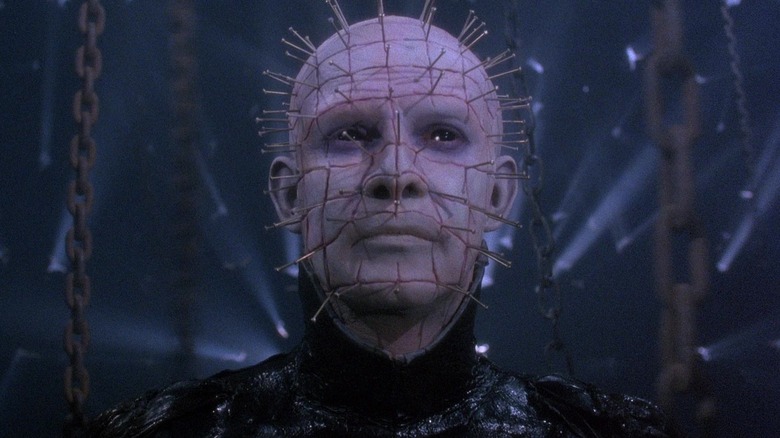
This hatred seemed to extend to Clive Barker's 1987 film "Hellraiser" and Tony Randel's 1988 sequel "Hellbound: Hellraiser II." These happen to be two of my favorite horror movies, as they contain a fascinating mythology. If one solves an enchanted puzzle box, their one-minded obsession summons a cadre of supernatural S&M fetishists called Cenobites. These beings are so skilled at S&M that they have made pain and sexual pleasure indivisible. The Cenobites then kill their summoner and drag them into a bleak Hell-like realm where they are tortured indefinitely. Not bad, if pain and pleasure are the same.
Ebert cared not for the myth, seeing only silly blood effects and relentless screaming. He gave both films only one-half-of-a-star each, writing that "Hellraiser" was a dreary collection of repetitive scenes, and that "Hellraiser II" "contains the kinds of nightmares that occur only in movies, because our real dreams have low budgets and we can't afford expensive special effects." Harsh words indeed. He made no mention of the originality of the Cenobites or the freshness of horror movies that explore adult themes of lust, obsession, and BDSM. No, he just hated the blood and the effects.
Fight Club (1999)
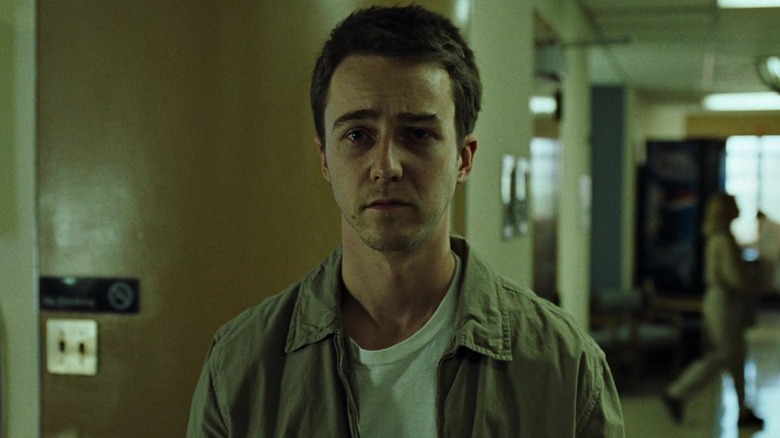
Reams have been written about "Fight Club." Some see it as a vital late-'90s treatise on the fragility of manhood and the absurdity behind that fragility. It examined the deep roots of masculine fantasies and how the ultimate end goal of patriarchal thinking is an apocalyptic dream of destructive fascism. Then, in the post-apocalypse, men can once again take their rightful place in the wasteland. Director David Fincher managed to explore this story with a high degree of hipster, MTV cool, and the film's characters were undeniably appealing, making the message more palpable; Tyler Durden (Brad Pitt), the aspiring, fight-loving pseudo-fascist, is an alluring figure because he's hip, not because he has an important point about modern masculinity.
Those who admire Tyler Durden have missed the point entirely. He's a demagogue, not an aspirational figure.
Roger Ebert, meanwhile, gave "Fight Club" only two stars, feeling that its style sold its fascism too well. "'Fight Club' is the most frankly and cheerfully fascist big-star movie since 'Death Wish,'" he wrote, "a celebration of violence in which the heroes write themselves a license to drink, smoke, screw, and beat one another up." He felt that its criticism of machismo was no different from the thing itself, calling it "macho porn." Ebert admired the first act of the movie wherein the protagonist attends addiction meetings for the cathartic tears they provide but hated the "pandering" nature of the second act, and the "trickery" of the third. He called it "a thrill ride masquerading as philosophy." One can see why Ebert would write that, but one might also note that he wasn't a Gen-Xer on the wavelength of Fincher's movie.
Ebert was spot-on, however, when he wrote that "whatever Fincher thinks the message is, that's not what most audience members will get."
Star Wars: Episode I - The Phantom Menace (1999)

To my recollection, no film in history was more hotly anticipated than George Lucas' 1999 feature "Star Wars: Episode I — The Phantom Menace." There hadn't been a high-profile "Star Wars" movie since 1983, and a whole generation had grown up with the property. Over a decade of VHS analysis and Special Edition re-releases laid the groundwork for the subsequent "Phantom Menace" hype, and people slept overnight on the sidewalk outside of theaters to get their tickets. Not even "Avengers: Endgame" had this amount of fervor.
And then the film came out, and it proved to be, in my eyes, plodding, dull, poorly written, and mind-numbingly empty. Lucas chose to tell the story of a young Darth Vader back when he was a nine-year-old named Anakin Skywalker (Jake Lloyd, whom we owe an apology to), and he didn't seem to know what to say. The movie has no true protagonist or theme. Even its state-of-the-art effects felt sterile. It's one of the greatest letdowns in cinema history, and "The Phantom Menace" is terrible to this day. (Suffice it to say, I'm not part of the "Star Wars" prequel trilogy re-evaluation movement.)
Roger Ebert, however, gave "The Phantom Menace" three-and-a-half-stars. He dismissed the film's negative reviews as "blase," arguing that its craft and epic scope should not be overlooked and that we should not be inured to the movie's visual awesomeness. Ebert even went so far as to call it "an astonishing achievement in imaginative filmmaking."
He then ended his review by comparing "The Phantom Menace" to a "Star Trek" film. "I've seen space operas that put their emphasis on human personalities and relationships," he wrote, "They're called 'Star Trek' movies. Give me transparent underwater cities and vast hollow senatorial spheres any day."