

Legendary Sci-Fi Author Arthur C. Clarke Didn't Mince Words About Star Trek
Arthur C. Clarke wrote his most famous 1968 novel "2001: A Space Odyssey" in conjunction with the (confusing?) Stanley Kubrick movie of the same name, publishing the book shortly after the film came out. Both iterations of "2001" deal with the vast infinities of space in a way that can barely fit into the paltry limits of the human imagination. Humankind is on the cusp of evolving into something new; our movement into the stars marks the end of our earliest developmental stage, and we are ready to become infants among the cosmos, soon to be born into a higher plane. It's heady stuff.
Clarke began publishing science fiction books in the mid-1940s and often returned to outsized ideas about humanity's place in the cosmos. His second most famous novel is probably 1953's "Childhood's End," a story about demonic-looking aliens who arrive on Earth to, ultimately, assist humans in their sudden evolution into a new species. Overall, Clarke wrote dozens of books and numerous short stories, and no sci-fi fan should consider their genre education complete until they have read at least a few of his works.
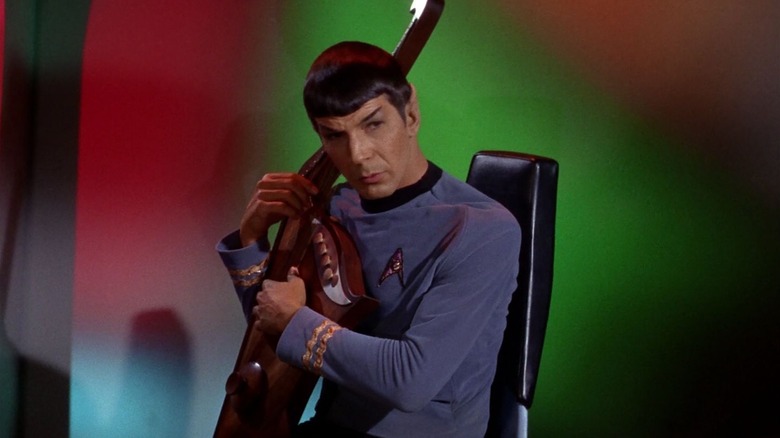
"2001" came along in the midst of an early, miniature sci-fi boom. After all, 1968 was also the year of "Planet of the Apes" and the ongoing "Star Trek: The Original Series," and Clarke himself would live to see "Star Trek" become a huge cult phenomenon. One might think that the author would adore a space travel-focused property like "Star Trek," but that wasn't necessarily the case when Salon interviewed Clarke in 1997. Mostly, he worried that it would draw the interest of young astronomy enthusiasts, only for them to be disappointed to learn that actual space travel almost certainly won't involve meeting a lot of alien life like in "Star Trek."
Arthur C. Clarke worried that Star Trek would get people's hopes up about space travel
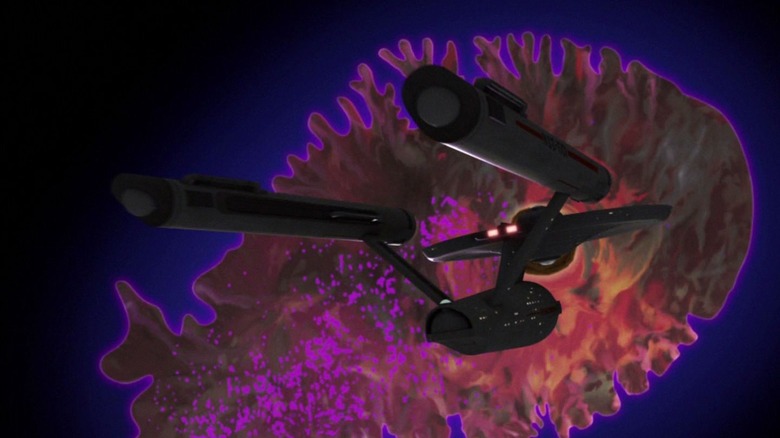
In 1997, Arthur C. Clarke expressed a little dismay about the then-current state of space travel. His "2001" was clearly inspired by a lot of the space frenzy that the world was experiencing throughout the 1960s, culminating with humans walking on the moon. But then, Clarke noted, we just kind of stopped. No longer-term manned space missions were launched, and the public seemed to be sated. Obviously, things have since changed, as evidenced by the public response to the Artemis II's historic lunar flyby in 2026.
One might assume that the "Star Trek" franchise (which was alive and thriving in 1997) would act as an ersatz space program and even inspire people to return to space. When Salon's interviewer noted this, Clarke responded:
"I think you're quite right. [...] But in a way, I'm afraid that it may be counterproductive. Because we're not going to find new civilizations every week in prime time when we do start the exploration of space! In fact, [...] the inner solar system has been a major disappointment. Not a trace of life anywhere, let alone Martian princesses. And the Martian 'bacterium' is very iffy. Exciting if it is true, but it's still very, very iffy. Still, it's interesting that there was so much enthusiasm when the announcement was made. It shows that people are keen."
The "Star Trek" property's mission statement of seeking out new life and civilizations, Clarke felt, was an empty promise at best. After all, the nearest intelligent life to Earth might be too far away to ever each. (His "Martian princesses" joke was clearly a nod to "A Princess of Mars," the Edgar Rice Burroughs sci-fi book that later inspired Disney's mega-flop "John Carter.")
Could a utopia like Star Trek still happen? Arthur C. Clarke said ... maybe
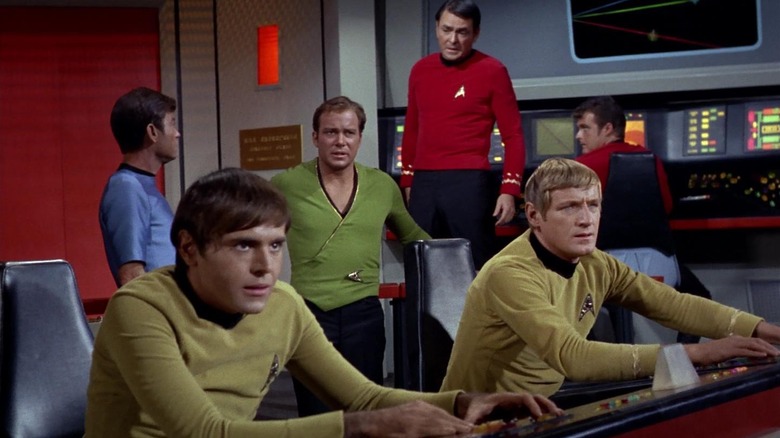
Salon's interviewer additionally mentioned that "Star Trek" creator Gene Roddenberry had once met with Arthur C. Clarke, with Roddenberry later saying that their meeting helped inspire him to create "Star Trek: The Original Series" in the first place. Roddenberry's show takes place in a post-capitalist future wherein humanity is beyond petty concepts like nationalism, prejudice, and war. Pacifism lies at the core of "Star Trek," and when asked if such a utopia may be possible, Clarke admitted:
"Well, it's certainly possible. [...] Whether it will be real, of course, depends on us. And looking at the evening news, it's hard to be very optimistic."
Clarke also noted that "Star Trek" too often bumps into the usual limitations of sci-fi movies and TV shows. Namely, aliens have to be played by human actors, so truly wild, non-human intelligence cannot be accurately or interestingly represented. As he put it:
"We always meet humans [in sci-fi franchises like 'Star Trek']. Whatever they are, they're humans. We know that central casting can't come up with an intelligent blob of something or other; it wouldn't be very exciting. So, that's a limitation of any science fiction on movie or TV. It can't be realistic. I'm sure there's lots of life out there, lots of intelligence, though I suspect that all the intelligence will be silicon. Probably carbon is only a brief moment in the evolution of intelligence."
Again, things have changed since 1997. Nowadays, a film like "Project Hail Mary" can show humans encountering alien rocks. As for Clarke, it seems that he respected the "Star Trek" property but felt that its own portrayal of alien life is too anthropocentric and didn't realize its full potential, which is a fair criticism.