

10 Best B-Horror Movies Of All Time, Ranked
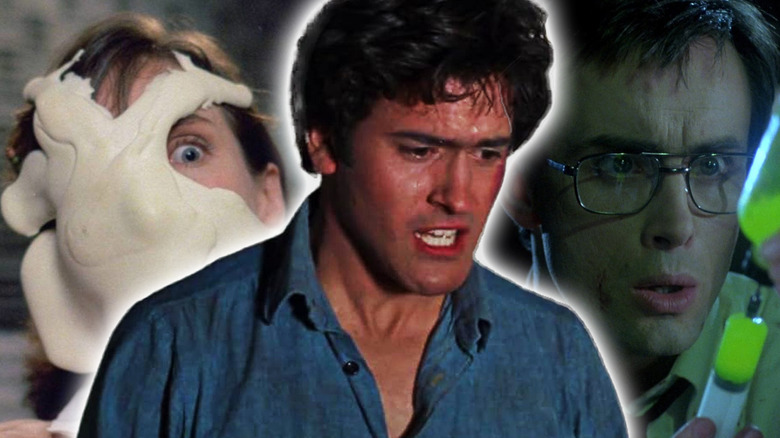
If there was ever a genre that thrived within the realm of B-movies, low-budget indie flicks outside of the major studio production and distribution system, it's horror. Largely free of studio executive interference, these productions could get weirder and more violent than more mainstream fare. Operating outside of larger distribution deals, B-horror movies filled late-night cinemas and saw their reputation grow by word of mouth. Since their relatively modest debuts, many of these movies have become cult classics and, in some cases, major horror franchises.
There is a distinct grindhouse quality to B-movies, with budget constraints serving as creative challenges that filmmakers make the most of. This lo-fi presentation often has a charm all of its own and certainly doesn't diminish the power of the storytelling. Low-budget or not, there are plenty of B-horror movies that far surpass even the most carefully crafted scary blockbusters.
Standing as an entertaining, low-budget alternative to their big studio counterparts that prove no less memorable, these are the 10 best B-horror movies of all time, ranked.
10. The Stuff
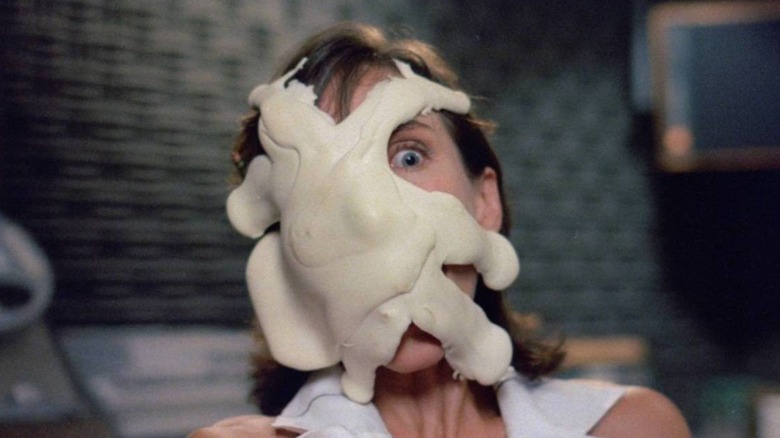
In the face of heightened consumerism and corporate ubiquity, numerous '80s movies provided their own sharp commentary of these social trends. One of the most direct, if off-kilter examples is the indie sci-fi horror movie "The Stuff," released in 1985. The movie opens with the discovery of a strange creamy substance emerging from the ground, which is mass-marketed and sold nationwide as an increasingly popular treat. A boy named Jason (Scott Bloom) and industrial saboteur Mo Rutherford (Michael Moriarty) discover the stuff is a living parasite and try to stop it from spreading.
"The Stuff" is as campy as '80s indie horror gets, but that's exactly why we love it, especially its inane premise. Openly satirizing contemporary consumer culture, the movie functions more as a horror comedy, though it also contains its fair share of creepy moments. For as patently ridiculous as the proceedings get, its core cast, particularly Moriarty, plays things relatively seriously, helping sell the concept. A cult classic in every sense of the word, "The Stuff" is '80s schlocky horror done remarkably well and certainly with a singular premise.
9. Re-Animator
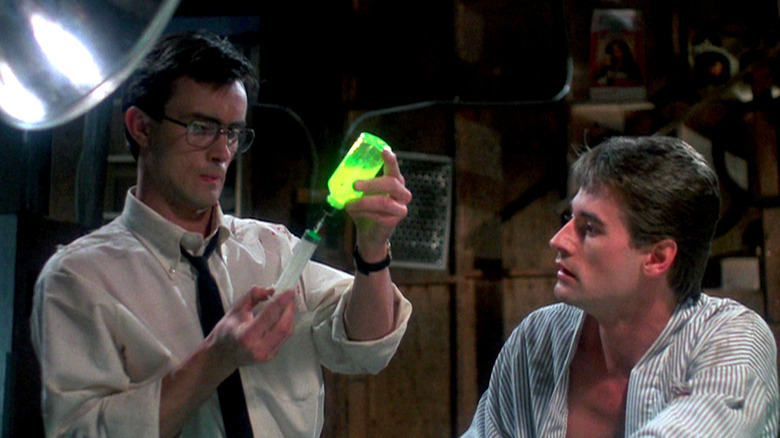
Influential author H.P. Lovecraft's short story "Herbert West: Re-Animator" serves as the basis for the 1985 movie "Re-Animator." After developing a reagent that can raise the dead, medical student Herbert West (Jeffrey Combs) continues his unnatural research in Arkham, Massachusetts. As West begins testing his reagent on more unwilling test subjects, revived professor Carl Hill (David Gale) takes control of his fellow undead. This leads to a gruesome showdown as Hill raises a horde of zombies from corpses in the local morgue.
While "Re-Animator" embraces the gory nature of its premise, it also has fun with the self-aware campiness that comes with it. Setting the tone for "Re-Animator" is a delicate balancing act, but the movie largely handles those dueling sensibilities. Combs proves a natural at playing the stakes with a darkly deadpan sense of humor, even as the proceedings grow more out of control. A horror comedy exploring the price of macabre obsession, "Re-Animator" is a viscera-filled take on Lovecraft's story.
8. Sleepaway Camp
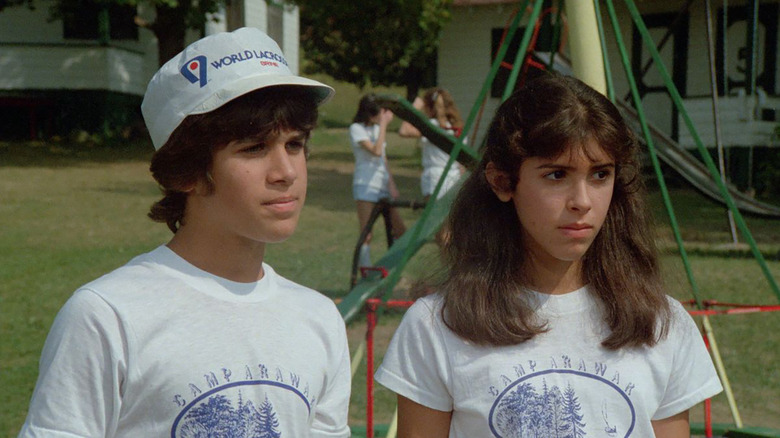
After "Friday the 13th" carved its way through cinemas in 1980, its success spawned countless low-budget slasher movies centered on teens at remote locations. A notable example is the 1983 flick "Sleepaway Camp," which opens with a pair of siblings enduring a horrific boating accident in 1975, killing one of them. Eight years later, surviving sibling Angela Baker (Felissa Rose) attends a summer camp where she is ostracized by her peers. Shortly after Angela's arrival, disturbing incidents begin to occur around the camp, killing off her fellow campers and staff.
As far as "Friday the 13th" pastiches go, "Sleepaway Camp" stands a clear step above most of its contemporaries including, arguably, many Jason Voorhees-led movies. This comes down to earnest performances from its young cast, a genuinely intriguing mystery at the narrative's core, and a twist ending that continues to shock 40 years later. But in addition to its sharper material, the requisite kills are sadistically inventive as the victims are picked off one by one. Like so many successful horror movies of its era, "Sleepaway Camp" spawned its own franchise, but the 1983 original remains the one to watch.
7. Zombi 2
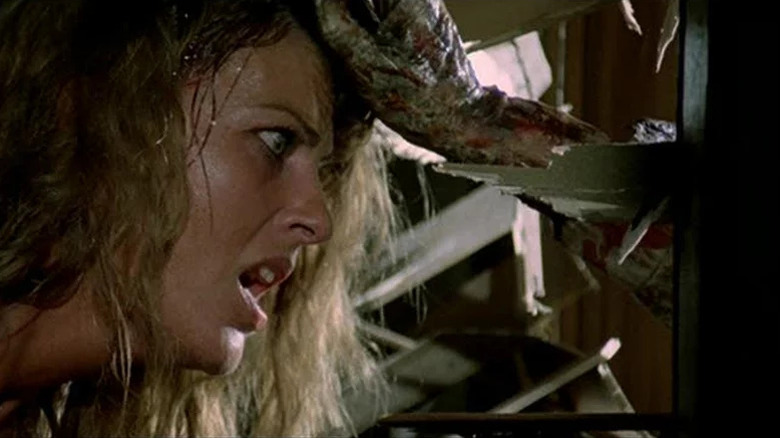
Filmmaker Lucio Fulci directed the unofficial sequel to "Dawn of the Dead," which had originally been released in Italy under the title "Zombi." The 1979 movie opens with an abandoned boat drifting into New York Harbor with ravenous zombies on board. In response, a team travels to a remote Caribbean island linked to a contagion creating the zombies. The group quickly finds itself in the midst of an uncontrollable undead uprising prompting them to try to find a way to escape in one piece.
"Zombi 2" is a delightfully trashy take on George A. Romero's zombie horror, leaning way more into grindhouse gore. There is a viciousness common in Italian giallo cinema present here, with a mounting carnage as the zombie outbreak becomes more pronounced. At the same time, the movie clearly has fun with its premise, even going as far as to pit a zombie against a shark. Representing the best in B-horror to come out of Europe, "Zombi 2" is one of those movies that has to be seen to be believed.
6. The Burning (1981)
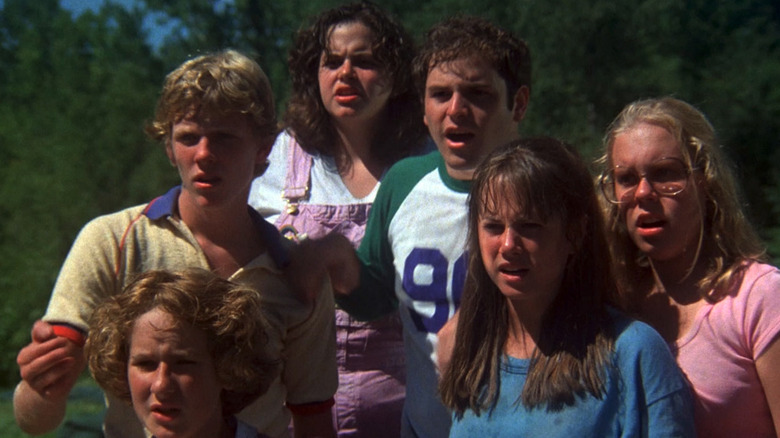
The 1981 slasher movie "The Burning" offers a broad retread of the premise from "Friday the 13th" but also somehow does it better. After being subjected to a cruel prank by summer campers at a lakefront retreat, Cropsy (Lou David) is horrifically burned. Five years later, Cropsy menaces another summer camp, primarily stalking his prey with a nasty set of garden shears. The campers and counselors scramble to avoid becoming Cropsy's next victim as the body count steadily increases.
"The Burning" takes its familiar slasher hunting summer campers at a lake premise and turns into one of the more enduring and underrated movies of its era. Compared to "Friday the 13th," the acting is marginally better, while the graphic kills are viscerally memorable in their own right. The movie's closing scene, framing it as a new campfire-told urban legend, really speaks to its setting and helps distinguish it from the competition. A summertime slasher that carves its own legacy in an increasingly crowded genre space, "The Burning" makes for a bloody good time.
5. The Return of the Living Dead
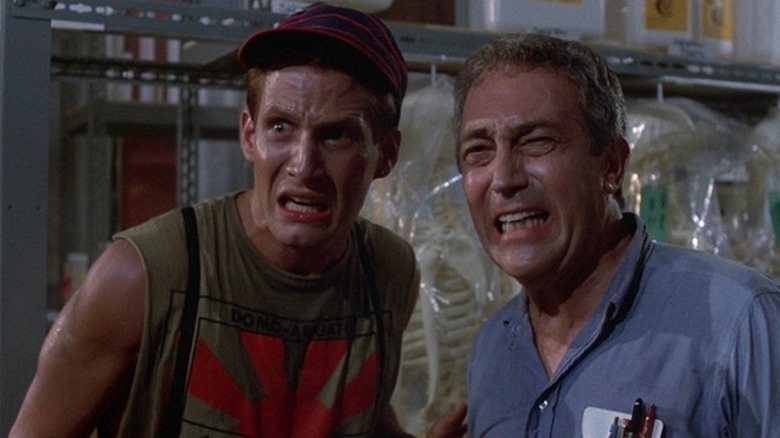
While George A. Romero-crafted zombie movies with a clear social commentary into the '80s, "The Return of the Living Dead" offered its own wild take on the genre. The 1985 movie has toxic chemicals capable of transforming the dead into ravenous ghouls accidentally unleashed from a Kentucky warehouse. This causes zombies to rise from a nearby graveyard as it's visited by a group of young punks looking to party. Taking refuge in the adjacent mortuary, the punks hold off the relentless undead even as the authorities fail to contain the flesh-eating threat.
Like "Shaun of the Dead," "The Return of the Living Dead" pokes fun at established zombie movie tropes while taking its own scares very seriously. The gags here are less overtly slapstick, driven from observations and absurdities when it comes to tangling with ghouls, and more importantly, don't distract from the terror. The movie went on to launch its own wave of sequels, but none hold a candle to the 1984 original. One of the best zombie movies of all time, "The Return of the Living Dead" mixes dark humor with vicious thrills to genre-defining effect.
4. The Pit and the Pendulum (1961)
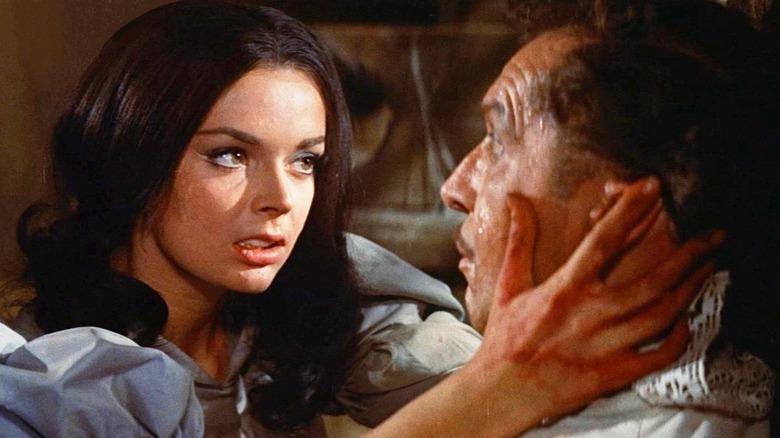
When it came to B-movies, there was no producer and director more legendary than Roger Corman, who crafted hundreds of movies throughout his extensive career. Corman directed and produced a number of Edgar Allan Poe adaptations in the 1960s, including 1961's "The Pit and the Pendulum." Set in the 16th century, Francis Barnard (John Kerr) visits his brother-in-law Nicholas Medina (Vincent Price) in search of his missing sister. When dark forces conspire against Nicholas, his sanity breaks and he takes advantage of the castle's nightmarish torture chamber to turn on his guests.
"The Pit and the Pendulum" is an atmospheric gothic horror story a clear cut above most of Corman's other low-budget fare. Corman found a creative simpatico in Price, who consistently elevated whatever projects he appeared in, sparing them from descending into generic schlock. Corman's previous Poe adaptation, "House of Usher," had been a B-feature, paired with "Psycho," and his follow-up maintains that tradition while surpassing its quality. Standing among the best Roger Corman films, "The Pit and the Pendulum" marks the pinnacle of his partnership with Price.
3. The Fog (1980)
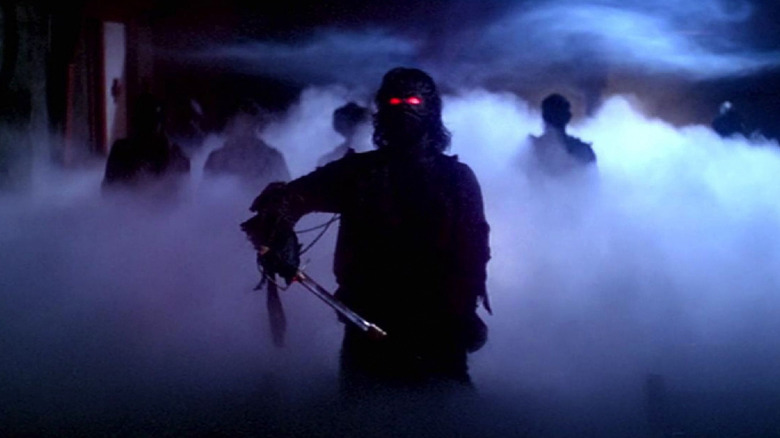
John Carpenter is another filmmaker who excels when working with smaller budgets as evidenced by movies like "Assault on Precinct 13" and, of course, "Halloween." Another sterling example of Carpenter thriving within the bounds of a low-budget indie production is his 1980 coastal chiller "The Fog." Set in a Northern California town, the community is menaced by a cadre of spectral sailors whose appearances are masked by a thick fog sweeping the area. As the phantasms begin gruesomely carving up victims, a handful of townsfolk uncover the mystery behind these homicidal hauntings.
"The Fog" proves that some of the best ghost stories are the simplest, combining slasher carnage with a supernatural mystery. Across Carpenter's horror projects, the movie feels like the filmmaker at his most intimate, really leaning into its sleepy small-town setting. As such, the scares are more low-key, more about carrying the story forward and establishing the mood, with its overtly terrifying scenes fewer and farther in between. An underrated entry in the wider Carpenter filmography, "The Fog" shows the filmmaker utilizing paranormal restraint with welcome results.
2. Night of the Living Dead (1968)
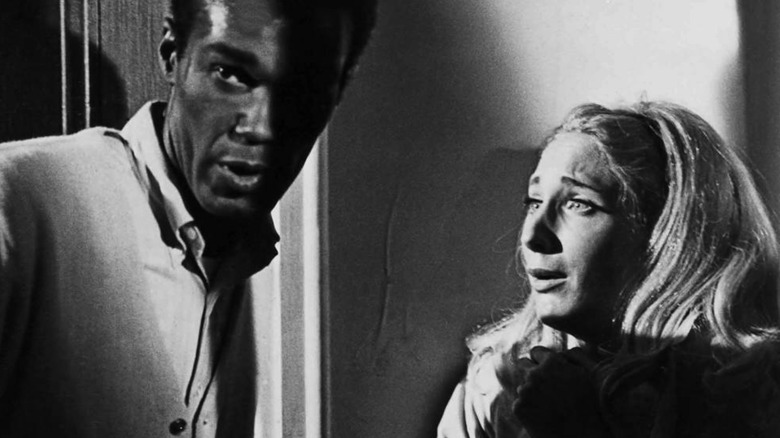
The film that essentially set the template for all zombie movies to follow, "Night of the Living Dead" was directed, shot, edited, and co-written by George A. Romero. The movie centers on a group of strangers in rural Pennsylvania who shelter in a farmhouse when the dead rise with an insatiable taste for human flesh. As tension grows, self-centered father Harry Cooper (Karl Hardman) sequesters with his family in the cellar while Ben (Duane Jones) leads the survivors upstairs. This culminates in a thoroughly bleak ending, as the survivors' last stand goes gruesomely awry before the night breaks.
With its moody black-and-white cinematography and much of the story unfolding in a single location, "Night of the Living Dead" lulls audiences into a false sense of security. However, as the night progresses and animosity grows between the literal upstairs-downstairs groups, the stakes take a gory turn. By modern zombie standards, the carnage isn't that visceral, but it still packs an emotional wallop as the characters' hope is swiftly snuffed out. Turning zombie movies on their heads, "Night of the Living Dead" is still an enormously influential film in the genre.
1. The Evil Dead
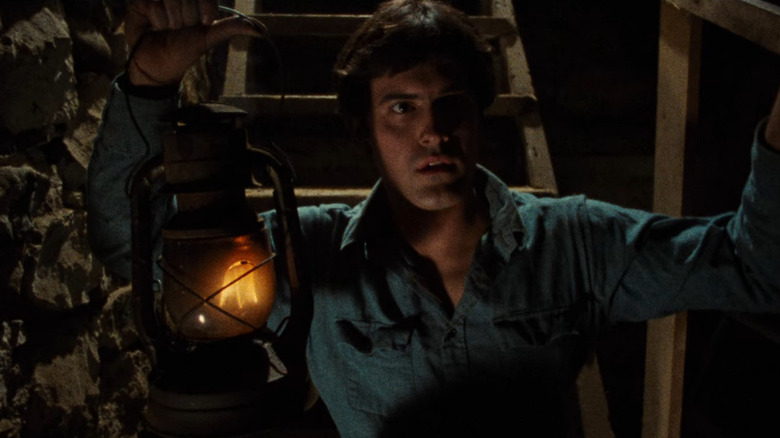
When it comes to low-budget indie horror, the 1981 original classic "The Evil Dead" is a DIY masterpiece. Written and directed by Sam Raimi, the movie is the definitive cabin in the woods story, with Ash Williams (Bruce Campbell) and his friends trying to enjoy a weekend getaway. As the group notices paranormal activity around their remote vacation locale, they accidentally unleash evil spirits by the sinister Necronomicon. When everything from the trees to their group becomes demonically possessed, Ash does everything he can to survive the night as the malevolent mayhem escalates.
Still ranked highly among the "Evil Dead" movies, the 1981 original is a strong reminder that the subsequent franchise is rooted firmly in gory horror. Once all hell breaks loose, and it breaks quickly, Raimi absolutely cuts loose with his vicious little locked cabin story. There is also something more grounded and raw about Campbell's Ash, elevating the film, not yet the wisecracking action hero that he would become. Though "Evil Dead II" and its follow-ups catapulted the series to new heights, there is something undeniably pure and nasty about the first movie.