

Two Avengers: Doomsday Actors Were In The Remake Of A Beloved '60s Sci-Fi Show
Most fans of sci-fi television likely remember "The Prisoner," Patrick McGoohan's surreal one-season series from 1967. In "The Prisoner," McGoohan played an unnamed spy who, in the show's opening sequence, is seen angrily quitting his job. He returns home, only to be gassed by a mysterious figure and transported to a bizarre place called the Village. The Village is a candy-colored carnival world where people speak to each other in an aggressively polite manner, wear bizarrely bright clothes, and don't have names. They only refer to one another by numbers.
McGoohan's character is called Number Six, and he finds that the Village is overseen by a mysterious cabal of handlers who can monitor everything in town. No one is allowed to leave the Village, as its borders are policed by enormous, seemingly living balloons called Rovers. Number Six doesn't even know where the Village is on the planet. The villain of the piece is the sinister Number Two. Many actors played Number Two over the course of the show's 17 episodes, although Leo McKern held the record with three. Who is Number One? Watch the show to find out.
"The Prisoner" was singular and bizarre. Although it only lasted for 17 episodes, it looms large in the pop consciousness. At least as far as sci-fi fans were concerned. We called it one of the best TV shows of the 1960s.
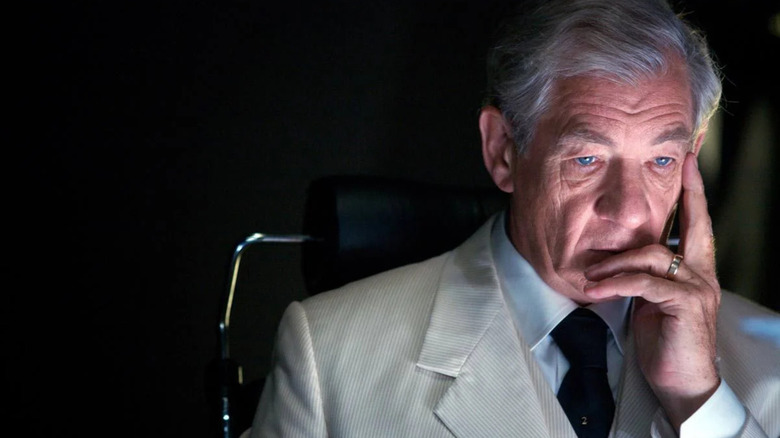
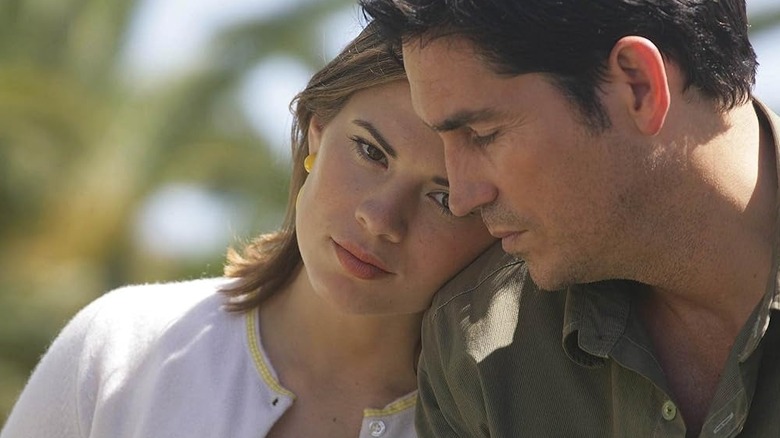
In 2009, AMC made the (perhaps unwise) choice to remake "The Prisoner" for a modern audience. The 2009 series only lasted six episodes, and starred Jim Caviezel as Number 6. Sir Ian McKellen played Number 2, while Hayley Atwell played a character who calls herself Number 4-15.
In a fun coincidence, McKellen and Atwell will both appear in the upcoming superhero flick "Avengers: Doomsday."
Ian McKellen and Hayley Atwell were in a remake of The Prisoner
"Avengers: Doomsday," of course, will be the largest superhero mashup to date, and Ian McKellen will be reprising his role as Magneto. Atwell played Peggy Carter in both "Captain America: The First Avenger" and in her own TV series, called "Agent Carter," and reprised the role in several other MCU projects.
Because the 1967 version of "The Prisoner" is oblique and surreal, the makers of the 2009 seemed to make their series super-confusing by mandate. In the updated version, Number 6 awakens outside of the Village, also a surreal society located in an unknown spot on Earth, but this time, he has no memory of who he is. He has dreams of his life outside the Village, and soon begins conspiring with other "dreamers" to find out the truth. He eventually recalls romancing a woman named Lucy, a memory that is jogged when she, too, arrives in the Village as Number 4-15.
The new "The Prisoner" also goes into detail about Number 2's home life. It seems that he has a son (Jamie Campbell Bower), and a comatose wife at home. The true nature of all the character's relationships is revealed slowly over the course of the series, and it seems that Number 6 also resigned from a spy agency. The difference, now, is that several characters all had a personal relationship to Number 6 prior to his transportation to the Village.
The true nature of the Village is also eventually explained, and while I won't reveal the surprises here, I will say that it's all pretty stupid. "The Prisoner" follows a dream-like illogic that is not so much intriguing as it is baffling and contrived.
Critics hated the 2009 version of The Prisoner

The reviews were largely negative for "The Prisoner," and the show only received a 17% approval rating on Rotten Tomatoes. Ken Tucker's review for EW hit the nail on the head when he wrote: "[Writer Bill] Gallagher has said that the original's theme is old hat, and he wanted to deal with our current 'obsession with self.' Ick. That's exactly what's wrong with the new 'Prisoner.' It's self-absorbed to the point of incoherence." That's a very polite way of saying that "The Prisoner" is guilty of disappearing up its own below-the-waist bodily aperture.
Paige Wiser of the Chicago Sun-Times was also amusingly negative on the show, writing that "There is a very good reason why I am not tripping on LSD right now: I have no desire to be disoriented for six hours. There's also a reason why I am not conking myself on the head with a croquet mallet, but 'The Prisoner' somehow has the same effect." Very harsh indeed. Wiser also noted that Ian McKellen gave a great performance (perhaps expectedly), and that the series was, at the very least, pretty to look at.
It's telling, however, that the remake of "The Prisoner" left no lasting cultural impact. No one seems to quote it, or even mention it, other than in articles like this, which only exist to compare it to Patrick McGoohan's 1967 original.
Ridley Scott thought of making a remake of his own once, but he mercifully never got to it.