

Lee Cronin's The Mummy Ending Doesn't Work For One Reason
Warning: this article discusses the final scenes of "Lee Cronin's The Mummy" and enters spoiler territory.
"Lee Cronin's The Mummy" will likely be best remembered for its extensive, gnarly gore. There are all kinds of gross, painful scenes of nasty body horror throughout the movie, and the extended climax erupts into an orgy of delightfully sick stuff. Horrible things happen to people's teeth and fingernails. Large strips of skin are peeled off people's sticky, pus-ridden bodies. There is a fun moment involving embalming fluid. And definitely don't eat the deviled eggs.
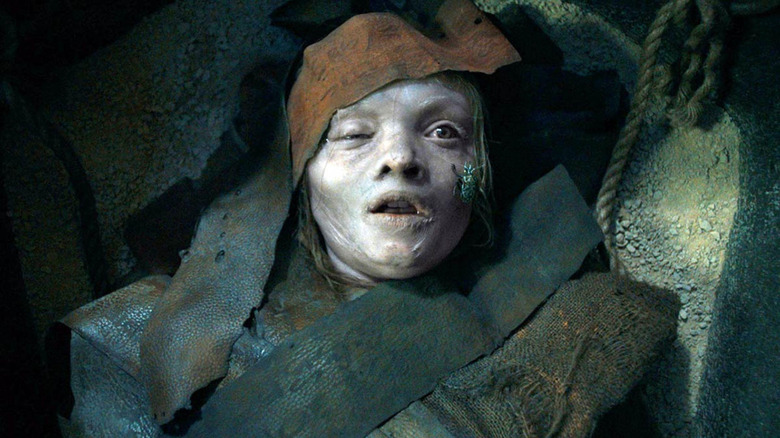
Story-wise, however, "The Mummy" is nothing more than the 1,000th "Exorcist" retread. It followed the misadventures of an American family after their kidnapped child/sibling, Katie (Natalie Grace), was returned to them after an eight-year absence. Katie was found in a sarcophagus, wrapped in mysterious bands of cloth, and crisscrossed with scars. Something terrible happened to her. Perhaps predictably, it will be revealed that Katie is possessed by an ancient Egyptian demon, and the demon has been using Katie's body and its own dark magic to wreak terror among the fam.
Audiences will eventually learn the identity of Katie's kidnapper, identified in the credits only as "the Magician" (Hayat Kamille). The Magician is part of an intergenerational legacy that has been shunting the demon from body to body for years, keeping it safely trapped in a sarcophagus. A resourceful Egyptian cop Detective Zaki (May Calamawy) manages to locate the Magician, and shoots her in the chest. It seems that the "bad guy" has been karmically punished for her demonic malfeasance and kidnapping habit.
Sadly, the Magician is punished a second time in an epilogue, and it feels tacked on. It also feels really mean-spirited and kind of undermines much of the movie's visceral effectiveness.
The epilogue for The Mummy is clunky and uncessecary
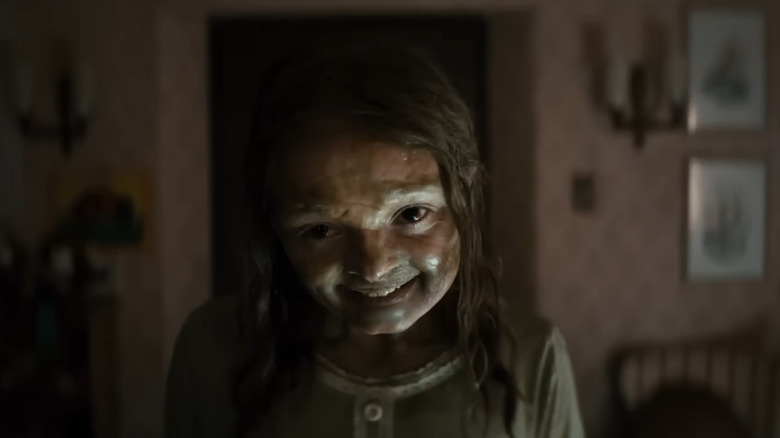
The Magician, it should be noted, is depicted as villainous from the very start of "Lee Cronin's The Mummy." One of the first things she does, in the film's prologue, is snap at her family for singing too loudly and annoying her. Later, she will be seen on a videocassette, dispassionately and efficiently conducting a black magic ritual. One might think that being apprehended by the cops and shot would be enough to bring closure to the story and elicit justice for a demonic kidnapper. For a long portion of the movie, it appears that the Magician is dead. All that was left to deal with was exorcising the demon in Katie's body.
At the end of "The Mummy," the family patriarch, Charlie (Jack Reynor), bravely sacrifices himself for his daughter. He volunteers to be the vessel that hosts the Egyptian demon, and some magic words are hastily shouted that drive the demon into his body. The film ends with Katie cured, but with Dad locked in a coffin. It's a dark ending, to be sure, but it is dramatically satisfying. A teenage girl's life was saved, and a father proved his love to his family by giving himself over to a demon to protect them. No further ending was needed.
But perhaps this ending was too much of a bummer, as there is one final scene in "The Mummy" that screams "reshoot." As was recently confirmed via The Hollywood Reporter, the original ending didn't test well. Unfortunately, this resulted in a tacked-on violent "revenge-against-the-Magician" epilogue that feels utterly useless. It punishes the Magician a second time, even though she had already been shot and (presumably) killed. What?
The useless epilogue is also mean-spirited ... and weirdly racist
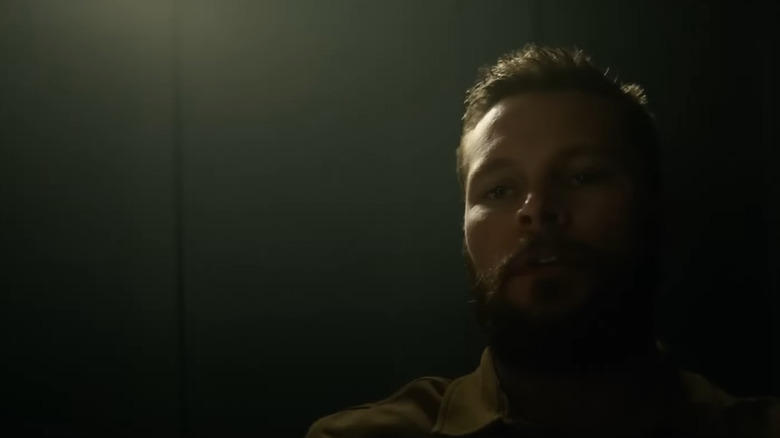
In the epilogue, it's revealed that the Magician is still alive, having survived the gunshot from earlier, and is being held in an Egyptian prison hospital. She is handcuffed to the bed and complains about being in pain. Then Detective Zaki, the one who shot her, unlocks her cell door and strides in. She admits the possessed Charlie, strapped to a wheelchair, and Charlie's beleaguered wife, Larissa (Laia Costa), with vengeance in her eyes. Their intent is clear. They intend to recite the magical spell and shunt the demon into the Magician's body, the ultimate punishment for perpetuating a cycle of kidnappings and demon magic.
The intent of this scene was clearly to save Charlie and punish the Magician. It was a mean-spirited appeal to the audience members who felt that no sacrifice should have been made in Katie's honor. Never mind that the Magician was already shot earlier in the movie. Without the epilogue, she would have been dead. That seems like punishment enough to me. The epilogue brings her back only to punish her again. And make sure Charlie's sacrifice is meaningless.
There is also a weird racist undercurrent to the epilogue. Rather than let Charlie be heroic, it saves him. The film adds an extra scene right at the end to save the white character ... and punish the Egyptian one. Indeed, the Egyptian character is seen as not having learned a lesson, just as bitter and evil as she was at the start of the movie. Any sympathetic motivations the film tried to give her were wiped away by shunting a demon into her body.
But then, most "Mummy" movies have racist underpinnings, exoticizing Egyptian culture. So this may just be the latest in a long, bad tradition.