

Why Lee Cronin's The Mummy Is Getting Strong Reactions And Prompting Damage Control
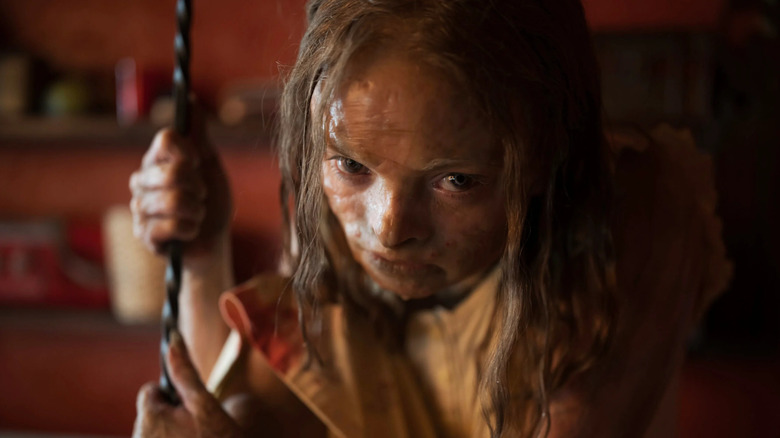
This article contains light spoilers for "Lee Cronin's The Mummy."
If you're a chronically online horror movie fan, chances are good that you've seen "BRENDAN FRASER IS NOT IN LEE CRONIN'S THE MUMMY" posted incessantly by the official Blumhouse X account. While it initially felt like an ill-advised bit, it now seems that Blumhouse was doing some preemptive damage control. To wit: "The Mummy" is a household title, but it's one that means very different things to different people. Unlike, say, "Star Wars," whose numerous pieces of media are all part of the same franchise, "The Mummy" has undergone several iterations unrelated to each other.
There's the original Universal Monsters cycle of films beginning in 1932, the Hammer horror cycle beginning in 1959, the ill-fated "Dark Universe" version starring Tom Cruise from 2017, and most famously the adventure franchise starring Brendan Fraser, which began with an era-ending box office smash in 1999. Given the latter's continual popularity and recognition, not to mention the news that the series has been revived for a legacy sequel, it's obvious that Blumhouse had some confusion to clear up.
While the company has done their darndest to explain the lack of Brendan Fraser in "Lee Cronin's The Mummy," it isn't the only hurdle presented by Stephen Sommers' films that the new movie faces. "Lee Cronin's The Mummy" isn't a sequel, reboot, or remake to any of the previous "Mummy" features: In this way, there's little difference between the film doing its own thing with the creature and various werewolf, vampire, and zombie movies, save for the fact that the title deliberately invokes the other films' heritage. "Lee Cronin's The Mummy" seeks to make the mummies scary again, and its use of revisited, remixed tropes and elements is what helps Cronin achieve this goal.
The Mummy was a horror story before it became an adventure story
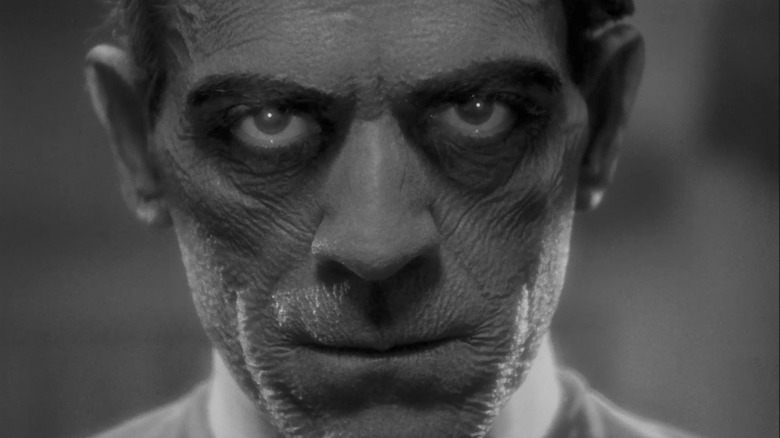
While horror fans should already be aware of the long history of "The Mummy," it's easy to forgive general audiences their confusion about Lee Cronin's horror-centric take. The 1999 "Mummy" and its sequels (including "Scorpion King" spin-offs) cemented the series' reputation as an action/adventure romp more than a horror franchise. Universal's failed 2017 reboot tried to merge action and horror to haphazard results (and besides, people don't seem to remember the film).
Those young enough to not remember a time too long before the 1999 "Mummy" might be surprised to learn that part of the reason Stephen Sommers went in a more "Indiana Jones" direction with his remake was because the character's status within horror had become diminished. In the same way that the shambling version of the zombie was seen by '90s geek pundits as something not very scary given how easy it would be to outrun one, the mummy was considered a laughable opponent. Not even the kids of "The Monster Squad" found their mummy all that threatening!
Yet treating the mummy as a mere physical menace does a disservice to the more subtle, esoteric brand of horror the character represents. Along with more problematic elements like xenophobia and Anglo-Saxon-style suspicion surrounding other cultures, their beliefs, and traditions, the mummy films concern occultism, spiritualism, and black magic in addition to just a reanimated corpse. While these notions often manifest on screen as a man (or woman!) in wrappings stalking their prey, the intent behind such actions (as well as the license afforded by these various topics) meant that no two "Mummy" movies were exactly alike before 2001's "The Mummy Returns." The mummy films cannot be so easily pigeonholed.
Lee Cronin's The Mummy remixes the character's tropes for maximum impact
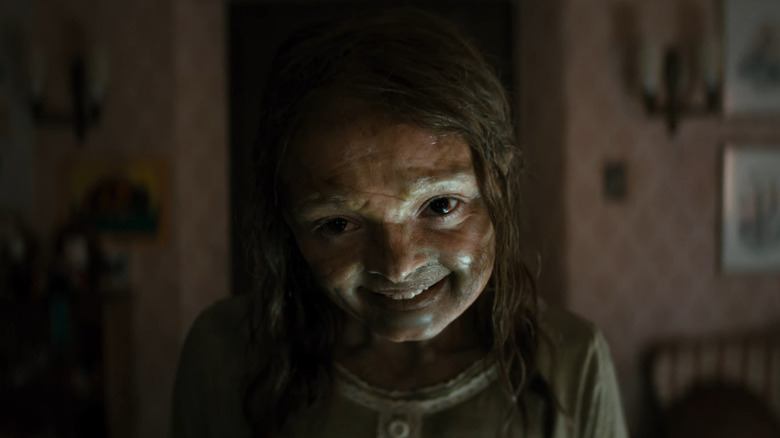
Audiences aren't as tender as they were in the 1930s and '40s, so a walking corpse isn't quite enough to chill anymore. This is why Cronin has gone the extra mile to make his mummy especially upsetting, violent, and disgusting. Setting aside the fact that Cronin's movie is all about the abduction, abuse, and forced mummification/possession of a young girl, the filmmaker remixes the mummy's traditional tropes for maximum impact.
The most notable of these is the discovery that Katie (Natalie Grace), due to years of being captive inside a sarcophagus, has had the wrappings put on her blend into her skin. This means that pulling off the wrappings is tantamount to skinning her alive, something her father Charlie (Jack Reynor) discovers to his great dismay. Also, she isn't just a mindless ghoul following any old curse; instead, she's host to an ancient Egyptian demon, and her curse is passed on to her entire family. In this way, Cronin is intentionally riffing on a trope from Universal's "Mummy" cycle, in which the mummy is always after someone it loves.
Even taking into account the variety of tones and genres within the titular "Mummy" movies, there are a dozen or so more movies involving the creature, many of which take a horror-forward approach. There's 1980's "The Awakening," based on Bram Stoker's 1903 novel "The Jewel of Seven Stars," which has a bleak, nasty tone similar to Cronin's movie. Even Don Coscarelli's "Bubba Ho-Tep," for all its satiric material, treats its mummy villain seriously. So, fans should at least give Lee Cronin's take on the character the benefit of the doubt. There's more than enough room in the tomb for all kinds of mummies.