

10 Worst Movie Remakes Of All Time, Ranked
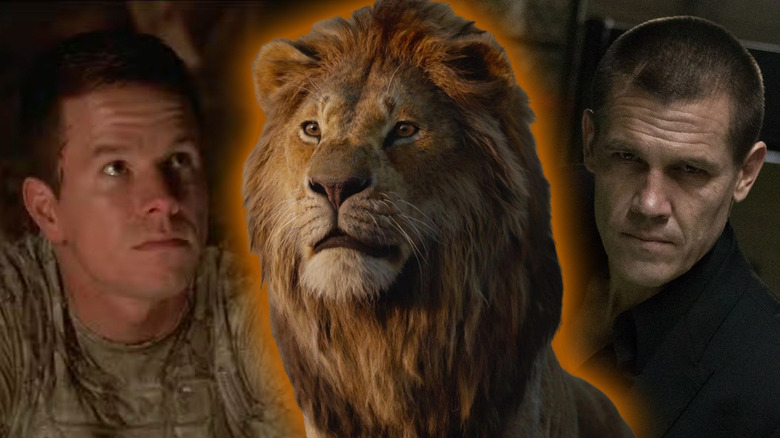
For many, remakes represent everything awful about Hollywood. They're the embodiment of some executive going, "Hey, we need to sell movie tickets. Let's just remake something people recognize in the hopes that fans of the original turn up."
To be fair, there's nothing inherently wrong with the idea of remaking a movie. Some remakes are genuinely better than the original, like the Coen Brothers' redoing "True Grit" or John Carpenter's "The Thing." But in those instances, you have a creative force behind the scenes who has a vision for how this new spin on an old classic can look. Or for horror/sci-fi movies, better technology can make a remake a worthwhile proposition, like with 1986's "The Fly."
All of this is to say that remakes aren't always terrible. Of course, there are plenty of terrible remakes that give every single one a bad name. These are the worst remakes of all time that really have no business existing; the lazy cash grabs that sometimes worked out for the studio and sometimes failed miserably. If there's any good to come from these films, it's that they make us appreciate the original film much more.
10. Planet of the Apes (2001)
Tim Burton made a name for himself in the 1980s and '90s as a singular creative visionary, willing to bring gothic sensibilities to the mainstream with original pictures like "Beetlejuice" and "Edward Scissorhands." Sure, he did adaptations like "Batman," but the two felt like strange bedfellows that oddly worked well together. At a certain point, Burton dove headfirst into doing blockbuster remakes, and none sunk so low as his 2001 version of "Planet of the Apes."
Burton's movie follows the same basic skeleton as the original, where a human astronaut, Leo (Mark Wahlberg), winds up in a cosmic storm that strands him on the planet Ashlar, inhabited by hyper-intelligent apes. There are many failures to Burton's "Planet of the Apes," chiefly that humans are given much more attention. Rather than focusing on the apes and forcing the audience to extend its empathy toward them, the film is much more concerned with ensuring humans are front and center.
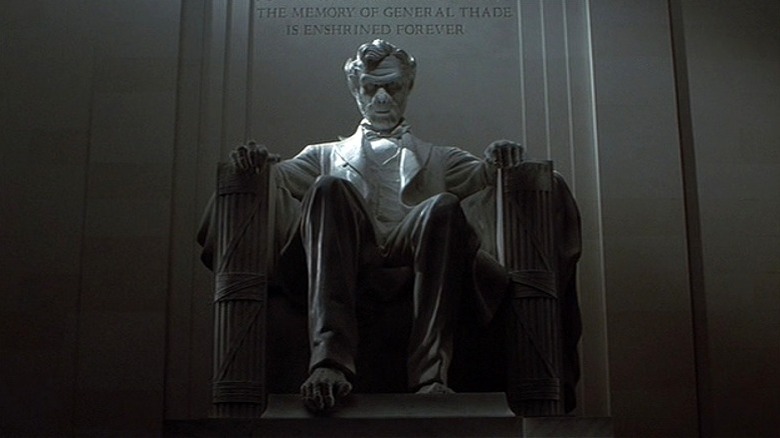
There's also that abysmal ending. The original "Planet of the Apes" has the iconic twist where George Taylor (Charlton Heston) discovers he's been on Earth this entire time, after seeing the destroyed Statue of Liberty on a beach. Burton gives us ... Ape-raham Lincoln?
Leo effectively time travels in the end, but Thade (Tim Roth) comes with him and changes the past, liberating apes from humans. If that sounds far more convoluted than necessary, you're absolutely right. It's clear Burton wanted his own twist to upend audience expectations. After all, the Statue of Liberty reveal is one of the best movie plot twists of all time. Doing it again would be repetitive, but Burton sank any chances of getting a new "Planet of the Apes" series off the ground with an ending that left everyone baffled.
9. Point Break (2015)
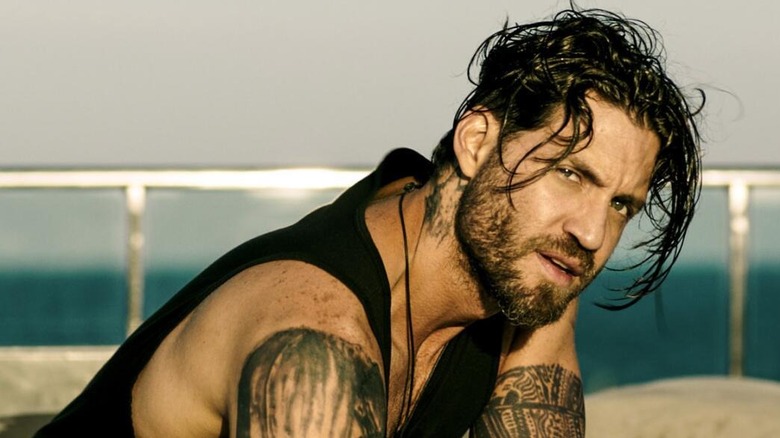
1991's "Point Break" sees FBI agent Johnny Utah (Keanu Reeves) infiltrate a group of bank robbers who happen to love surfing, with Johnny developing a complex friendship with the gang's leader, Bodhi (Patrick Swayze). Yes, it's an amazing action movie with some incredible stunts (that James Cameron claims he's mostly responsible for), but there are also superb characterizations. You can feel the internal tension Johnny develops through his mission. Plus, there's the philosophical component of how things like money and jobs only have power when we give them power.
2015's "Point Break" feels like someone looked at the cool action scenes of the original and went, "Yeah, let's do that again." Despite a bigger budget ($105 million compared to the original's $24 million), the remake fails to make the same sort of impression as the first one. Everything that made the first "Point Break" special is there by proxy but with a more hollow interior. Character arcs are shortened as basically an excuse to drive us toward the next big set piece.
What's amazing is that we already had a pretty good "Point Break" remake in the form of 2001's "The Fast and the Furious," except with street racing instead of surfing. And that franchise is still going strong, so remaking "Point Break" verbatim is the ultimate exercise in futility.
8. A Nightmare on Elm Street (2010)
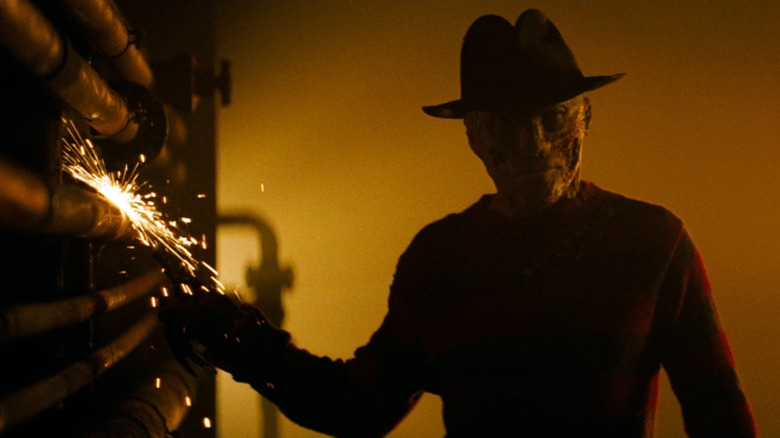
The 2000s featured a glut of remakes of classic horror films, with "Friday the 13th," "House of Wax," and "Texas Chainsaw Massacre." These were met with varying levels of success, but the true bottom of the barrel during this period was 2010's "A Nightmare on Elm Street."
While you can cast almost anyone as Jason Voorhees and have it work out well, since Jason doesn't talk, Freddy is far more of a true character. Robert Englund's version is quippy and isn't afraid to spout off some snappy dialogue before slashing through his victims, like referring himself as God to Nancy (Heather Langenkamp). Great dialogue helped differentiate Freddy from other slashers of the era. Jackie Earle Haley's version of Freddy in the 2010 remake is also reflective of his era but in the worst way. The 2000s were filled with films adhering to grimdark sensibilities and being too serious for their own good. As a result, Haley's Freddy is dark, dour, and doesn't have a single funny bone in his body.
The remake also saw fit to make it explicit how Freddy was a child molester, whereas he was only a child killer in the original. It's difficult subject matter tonally to make work in a teen slasher flick. Again, we have a remake that takes iconography from the original without truly understanding what has made it a timeless classic. The 2010 movie is difficult to get through, making it truly the worst "Nightmare on Elm Street" film in the entire franchise.
7. The Wicker Man (2006)
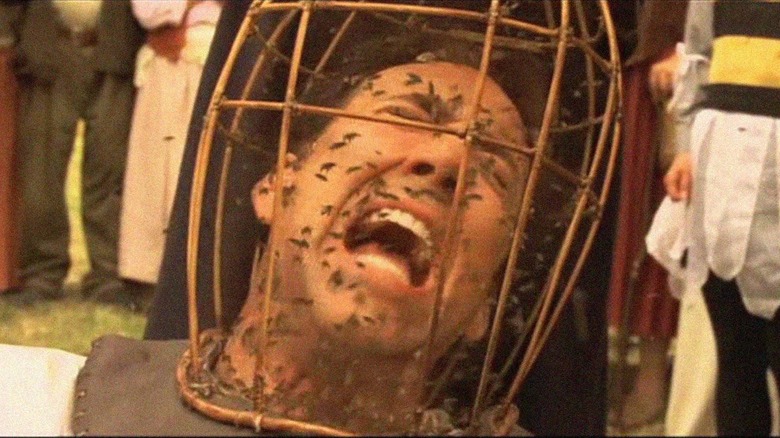
2006's "The Wicker Man" is probably best remembered today for having the scene where police officer Edward Malus (Nicolas Cage) screams while being attacked by bees, all while yelling, "Not the bees! Ahhhh! They're in my eyes!" If you've only watched that scene, you might be under the impression that the rest of the movie exemplifies that same kind of campy fun, where maybe's it's bad in a good way. Sad to say, that isn't the case.
1973's "The Wicker Man" is the platonic ideal of the subgenre of folk horror. It creates a keen atmospheric dread that's quieter than other horror films but has a way of getting under your skin. The 2006 remake tosses all of that out of the window. It's hard to gain any sense of gradual dread when you have Cage running around screaming like a maniac. Like the original, Edward investigates a cult following a young girl's disappearance and discovers this cult is, indeed, not to be trusted.
However, the original film presents the cult in a more idealistic manner. It forces the audience to question whether Sgt. Neil Howie (Edward Woodward) is right in assuming these people are up to something nefarious when everything seems so pleasant. "The Wicker Man" remake does away with any nuance and gets the audience to understand how vile this cult is almost immediately. It's also probably worth mentioning that the infamous bee scene wasn't in the original cut. It's part of the extended version on DVD, so folks who saw it in theaters couldn't even enjoy that.
6. The Lion King (2019)
Most lists of the worst remakes of all time include Gus Van Sant's "Psycho," but I think that film doesn't get enough credit for being as prescient as it was. Van Sant intentionally wanted to stick it to studio executives who didn't want to take chances on anything new, so he made a shot-for-shot remake of Alfred Hitchcock's classic. Even though it's functionally the same movie, it doesn't resonate the same with audiences because tastes and styles evolve. Van Sant's "Psycho" is a movie failure but a successful experiment, especially now that Disney has pretty much made the "Psycho" remake its entire business model.
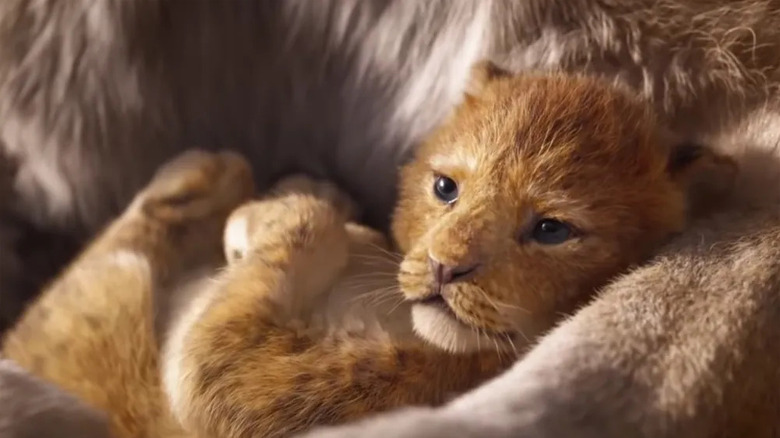
You could fill a list of the worst remakes with Disney's live-action abominations, but the worst of the worst truly worthy of scorn is 2019's "The Lion King." The original is a bonafide classic with animation that still holds up to this day. It has a timeless story, and you can put it on for any kid today, and they'll enjoy it. There's no reason to remake it, let alone with photorealistic CGI animals, meaning it's not even a "live-action" remake.
2019's "Lion King" copies many scenes shot for shot, but since the animals can't emote as well as cartoons, the whole thing feels lifeless. And 20 years later, it perfectly encapsulates the point Van Sant was trying to make with "Psycho." Executives love remakes and sequels because there's a built-in audience, but they never want to invest in original projects they could then make sequels for after the fact. Of course, whereas many people rightfully derided the newer "Psycho," many audiences enjoyed the "Lion King" remake well enough simply because of nostalgia. The king is dead. Long live the king.
5. Jacob's Ladder (2019)
The 1990 film "Jacob's Ladder" grossed $26 million against a $25 million budget, so while it wasn't a huge hit upon release, its legacy grew over time. It's been elevated to the status of cult classic and a hugely influential psychological horror film about an infantryman, played by Tim Robbins, who begins experiencing intense hallucinations. "Jacob's Ladder" does a great job of building dread while offering surprisingly poignant commentary on PTSD, which makes the remake's refusal to engage with any of that baffling.
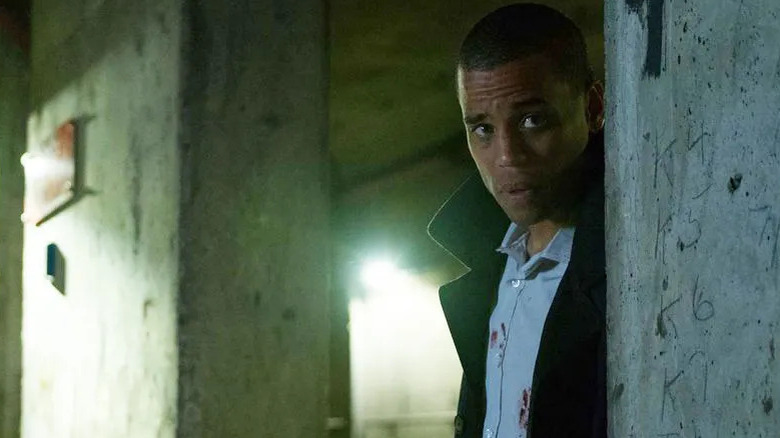
You'd be forgiven for not even realizing "Jacob's Ladder" got a remake in 2019. Released by Vertical Entertainment, the film was pretty much dead on arrival, meaning the name recognition didn't benefit it in any way. While billed as a "psychological horror," the new "Jacob's Ladder" plays more like a family drama, and even though Jacob Singer (Michael Ealy) has returned from war, the film isn't as much interested in exploring the psychological impact of war like the original.
It's bizarre to remake a film as highly regarded as "Jacob's Ladder." When watching the remake, one almost gets the impression this was supposed to be a completely original story, but maybe the producers figured it wouldn't sell. So they slap a recognizable title onto it, hoping to trick some folks into purchasing it on VOD. I can't say if that's for sure what happened, but it seems like a likely scenario. The best thing to say about the "Jacob's Ladder" remake is that it's so obscure it doesn't tarnish the original's legacy in the slightest.
4. Rollerball (2002)
I'm not going to sit here and pretend like 1975's "Rollerball" is some cinematic masterpiece. But it's a perfectly serviceable dystopian science-fiction film in which the world's governments have been replaced by corporations, and the most popular sport is the deadly rollerball. It's up to one man to earn his freedom while dismantling the powers that be. It does get bonus points for laying the groundwork for other dystopian stories centered around deadly games, like "The Running Man" and "Death Race 2000."
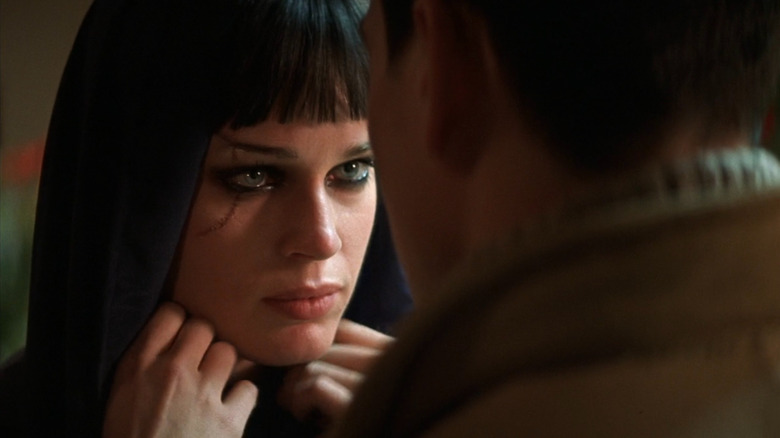
Honestly, it's the kind of movie that should get a remake where new technology and a fresh vision could make this story stand the test of time. Instead, we got 2002's "Rollerball" from "Die Hard" and "Predator" director John McTiernan. It certainly doesn't rank among McTiernan's better works, as he seems more interested in violent spectacle than social commentary. The original was at least prescient in showing how major corporations would soon come to hold as much power (if not more) over our lives than governments. It may not have fleshed it out all that much, but something's there. The remake pushes all that aside in favor of a plot about rollerball's creator realizing how the sport can get better ratings with worse injuries.
The performances fall flat, making "Rollerball" one of IMDb's lowest-rated projects ever. Even the action, which is supposed to be the selling point, becomes mind-numbingly repetitive. The only noteworthy thing about 2002's "Rollerball" is how it's responsible for McTiernan winding up in prison for wire-tapping a producer, which is a more engaging story than the movie itself.
3. Ben-Hur (2016)
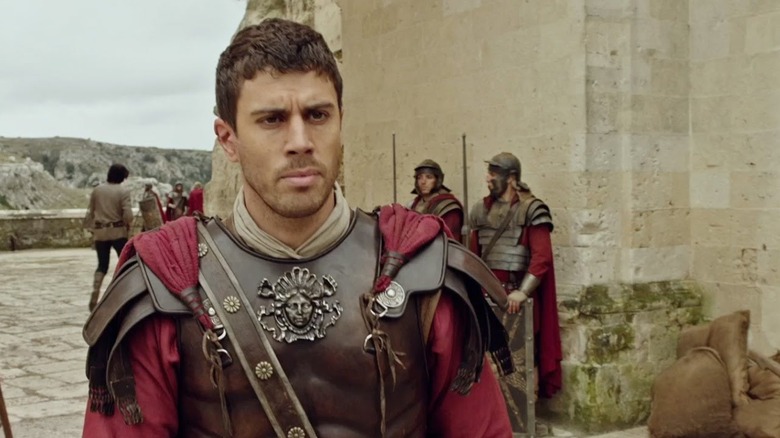
There have been five feature-length "Ben-Hur" movies over the years, all of which are based to varying degrees on the 1880 novel "Ben-Hur: A Tale of the Christ." But the one everyone remembers is the 1959 version that has become a stone-cold classic to cinephiles. Everything about the film just works, from the acting to the cinematography to the themes surrounding Jesus Christ's teachings that even non-believers can appreciate. It's about as perfect of a film as you can get, which means 2016's "Ben-Hur" basically had no chance of succeeding.
The thing about 1959's "Ben-Hur" is that it still holds up incredibly well. It's nearly four hours long, but it truly flies by. It's possible the 2016 version could've carved its own path and shown some epic chariot races with advancements in CGI, but it can't even do that right. The races are typically shown in extreme close-ups, and the shoddy CGI takes you out of the movie.
The problem may rest with director Timur Bekmambetov, known for kitschy action flicks like "Wanted" and "Abraham Lincoln: Vampire Hunter." His kinetic action style works well for those films, but "Ben-Hur" requires a more human touch. And that human element is severely lacking, which is probably why it didn't connect with audiences, making 2016's "Ben-Hur" a major box office flop. May it serve as a lesson to Hollywood to avoid remakes of other beloved classics like "Casablanca" and "Citizen Kane."
2. The Mummy (2017)
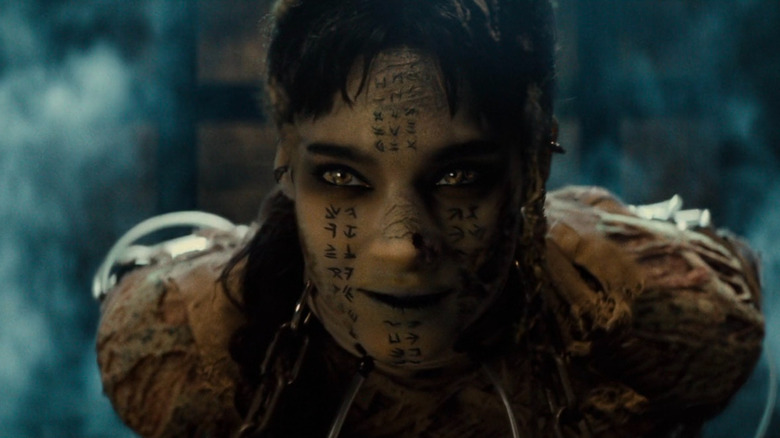
There have been many solid "Mummy" movies throughout Hollywood's history. Many people today no doubt have fond memories of the Brendan Fraser "Mummy" franchise, but a new take, especially one starring Tom Cruise, isn't a terrible idea. The main issue plaguing 2017's "The Mummy" is that it tries to kickstart a new cinematic universe to follow in the footsteps of Marvel. Universal's Dark Universe deserved better than whatever "The Mummy" is.
The film tries to cram in references to other Universal monsters, like Russell Crowe playing Dr. Henry Jekyll to set him up for a future Jekyll and Hyde movie. There are also nods to Dracula and the Creature of the Black Lagoon. The film fails to understand that the reason the Marvel Cinematic Universe was as successful as it was is due to 2008's "Iron Man" being a great film all on its own. People like Tony Stark (Robert Downey Jr.) as a character, so the prospect of an "Avengers" movie coming down the pipeline was enticing.
"The Mummy" makes Cruise's Nick Morton an utter bore. Then there's the matter of the titular Mummy herself, Ahmanet (Sofia Boutella). She's more of a generic action antagonist than a genuinely scary monster, so it's hard to get invested in whatever else Universal had planned for the rest of its creatures. The Dark Universe was dead on arrival, and maybe it would've been better to start with a monster that isn't tied to a beloved film series starring Brendan Fraser. Could the Dark Universe had succeeded if they went all in on the Wolf Man to start? We'll never know.
1. Oldboy (2013)
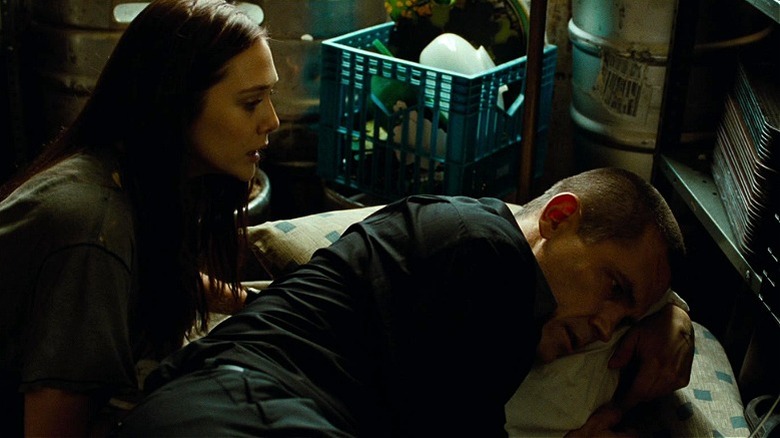
I remember attending a screening of "Oldboy" in 2013 followed by a Q&A with director Spike Lee and screenwriter Mark Protosevich. When asked about how Lee, at one point, had a longer cut of the film that got chopped down during the editing process, Lee just looked kind of disappointed and said, "Tough business." His resigned demeanor, I think, said it all about how he felt about the remake, seemingly knowing that it became an utterly pale imitation of Park Chan-wook's masterpiece, like he couldn't connect at all with the project.
There are many reasons why Lee's "Oldboy" is worse than the original. Park's version has plenty of violence, but it's visceral. You feel every punch and every whack of a hammer. Lee's iteration has action, but it feels indistinguishable from the overly stylized fight scenes that embody every B-grade action flick you can find in the Walmart bargain bin. 2013's "Oldboy" effectively sands the original down until it's an unrecognizable stump of what it once was.
Lee has said that his "Oldboy" is a reinterpretation as opposed to a remake, drawing from the manga source material. Yet there are still plenty of facets from the original film that made its way through. It wants to be Park's "Oldboy" but grounded into something suitably palatable for American audiences, even though Americans are perfectly capable of reading subtitles and enjoying what Park accomplished the first time around.
It sounds as though there may have been some studio interference, so it's hard to know who's responsible for what baffling decisions. But 2013's "Oldboy" is the worst remake ever because it doesn't offer anything new and misunderstands the original to an insulting degree. Lee had one thing right though: Hollywood is indeed a tough business.