

The Original Planet Of The Apes Movie Was Almost Directed By A Comedy Legend
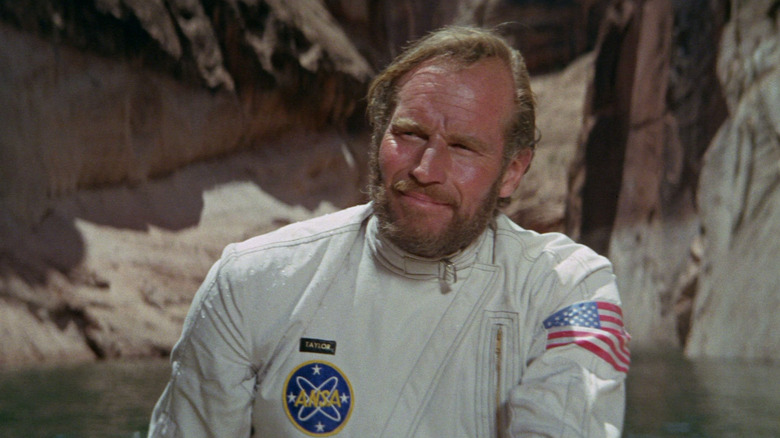
If you've ever been a "Planet of the Apes" movie fan, you know how difficult it can be for non-fans to take you and the films seriously. Sure, us "Apes" heads have it easier these days. After all, the last several entries in the franchise, particularly those directed by Matt Reeves, are largely regarded as the thematically rich and emotionally intelligent sci-fi epics they are.
Before the Rupert Wyatt-helmed "Rise of the Planet of the Apes" was released in 2011, however, the "Apes" movies had a dubious reputation. For starters, director Tim Burton's 2001 "Planet of the Apes" remake infamously fumbled the ball for "Apes" fans and Burton fans alike. Additionally, a prevailing retrospective consensus regarding the "Planet of the Apes" movies produced from 1968-1973 was that they were hopelessly dated. Even John Chambers' award-winning makeup looked hokey to 21st century eyes.
Steadfast "Apes" fans know that such reactions are nothing new, of course, as numerous folks have had an aversion to the property before actually sitting down with it and discovering just how much richness it holds. To be fair to them, the absurdism inherent to the franchise's premise has always been intentional, as author Pierre Boulle's original 1963 "Planet of the Apes" novel was very plainly a satire using sci-fi concepts. This is also likely the reason that film producer Arthur P. Jacobs initially wanted Blake Edwards to bring "Planet of the Apes" to the big screen in 1968.
According to the AFI Catalog, the main reason Edwards didn't direct the film is because its production was delayed, which is when Franklin J. Schaffner came aboard. But while it may seem like the movie dodged a bullet in not being directed by the comedy legend, Edwards' version may not have been all that different from what we got.
Blake Edwards was more than just a comedy director
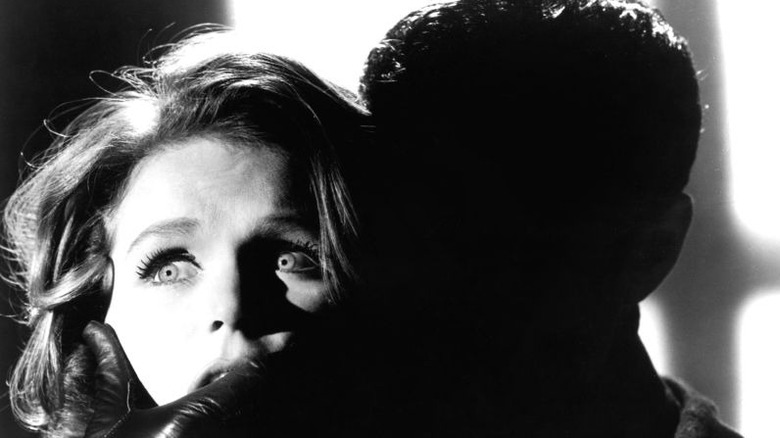
As noted in the AFI Catalog entry for "Planet of the Apes," Blake Edwards had to leave the film after Variety reported "budgeting and production problems" in March of 1965, largely due to the fact that Edwards had recently signed a contract to make six movies for The Mirisch Corp. Now, for anyone with a cursory knowledge of Edwards' career, this scheduling mishap might look like a blessing in disguise. After all, one can only imagine what the filmmaker who would go on to direct "10," "Curse of the Pink Panther," and "Blind Date" would've done with "Apes."
That being said, the fact that Edwards is largely known for his comedy work doesn't negate the fact that he had a surprisingly wide range as an artist. Although his directing resume from the mid-1970s on through the end of his career in the early 1990s is made up exclusively of comedy films, Edwards made several dramas and thrillers before then. That alone proves he was more than just a one-note director.
Heck, in 1962 alone, Edwards directed the neo-noir "Experiment in Terror" and the gritty drama "Days of Wine and Roses," in addition to co-writing the psychological horror movie "The Couch." These films, plus later efforts like "Gunn," "Wild Rovers," "The Carey Treatment" and "The Tamarind Seed," are excellent examples of the range Edwards had as a director. It's even possible that producer Arthur P. Jacobs might've been hoping that Edwards' comedy background might have taken the edge off the concept of walking, talking ape-like characters. Then again, it's just as likely that Jacobs was hiring the director behind "Experiment in Terror" more than that of "The Pink Panther," too.
Blake Edwards' Planet of the Apes may not have been too different from the version we got
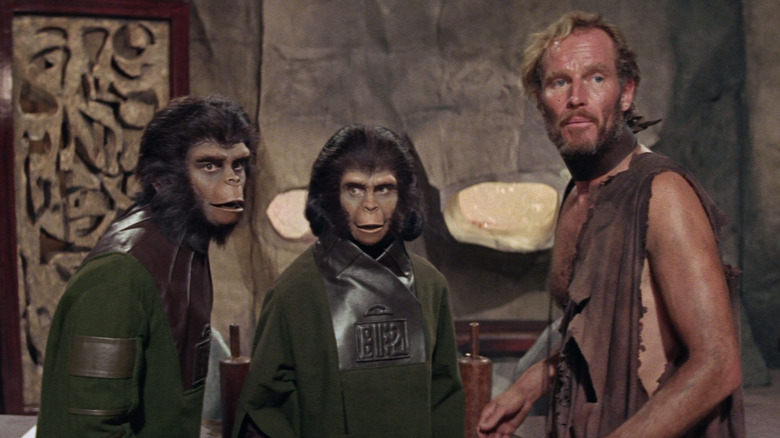
Another key element mentioned in the AFI Catalog entry on "Planet of the Apes" is that Rod Serling's draft of the film's screenplay had been completed in November of 1964, as reported in the New York Times. If Blake Edwards had gone ahead with this version of the script, his "Planet of the Apes" would indeed have been noticeably different than Franklin J. Schaffner's, as Schaffner ended up bringing in screenwriter Michael Wilson to rewrite Serling for the eventual 1968 feature.
For instance, the lead human character of George Taylor was named Thomas. He likely wouldn't have still been played by Charlton Heston, either, as it was Schaffner who tapped Heston for the role after working with him on "The War Lord" in 1965. Additionally, the most famous reason for Serling's original draft not getting made was its production expense, as the "Twilight Zone" creator tried to remain very faithful to Pierre Boulle's novel (which takes place in a bustling urban city filled with sentient apes). It was Schaffner who elected to bring down filming costs by setting the tale in a much more primitive (and, thus, less costly) village.
Still, Serling's draft was the one that instituted the movie's infamously bleak twist ending, indicating that "Apes" under Edwards' direction wasn't going to be a frivolous yukfest. So, instead of pausing at the prospect of a Blake Edwards-helmed "Planet of the Apes," perhaps we should lament the fact that it never came to pass. Sure, film history and the "Apes" franchise may have turned out markedly different, but a big-budget sci-fi thriller set in an ape city with that twist ending does sound pretty keen.