

Why The New Faces Of Death Movie May Be The Most Complex Horror Movie Of 2026
Few films exist in a state of generational infamy quite like John Alan Schwartz's 1978 mondo horror classic "Faces of Death." Branded as a collection of authentic snuff films, the faux-documentary centered on a pathologist named Francis B. Gröss (Michael Carr), who assembled clips of "real life death" for scientific exploration. While the major set pieces of the film were nothing more than movie magic and practical effects, legitimate news footage was interwoven between the fictional kill sequences helped trick the mind into thinking "Faces of Death" was the real thing. Copies circulated on grainy VHS tapes, the cover art boasting that it had been "Banned! In 46 Countries!" It became the first "viral video," one passed down from childhood friends' older brothers and video store clerks willing to keep kayfabe alive.
"Faces of Death" maintains a notorious reputation nearly 50 years later, with even the most hardcore of horror fans exhibiting mild trepidation when asked if they've ever seen it. I saw it for the first time in 2004, after illegally downloading it from LimeWire onto my family's desktop computer in a desperate attempt to "prove" that I was "tough enough" to handle it. This was the era of shock sites like Rotten.com and the re-emergence of ultraviolent cinema after the success of "Saw," but it was the lore that surrounded "Faces of Death" that kept my finger hovering over the mouse, terrified to click "Play."
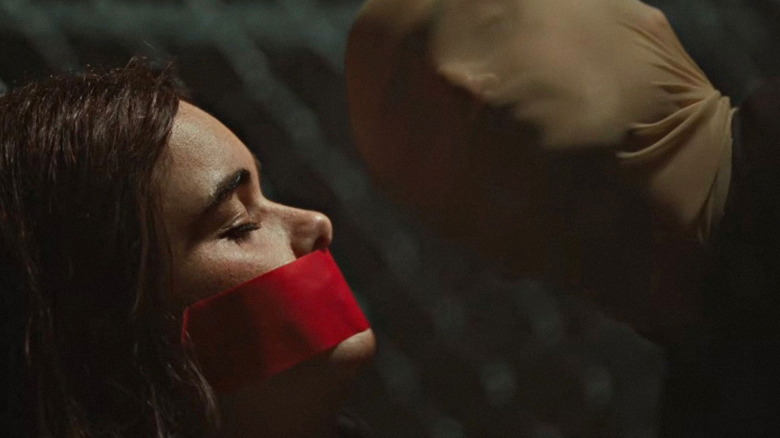
Daniel Goldhaber and Isa Mazzei's 2026 reimagining, also called "Faces of Death," is the infamous mondo movie reborn as a smart meta-slasher exploring the proliferation of potential snuff cinema in an era when the average person is inundated with a non-stop barrage of real-life depravity without their consent. "Faces of Death" has evolved into a complex indictment of our times.
Faces of Death sparked a moral panic
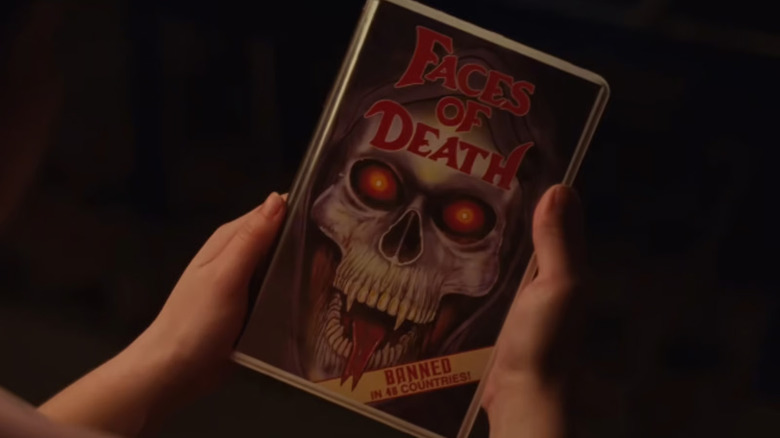
In 2008, special effects artist Allan A. Apone confessed to AMC that roughly 40% of "Faces of Death" was completely fabricated, while 60% of the film was repurposed genuine footage with enhancements such as sound design and effective editing. While viewers today who have consumed a healthy diet of practical gore effects in horror can easily look at the film today and tell when the ritualistic murder of a monkey for rich weirdos to eat its brains switches from an actual animal to a fake head with a dyed cauliflower brain, the average audience member wasn't nearly as savvy back in 1978, and the average politician was even less so (if you can believe it).
"Faces of Death" was one of many controversial films of this period lumped into a moral panic and attacked by the National Viewers and Listeners Association in the United Kingdom. The group used the Obscene Publications Act of 1959 to weaponize law enforcement against the possession of films deemed offensive, birthing a list of 72 films colloquially known as the "Video Nasties." The classification only boosted the films' popularity, turning low-budget horror films that would have likely languished in obscurity into infamous cult hits and must-sees for horror fans. The "prosecuted" label only made viewers more defiant in their desire to see what institutions tried to keep hidden, essentially creating the horror genre's version of the "Streisand effect."
Adding to it was the legitimate issue of a California high school math teacher who showed the film to his classes, leading to national headlines like "Snuff Video is Found in School." The second the title became something parents needed to fear had the potential of corrupting their innocent, precious babies, there was no putting Pandora back in the box.
Depraved material had to be sought out
Morbid curiosity is a healthy and completely normal aspect of human nature, as it allows us to explore our fears, gain knowledge about dangerous situations without putting us in any tangible peril, and build psychological resilience. It's actually been proven time and again that those who engage with morbid topics like horror or true crime have a stronger grasp on emotional regulation and handle distressing environments better than those who do not. But until very recently, graphic imagery of "taboo" subjects — real or fiction — was not easy to come by.
Countless horror lovers have waxed poetic about stealing issues of Fangoria Magazine from older siblings, begging video store clerks for the extreme stuff hidden behind beaded curtains next to the adult films, or blindly buying random tapes at swap meets. I'm not talking about movies that are so intense that horror fans couldn't finish them, but footage of actual death, over-the-top horror, or pornography. The latter was significantly easier to come by than the former, but even that was reserved for specialty stores or discarded piles in the woods. It was rare to just happen upon these sorts of images or films; to see them, you had to want to see them.
The lack of accessibility led to stigmatization. It wasn't commonplace to consume dubious material, so making the conscious choice to seek it out indicated a moral failing. "Why would you want to look at something like that?" was seldom asked in good faith, and instead lobbied as a mark of moral failure. If someone had admitted to seeing — let alone enjoying —a film like "Faces of Death," you were a sick freak, a menace to society, and a bad influence to those in your community.
The internet and the proliferation of disturbing material
Thanks to the advent of the internet, accessibility of disturbing material is significantly easier. In the early years, graphic content was limited to niche spaces and, as with seeking out physical media, required an active and deliberate effort to track it down. Websites like eBaum's World and Rotten.com prided themselves on being bastions of online free speech, but also doubled as archives of macabre history. Rotten, for example, was one of the first places to host images of those who jumped out of the World Trade Center on September 11, 2001. These sites ran on user submissions, leading to the upload of autopsies, crime scene footage, and previously unseen historical records that were not publicly available. Visiting these sites became a rite of passage, a way to flex with the press of a button that you could withstand the worst of the worst.
Today, widespread connectivity, social media platforms, and algorithms have all but removed any of the barriers. Content can be uploaded instantly or livestreamed from anywhere in the world and shared globally within seconds. A single scroll on a social media platform can jump from adorable dog videos to cooking tutorials to a genocide happening in real time. As a result, users may come across disturbing videos even when they are not actively searching for them. Features like autoplay, recommendations, and trending feeds further increase the likelihood of accidental exposure.
Moderation systems exist, but the sheer volume of uploads and the profitability of stoking outrage create gaps where graphic material can spread before being removed. It's no longer "if" we're going to see something deeply messed up, but "when." The choice to seek out explicit material has been taken from us. It will be thrust upon us whether we want to see it or not.
Faces of Death (2026) gives new meaning to choosing horror
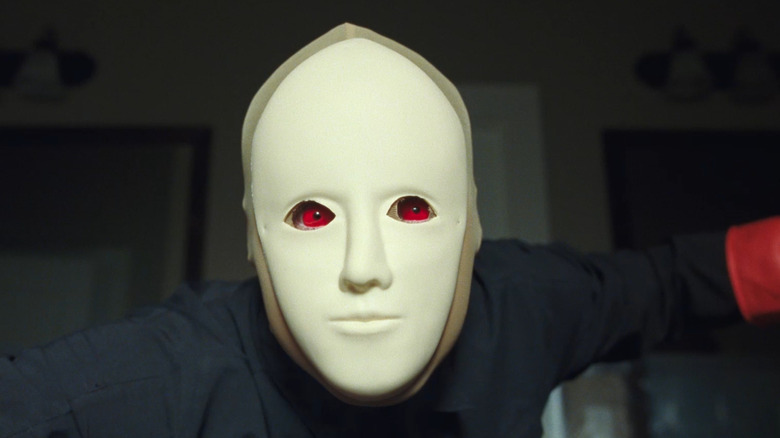
In an era of endless remakes and franchise pictures, questioning why anyone would remake "Faces of Death" is understandable. But in the face of a chronically online society bombarded with AI slop nestled between real-life footage of grotesquerie, it's a title that makes the most sense to reexamine. Or, as the filmmakers themselves admitted during a recent Q&A, "it is an exploitation of an iconic exploitation film." How does exploitation cinema exist when our reality drops monstrosities in the literal palms of our hands? How do you shock an audience that views actual human suffering as banality? How do you strike fear in the hearts of people living in a timeline where mass shootings are so common they barely make the news cycle? How do you make a horror movie that will never be scarier than what we see every day on our phones?
"Faces of Death" (2026) understands that the world is completely different from what it was in 1978. The goal is no longer simply to shock audiences, but to deliver a compelling story that audiences choose to see. Horror movies have always been a vital balm to the hells of reality, but there's an argument to be made that, in our current landscape of memeifying assassinations and images of children with limbs blown off becoming something people scroll past with the same ease as rejecting someone on a dating app, they're more necessary than ever.
Choosing a horror movie allows us a sense of control over the morbidity we see. Choosing to watch "Faces of Death" in 1978 meant you were a disgusting creep, but choosing "Faces of Death" in 2026 is regaining a sense of autonomy with our relationship to atrocity.