

For All Mankind Season 5 Changes Everything For Apple TV's Sci-Fi Epic

Apple TV's "For All Mankind" is a phenomenal sci-fi series set in an aspirational world where science and technology are the priority. Sadly, it also takes place in an alternate version of history. Still, this allows "For All Mankind" to explore all sorts of cool things in its timeline, like streaming potentially never happening. Moreover, humanity has colonized Mars by the early 21st century in this universe.
Indeed, after humans land on Mars in season 3 and populate it with workers in season 4, "For All Mankind" season 5 is all about what it means for people to call Mars home. This changes everything for the series and will serve as the crux of its plot going forward. But as co-creator Ben Nedivi told io9, season 5 is about generational change as well:
"Every year, I think, reflects the theme we're trying to capture that season. So, last year, season 4 was about workers on Mars. This season is about Mars being a home and what that means. The identity of being a Martian. And then you needed these children, these younger characters who have that tie to Mars and what that means to be someone [...] who grew up on Mars, where [...] that's the small town and Earth is the exotic place. It's like a flip on how we usually look at Mars."
These younger characters include Alex Baldwin (Sean Kaufman) and Lily (Ruby Cruz). The former is the son of Kelly Baldwin (Cynthy Wu) and the grandson of Ed (Joel Kinnaman), the face of the show since day one. Lily, meanwhile, is the daughter of Miles (Toby Kebbell), a worker on Mars who was a key figure in season 4's uprising. For Alex and Lily, Mars is home, rather than Earth, which creates some big tension.
Mars fighting for independence will be the crux of For All Mankind season 5

While "For All Mankind" is a pretty hopeful show set in a much brighter timeline, it is not without conflict. The first three seasons are full of Cold War paranoia and competition, with the U.S. and the Soviet Union engaged in a space race (with North Korea eventually joining the fray, too). However, season 4 changed things by focusing on class warfare, with blue collar workers on Mars fighting to be treated fairly by Earth governments and the private companies running things on the red planet.
Now, those same folks call Mars home. More than their workplace, it's become a planet where families have lived for a decade. "For All Mankind" season 5 is even building up to a full-blown crisis right out of an anime show, possibly culminating with a fight for independence. After season 4's asteroid heist storyline, season 5 reveals that Earth is punishing the Happy Valley base on Mars by turning it into a surveillance state that resembles the post-9/11 U.S., increasing its peacekeeping security presence, and more. Fortunately, we're already seeing signs of Mars becoming independent in the future. Ed, for example, is overseeing meetings promoting independentist ideas, while Helios founder Dev Ayesa (Edi Gathegi) intends to build a self-sustaining Martian city that would be able to function as a permanent, fully independent settlement.
As alluded to earlier, the idea of space colonies fighting for independence from Earth echoes one of the most influential sci-fi anime series ever: "Mobile Suit Gundam." It also seems like the next logical step that "For All Mankind" could take, seeing as it's all about moving towards a "Star Trek"-like future where humanity has conquered the stars. But it doesn't end here.
For All Mankind will look beyond Mars in its sixth and final season
As co-creator Matt Wolpert told io9, though, the show's writers didn't want "For All Mankind" and its theme of space exploration to just end with Mars. "The spirit of exploration was really important for us to continue moving forward," Wolpert explained. "And the search for life in the solar system felt like the right way to kind of motivate that."
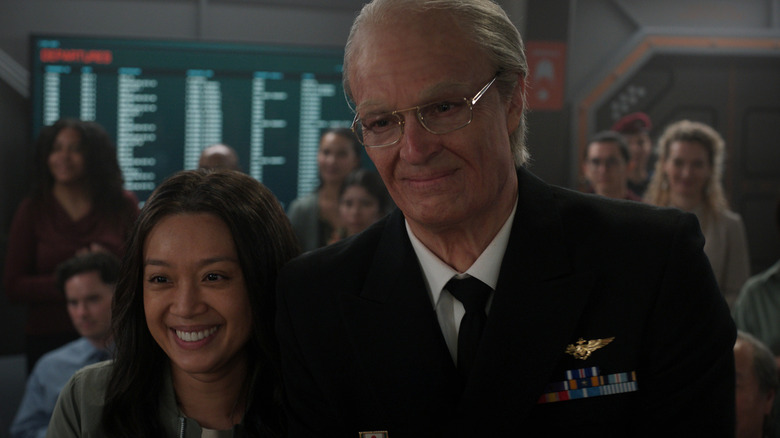
The "For All Mankind" season 5 premiere is already hinting that the search for life will drive the next major technological race in the show, even teasing expeditions to Jupiter and its moons. And with this being a generational story, it wouldn't be surprising if Kelly or even Alex led the charge as humanity expands further out into the solar system. With Ed seemingly beginning to face his mortality, it's time to pass the torch.
It's now been confirmed that "For All Mankind" will end with season 6, at which point its alternate timeline will have caught up to our present-day reality. What kind of future will the series face? Will humanity find life elsewhere? Will there be a fully independent Mars along with colonies on other planets? Heck, will Ed actually die or become a robot? We'll have to stay tuned to find out.
"For All Mankind" is now streaming on Apple TV.