

Why Mike & Nick & Nick & Alice Opens With An Unexpected (And Very Specific) Song [Exclusive Interview]
Warning: This article contains spoilers for "Mike & Nick & Nick & Alice."
I was a huge fan of "Scott Pilgrim Takes Off," the Netflix animated series co-created by original "Scott Pilgrim" author Bryan Lee O'Malley and filmmaker BenDavid Grabinski ("Happily," "Are You Afraid of the Dark?"). The show did not simply remake Edgar Wright's 2010 movie "Scott Pilgrim vs. The World" or even just rehash the existing beats from the book series, but instead used that foundation as a launchpad for a fresh story that felt more like a remix than a remake. It was a bold, creative approach to working with intellectual property, and I was so impressed that I made sure to show up for whatever Grabinski did next.
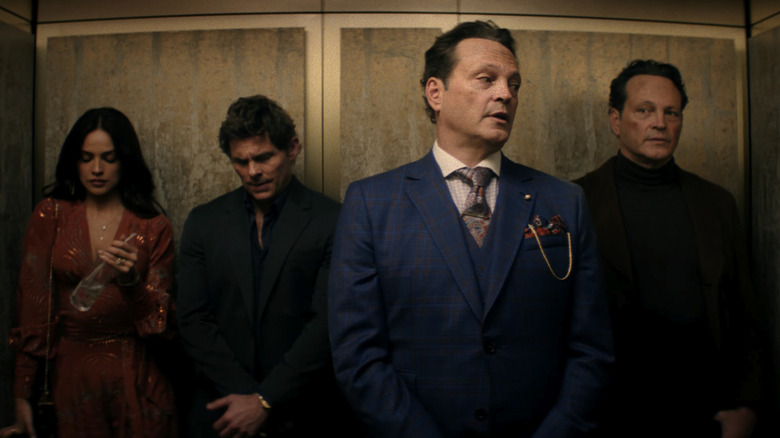
That next project has now arrived. "Mike & Nick & Nick & Alice" is a sci-fi movie with a terrific cast (Vince Vaughn, James Marsden, Eiza González, Ben Schwartz) and solid action. Grabinski's script balances sci-fi elements with tons of great jokes and some unexpected heart; the movie feels modern, yet also like a throwback to the type of adult-driven films that used to dominate the box office in an earlier era of Hollywood.
I caught up with Grabinski a couple of weeks before "Mike & Nick & Nick & Alice" premiered at the SXSW Film Festival (it's streaming now on Hulu) to talk about that delightful opening sequence, the technical challenges of getting two Vince Vaughn performances in the same frame, whether we'll ever see a sequel, and more.
Note: This interview has been lightly edited for clarity and brevity.
Mike & Nick & Nick & Alice opens with a 'song from an animated dog picture'
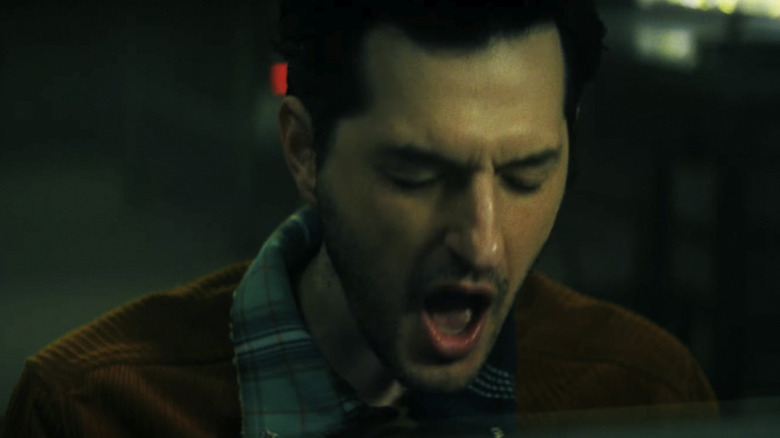
I was on board with this from the second that I realized the opening song was "Why Should I Worry?" from "Oliver and Company." So why that song?
BenDavid Grabinski: I have to tell you one of the funniest moments of the entire making of this movie was in pre-production, I had to request two songs because they were used in the movie. I planned about 90% of them and then some of them changed later, but I had to, in advance, clear this song and Oasis way early. The Oasis one, we cleared before they decided to have a reunion. I think if I hadn't been really prudent and tried to get it, I would've gotten a lot of trouble. But I requested this and I remember vividly my line producer, Richard Middleton, who I love dearly, walking into my office in Winnipeg in pre-production and saying, "Are you aware you've requested a song from an animated dog picture?" And I said, "Yes, I'm aware that the song I chose is from 'Oliver and Company.'"
The scene itself amuses me on a lot of levels because on the page, it was maybe a paragraph, and it didn't really seem like anything. And I really wanted Ben Schwartz for it and I offered it to him. The word I heard back was, "He's interested, he really likes the script, but it sort of feels like it's not much of a scene," because on the page it says, "There's a scientist in his lab, he's working on some things." I only had one sentence: "He's singing along under his breath to a song, and when there's a bright flash of light, a mysterious figure appears, he gets shot and dies." So [he was] like, "You just want me to show up, sit at a computer and get shot and die?" I'm like, "So, let me show you some storyboards."
We got on a Zoom, and my storyboard artist [Mark Sexton] did "Fury Road" and "Furiosa" — he's like a genius — and I boarded every shot of it. I had my concept art of the lab. and I walked him through the scene and he's like, "Oh, so it's like a musical scene?" I was like, "Exactly." My whole feeling about it was that I haven't seen a time travel movie open this way. I haven't seen the Doc equivalent in a time travel movie kind of behaving this way. And why not have a big opening?
It's one of those things where I didn't really tell anyone I was doing it except for Ben and my crew. I remember a lot of people on set kind of realizing, "Wait, we're spending about 10 hours shooting Ben Schwartz singing a Billy Joel song from 'Oliver and Company' in these big fancy shots?" And I was like, "Yeah, man, this is the big opening of our movie." I think in general, I just did want this to feel like a movie that, every five or eight minutes, turned in a way that kept you on your toes. If you've never seen the trailer or don't even know the premise, it has to be even more loopy. But that ... I have to imagine most people don't expect the movie to open that way.
Definitely not. I mean, I grew up watching those Disney sing-along VHSs –
Me too.
– and that song was in one of those, and that was my favorite one as a kid. But why did you choose that song? Why was it important for that to be the one?
It just felt like something his character would be into. I also just really like the idea of a guy who is a really dumb, smart person. Because he borrowed money from the mob, and Alice said, "Don't do it." And before he gets killed for the mistake, he's singing, "Why should I worry? Why should I care?", which is more of a second viewing kind of added thing to it. I loved the song, it felt like the right energy, and it has kind of an added ironic level of humor the second time. He's just so carefree, and he's doomed because he shouldn't have borrowed money from the organization.
Man, that's great. Ben Schwartz just always puts a huge smile on my face, so it started off really, really wonderfully.
The movie required a ton of planning to pull off Vince Vaughn's convincing dual performance effect
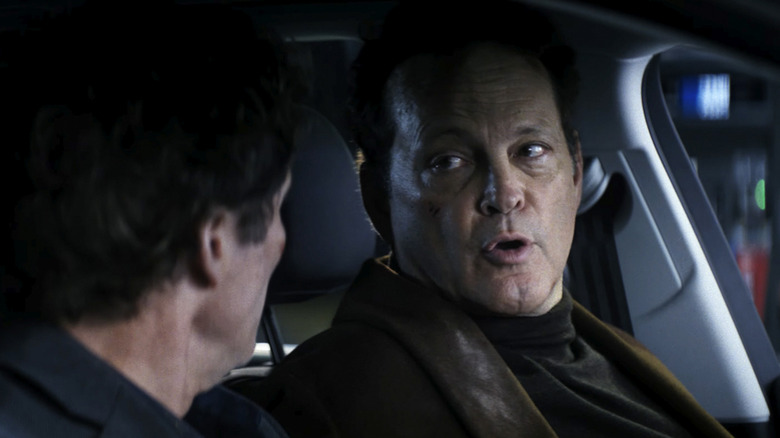
I was super impressed by the way that you were able to make two Vince Vaughns in the frame feel really natural. I thought those performances were very distinct and easy to track and everything looked super seamless. But was there ever a moment when you were filming the movie where you were kicking yourself as a writer for writing a scene a certain way, where maybe it was especially difficult to accomplish what you needed?
It's actually the opposite of that. I felt like there was a time when I was writing things to direct where part of my brain was thinking of the degree of difficulty of things. And with this, in every aspect, I turned that off — in terms of combining genres, complicated tone stuff, stuff that's technically complicated, and also, I've never directed a frame of action before. So it is almost designed to be as difficult as possible because the challenge of it felt worth it. It felt like I should only be chasing what feels correct creatively. The emotional and thematic thing about it requires it to be one guy playing two people. And if I started thinking about how much of a pain in the ass it would be, it would get in the way of the movie.
I remember so specifically the first couple meetings I had about motion control in prep, I needed to take a break after because I had a literal headache. I'm a big prep guy and I'm a big, big believer in figuring everything out in advance, because then you have freedom to change everything. But I needed to figure out how to do it. And the degree of difficulty of it was so much more complicated than I expected. You really only should be doing it in a movie that's like a tentpole-level budget.
This is the best example I can give. There's a scene when the two Nicks are walking down the hallway to his apartment after they get out of the elevator. That requires a giant motion control camera on a rig that is coming all the way back to the end of the hallway, and then you have to repeat it.
But the issue is, that's a gigantic set. You have to find a soundstage big enough that the crane can fit outside of it that has the entire motion control rig on it. And you have to figure out in a 3D map how much distance I need outside of the actual set, within the sound stage, to fit the crane in order to have just a walk-and-talk.
Wow.
It's just a simple thing, walking down the hallway. And I'd have countless meetings about it. Then we went into a soundstage and taped everything up to see how it would go. And then we had two people walking and we had to figure out like the distance between the lens and the person to get the shot. We had to build the entire set just to have that shot. And it's just two people talking. It's one of the least complicated moments in the movie if it was two actors. You couldn't do Steadicam, because you can't have a Steadicam rig repeat itself in motion control. I understand cinematography and production and how to do a lot of things, but I did not know how to do this, so I had to figure out how to do all of it.
Then you have to figure out how to do it with an actor where you're not impeding their process, because Vince is a guy who's pretty loose, but you have to get things exacting when he's interacting with himself because you can't mess with it. We'll spend hours doing one side of Vince and hours doing the other side, and the A and B takes have to match. So that becomes its own challenge as well, where you don't want to get in the way of an actor doing what they do best by putting restraints on them, but there are. Anyway, this is a really long way to say that, yeah, it was a pain in the ass, but worth it.
How Vince Vaughn reacted to the meticulous nature of making this movie
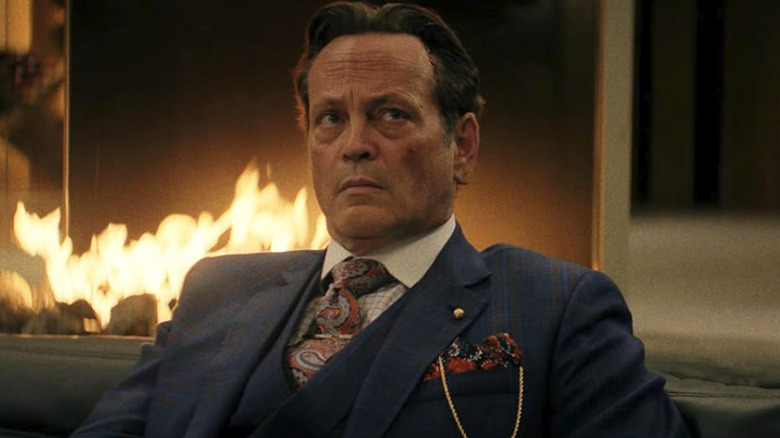
How did Vince react to the practicalities of what that actually looked like on the day? I imagine you can talk about it in prep or in early meetings with him, but then actually being there and doing it ... I don't think he's done anything quite like that before. So what was that like for him?
We did a test about a week out to sort of start to get the hang of it. And then I designed it so the first few days of it didn't have a lot of moving camera stuff. So there's a learning curve, because he's the most experienced actor on the planet, but it is a new thing. We had this actor who would be in the scene as the Nick, we'd have to decide which one we're starting with, and then also discuss with [Vince] if he prefers to start with one. But then you end up with this math of, "Okay, well, this means we have this many costume changes and makeup changes to switch," which is a not interesting headache, but it exists. But it's something I think he found very interesting, but at first, we just all had to figure out. Because he has to have an earwig in his ear and hear what he did the previous time and work within it. And that's just a different thing than acting against a person and just reacting to them.
You want your movie to not seem difficult. You want people to just enjoy it. You shouldn't watch it and think of how hard or easy it was to make a movie. But it all worked out, and I'm excited about it, but the first, I'd say like 40% of the process, including prep, was sort of just learning and doing a crash course and stuff. Unfortunately, by the end, I feel like I really got the hang of it, but I don't think I'm going to do it again. [laughs]
Mike & Nick & Nick & Alice is full of unconventional humor
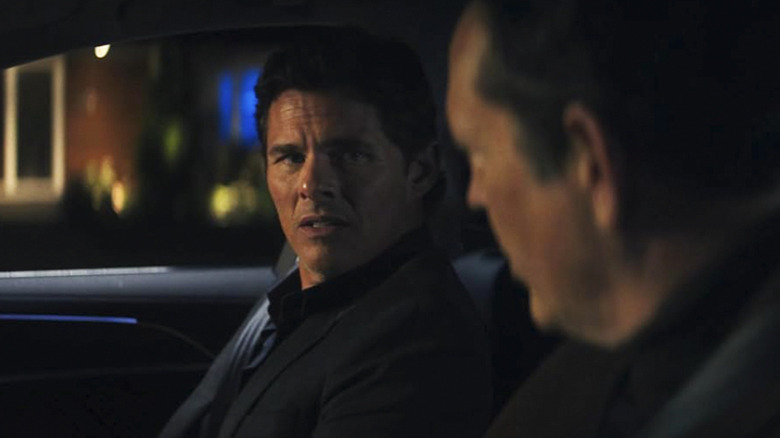
One thing that I thought was unusual about the movie is that characters will often make a reference to something, but the person they're talking to will have no clue what is being referenced. It's very funny, but those struck me as moments that maybe an executive might read in the script and be like, "Hey, can we cut this?" Did you have any pushback at all at any point of making this?
The interesting thing about this is the reason I made it with 20th [Century Studios] is they were the first people who read it and recognized that all of these things kind of add up to one thing. They didn't feel like, "Yeah, we like all of it, but do you really need the 'Gilmore Girls' references?" Or, "Yeah, we like all of it, but do you need this thing?" That was very helpful, because you either sort of get it or you don't. I understood that it would all work in context, and I just do think those things are very funny. I was just lucky in the fact that the studio understood my point of view on the movie tonally and the cast did too.
But that's one of those weird runners where you're not really sure ... I wrote all of them. The only one I made up on set was the Winnie the Pooh one because I was just really enjoying the chemistry between Jimmy [Tatro] and Keith [David], and I pitched him the "Pooh loves honey" thing and then Keith, his response, and I was sort of finding it while we were shooting.
But yeah, there is kind of just this weird runner of, whenever someone is talking about a pop culture thing, they're talking to someone who doesn't know the thing. I don't know why. It just seemed funny, and it seemed funnier the more I did it, but I didn't know if people would sort of lock onto it. Then I remember at a test screening, like multiple people wrote down — you write your favorite funny scenes, and people would write something to the equivalent of, "I really liked whenever someone would reference something and someone didn't know what it was." [laughs] I'm like, "Okay. All right."
Will we ever see a sequel to Mike & Nick & Nick & Alice?
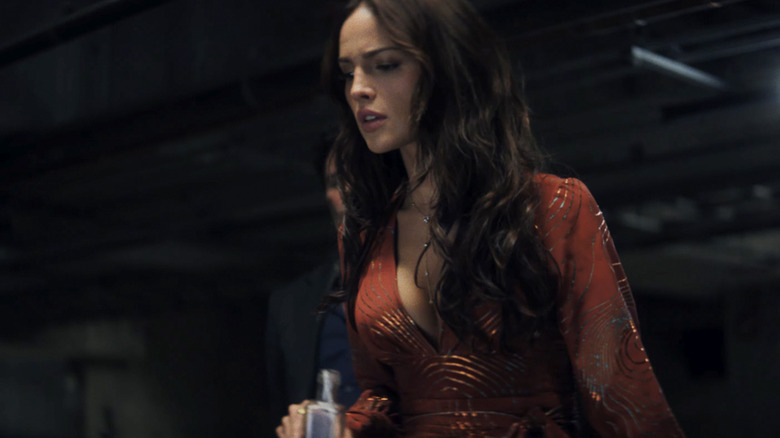
I'm just realizing you said you learned all this stuff and you probably don't think you're ever going to put it into use again. Does that mean that you're not interested in making a sequel to this? Because, in the moment, I thought the final scene of this movie was just a really good way to end a film. Then, afterwards, I kept thinking about it and I was like, "You know what? I actually wouldn't be opposed to watching a sequel to this if you're interested in making one." So is that not something you're really thinking about in a serious way?
Well, I don't think that way at all. To me, it has to be self-contained and I just ... I put everything into making the movie I wanted to make that did what I wanted it to do. I could wake up six months from now and have an epiphany of what I want to do, but I just sort of felt like if creatively I was thinking about a follow-up, it would undercut what happens. I understand how someone could misunderstand the ending as maybe being a cliffhanger, but I think it's not. I think you see everything you need to see to know that somehow Mike is going to fix things. And you don't need to see him fixing things or how he does. You just need to know that Nick did a great thing for Mike, and now Mike's going to do a great thing for Nick, and that's kind of the emotional closure of the movie.
Totally. Yeah. It's more of just a projection from me of being like, "I really wouldn't mind spending more time with these characters because I enjoyed the experience so much."
I mean, if I woke up one day and had an idea I really liked, I could see something like that happening, but I wasn't really thinking more than a foot in front of my face this entire time.
Yeah, it sounds pretty complicated.
I wasn't even thinking like, "Will I make another movie? Will I make a sequel?" I like behaving as if everything is the last thing I get to make, and I've just gotta try to feel like I'm really stoked about it.
BenDavid Grabinski explains one of the biggest upsides to being a filmmaker
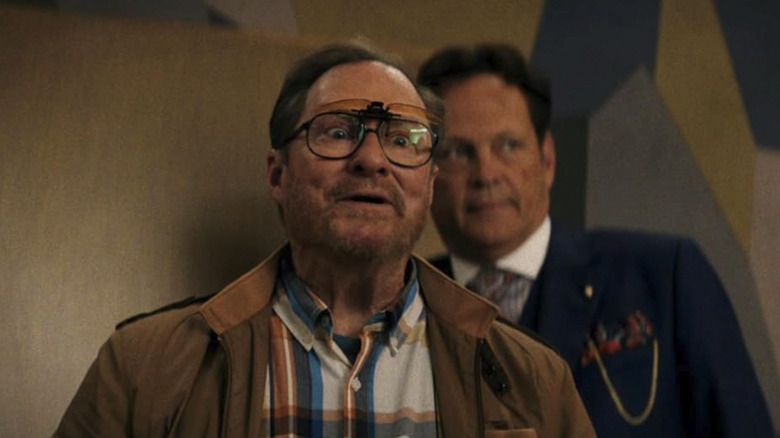
I don't want to take up much more of your time. I just wanted to ask you one more question: When you have incredible character actors like Stephen Root, who I know you've worked with before, or Keith David, who you alluded to, do you have time to ask them for stories about your favorite movies of theirs while you're working together?
Sir, what do you think? [laughs] If there's anything anyone would probably guess about me is that I'm not going to keep my enthusiasm to myself. I think one of the biggest benefits of becoming a filmmaker or having some level of success is you can get away with being a big fan even more. Because if a guy on the street walked up to Keith David and was like, "Hey, so I heard there's fight scenes with you that got deleted from 'Road House.' Can you tell me about that?" he'd be like, "What?" But if I do that on set, it just makes sense.
And Stephen Root and I have become friends. He's been in everything I made. He even does a voice of the nanobots in the "Scott Pilgrim" show, which he just came and did to make little gremlin noises in the finale. I wrote Chet for him, and part of it is just because he's such a good hang. I think he's one of the best actors in the world, and the voice of that character was clearly written for him.
But it's also so I can say, "Hey, so when you said 'pan shot' [in 'The Ballad of Buster Scruggs'], what was that like?" Or I can text him about, "Hey, I just watched 'Ghost.' What was it like being the detective in 'Ghost'?"
And Keith is ... there's a thing I did in there for him, and he was genuinely touched. I was talking about how much I like "Gargoyles" and he was saying his favorite line from that show was when someone got called "street pizza." So I rewrote a line and he got revised sides and he walks up to me and was like, "Am I going to say that Mike is going to be street pizza by morning?" And I was like, "Yeah." And he was like [imitates Keith smiling big and nodding], "Yeah." And it was just because we were sitting on set when we were shooting the club scene and he was talking about how much he liked the phrase "street pizza" on that show.
So sometimes you benefit from having those discussions. But Keith has been in too many things that I love. I unfortunately spent a lot of time talking about "Gilmore Girls" just because I accidentally found out he was a huge fan of it, and I could have spent that time talking about "Men at Work," but then I did already talk about "Men at Work" a little bit, so I think we're okay.
"Mike & Nick & Nick & Alice" is streaming now on Hulu.