

Project Hail Mary Author Andy Weir Did Not Hold Back About Black Mirror

"Project Hail Mary" is shaping up to be the best sci-fi movie of 2026. Andy Weir, the author of the book on which it's based, is currently doing the rounds to promote the film, and we're getting his takes on several topics. One such topic is the show "Black Mirror," of which it seems the writer isn't a fan. Why? Because it's mean to technology.
We live in a world that is essentially the product of unfettered technological advancement and proliferation. Today, some of the most powerful people in the world are tech company CEOs who, not content with having transformed the world via apps and devices, have used their newfound power and influence to subsume every aspect of our culture, from music to movies (Amazon MGM is the studio distributing "Project Hail Mary").
Meanwhile, the devices in our pockets are not only capable of monitoring every aspect of our existence, but have the ability to immediately divert our attention with a mere spasm. At the same time, the companies responsible for this state of affairs hold grandiose launch events for products on which they've barely iterated, wherein quarter-zip-clad cretins strut across stages heralding each new design as some sort of revolution.
So, you'd think that a bit of pushback against this new world order would be welcome. Well, as far as Weir is concerned, technology is very cool, actually, and any arguments to the contrary are ignoring the fact that tech "generally makes things better." That includes "Black Mirror," the award-winning sci-fi horror series that helped inspire "Severance" but which to Weir's mind is just simplistic anti-tech propaganda.
Andy Weir says Black Mirror is anti-tech
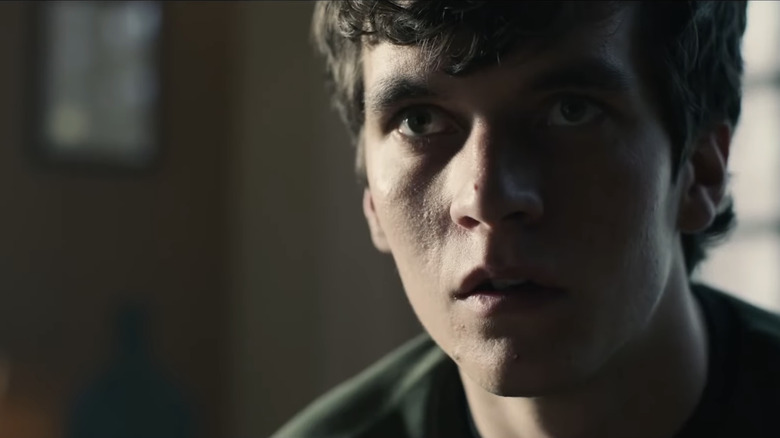
"Black Mirror" episodes range from great to disappointing but there's no doubting the impact this series has had. The show became popular precisely because it captured something fundamental about our inherent distrust of technology. But that doesn't mean it's fundamentally opposed to that technology. In 2014, "Black Mirror" creator Charlie Brooker spoke to The Telegraph and stated clearly that his show "isn't anti-technology." He continued:
"I'm quite techy and gadgety. I hope that the stories in this special demonstrate that it's not a technological problem [we have], it's a human one. That human frailties are maybe amplified by it. Technology is a tool that has allowed us to swipe around like an angry toddler."
Whatever you think of the show, then, clearly there's more to it than "technology=bad." Well, not if you're Andy Weir.
During an appearance Conversations with Tyler, Weir was asked for his take on the popularity of dystopian sci-fi. "There is sort of a technophobia out there, and I don't buy into it," he said. "I feel like technology generally makes things better. It's also why I really don't like the show 'Black Mirror,' because it's pretty much all about how technology is awful and will ruin the universe."
Aside from the fact the show is, as confirmed by the creator, very much not about how technology will ruin the universe, this is actually quite a disconcerting take from the "Project Hail Mary" author. The term "technophobia" seems like a vague attempt to cast skepticism of this all-powerful force in our lives as some sort of bigotry, which when coupled with Weir's remarkably incurious claim that tech "generally makes things better," gives off a subtly unnerving vibe, not unlike an episode of "Black Mirror."
Black Mirror is worthy of more than being dismissed outright
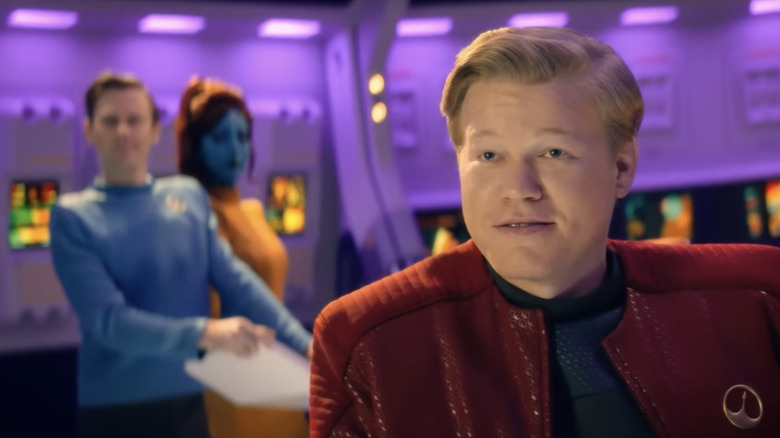
Andy Weir's comments on technology and "Black Mirror" are clearly informed by his belief that tech is generally a positive force. But he also seems to have been motivated in-part by his belief that a certain type of sci-fi storytelling has become trite. In his Conversations with Tyler interview, the author was asked about a supposed shift from pro-technology works of fiction from the likes of Isaac Asimov to more pessimistic sci-fi stories such as "The Terminator" or the "Hunger Games" movies. "I think lately YA fiction, young adult science fiction, has all been basically the same story told about 20 different times," he said. According to Weir, that story is "a dystopian future with a semi-fascist government and plucky young upstarts fighting against it," which, while "interesting" has in the writer's estimation "been done to death."
That line of thinking is much more palatable than the take that "tech is good, actually." The discourse around this stuff is more important than it seems, too. Much like with "Black Mirror" being more nuanced than "tech=bad," there is a more complex debate to be had here. Nobody could argue that technology has absolutely no benefit. But the entire discussion is taking place within the framework of a world in which technology has essentially won already. Creatives like Weir should feel exhilarated at the prospect of challenging and undermining its dominance with their art, especially since the age of social media has meant the negative effects of technology have become more excruciatingly obvious than ever. If "Black Mirror" — one of the best sci-fi shows ever made — has helped to promote any kind of debate on the topic, it's worthy of more than being brushed off.