

HBO's First Theatrical Release Was A Western Flop That Divided Critics
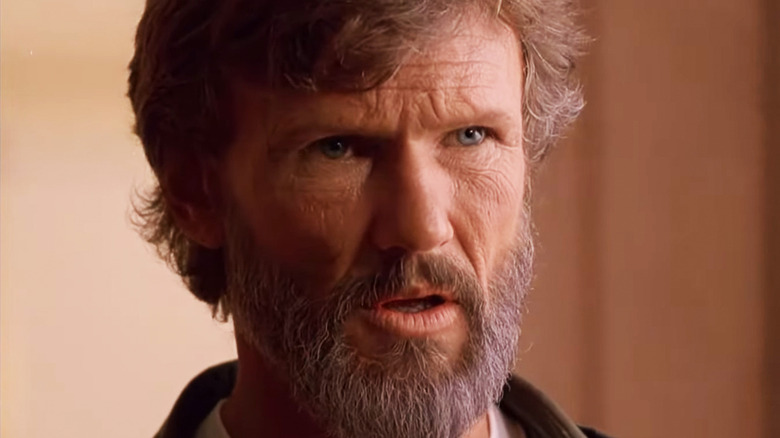
Over a decade before he played Abraham Whistler in "Blade," Kris Kristofferson starred in HBO's first ever theatrical release. Sadly, the 1984 neo-Western "Flashpoint" failed to be much of a flashpoint for anything beyond lukewarm reviews and lost revenue for HBO.
25 years ago, "Blade" was a great comic book movie before comic book movies were cool. One year after 1997's "Batman & Robin" brought the entire concept of the superhero blockbuster into question, "Blade" arrived amid a swirl of leather-duster-and-shades-clad '90s cool to prove that comic book films still had a lot to give. Alongside Wesley Snipes' Daywalker was Kristofferson's Whistler, who acted as a mentor and "man in the chair" for the titular hero, constructing weapons and orchestrating a war on vampires from the duo's secret hideout.
Immediately, then, Kristofferson became recognizable to '90s kids as Blade's right-hand man. But older generations remembered him for his raw country stylings as a musician and his roles in multiple films throughout the '70s and '80s. Unfortunately that included the time Kristofferson starred in "Heaven's Gate," an infamous box office bomb that pretty much killed the Western genre. That 1980 dud wasn't the only Western misfire that Kristofferson fronted in the '80s, either. HBO was hoping the man's star power would help carry their first theatrical project to success, but "Flashpoint" proved to be almost as big a disaster as "Heaven's Gate."
Flashpoint was supposed to be HBO's triumphant theatrical debut
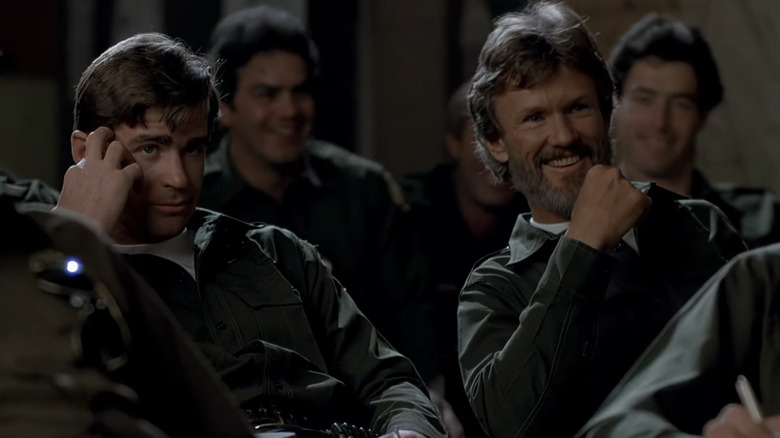
Abraham Whistler actually made his screen debut in a Spider-Man cartoon before Kris Kristofferson took on the role in 1998's "Blade." But it was Kristofferson that made the character memorable. Unfortunately, the same can't be said for the role of Border Patrol agent Bobby Logan, Kristofferson's character in "Flashpoint."
According to the American Film Institute, the film was the first production of Silver Screen Partners, which was a joint venture between HBO and Columbia Pictures. For its debut project, the company chose William Tannen to direct, who had previously only ever produced and directed commercials. With Tannen in the director's chair, Kristofferson set to star, and Tangerine Dream providing the score, "Flashpoint" was supposed to be the company's grand foray into big screen filmmaking. It was anything but.
The movie was based on George LaFountaine's 1976 novel of the same name and adapted by Dennis Shryack and Michael Butler, who a year after "Flashpoint" would co-write one of the best Westerns of the 80s with Clint Eastwood's "Pale Rider." Their 1984 effort wasn't making any such list. Kristofferson starred as Logan alongside Treat Williams as fellow Border Patrol agent Ernie Wyatt. While on the job, the pair discover a jeep buried in the Texas desert with a skeleton and a toolbox containing $800,000 inside. Suspecting the loot came from a 1960 bank robbery, Logan and Wyatt decide to keep it for themselves. Soon after, however, they discover that the money might well have been connected to an infamous 1963 assassination that occurred in Texas — yes, that one. When the FBI starts to show significant interest in the car, the Border Patrol agents are placed squarely in their crosshairs.
Flashpoint nearly ended HBO's theatrical project before it had started
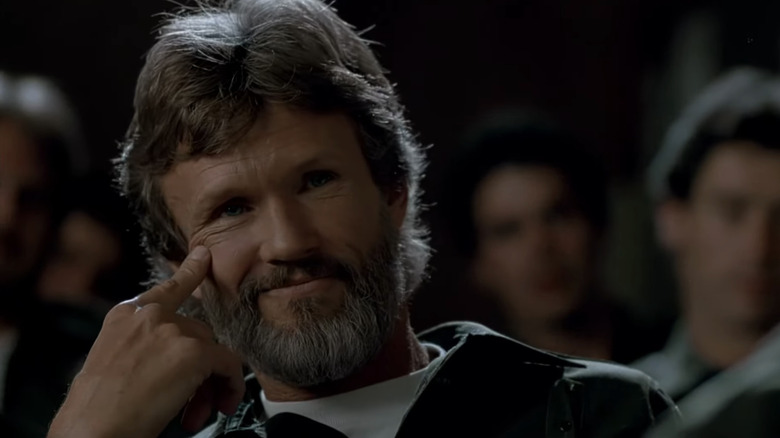
HBO was obviously hoping for a grand debut at the box office with "Flashpoint." Unfortunately, the neo-Western action thriller failed to deliver, making just $3.8 million on a $10 million budget — not far off the $3.5 million grossed by "Heaven's Gate" (though in that case the movie cost United Artists somewhere between $30 to $40 million).
The reviews for "Flashpoint" were less disastrous but far from glowing. The film maintains a 57% critic score on Rotten Tomatoes, with Roger Ebert describing it as "such a good thriller for so much of its length that it's kind of a betrayal when the ending falls apart." According to Ebert, that ending was so egregious due to fact a "key character conveniently appears out of nowhere at a crucial moment, explains everything, and resolves Kristofferson's dilemma." Otherwise, he seemed to like the film quite a bit, complimenting Kris Kristofferson and Treat Williams for their "interesting, low-key performances" and the film for establishing a believable world from which the plot naturally emerges.
Others were less impressed. Kevin Thomas of the Los Angeles Times described "Flashpoint" as "badly contrived" and "intent on self-destructing," though he also praised Kristofferson and Williams' performances. Hank Gallo of the New York Daily News was even more critical, however, stating that "There isn't even one riveting minute of film here."
Despite such a terrible start, with "Flashpoint" falling far short of becoming one of HBO's best movies, this wasn't the end of HBO's theatrical releases. "Heaven Help Us" followed in 1985 ahead of "Volunteers" and "Sweet Dreams" that same year. More came over the course of the following decade, which is kind of amazing considering "Flashpoint" nearly killed the whole enterprise before it had even begun.