

George Lucas' Star Wars Theory About Why Kids Love Darth Vader So Much Is Fascinating
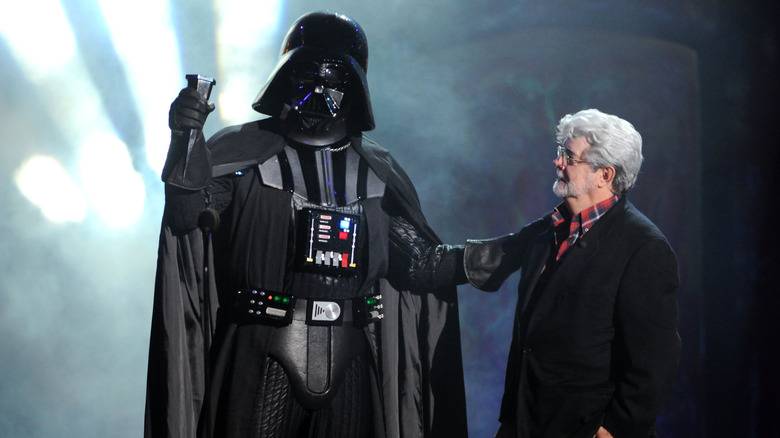
"Star Wars" is filled with beloved characters who've practically become archetypes unto themselves: the roguish Han Solo (Harrison Ford), the wise gremlin Yoda (Frank Oz), the satanic Emperor Palpatine (Ian McDiarmid), etc. But if you had to pick the single most popular, influential character in "Star Wars"? It's Darth Vader (James Earl Jones/David Prowse), the masked black knight and evil reflection of his son, Luke Skywalker (Mark Hamill).
Darth Vader is probably the greatest villain in pop cinema ("Fullmetal Alchemist" author Hiromu Arakawa agrees, as do many others). The "Star Wars" prequel trilogy cemented Vader's growth from a supporting villain to the lynchpin of the whole saga. As scary as Vader can be, even kids love him. The first time that I learned about "Star Wars" was seeing Darth Vader on a cereal box, and I instantly wanted to know more about him.
In a 1999 interview with journalist Bill Moyers, "Star Wars" creator George Lucas discussed kids' affection for Darth Vader. Lucas believes it's because Vader is so powerful, but he offered a fascinating insight into why kids are so attracted to power fantasies.
"Children love power because children are the powerless. And so their fantasies all center on having power. And who's more powerful than Darth Vader, you know?"
You can also see this in how kids also love superheroes. One of those superhero-loving kids' favorite pastimes is debating which of their favorite heroes (say, Batman or Captain America) would win in a fight.
Lucas further observed how Vader being revealed as Luke's father only reinforced his strength. When you're a kid, your father is your personal symbol of ultimate power. Yet Lucas always wrote Vader's strength not to be admired, but feared — both through the violence he can inflict and in how that strength has corrupted him.
Darth Vader's strength has always been a cautionary tale
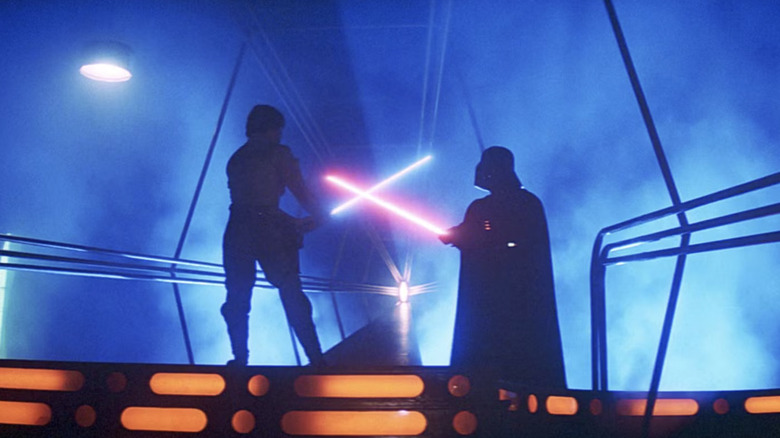
The original "Star Wars" trilogy shows that being a great Jedi Knight is not necessarily about being the strongest warrior there is. The dark side of the Force is "stronger" only in the sense that it teaches no restraint. As Yoda tells Luke in "The Empire Strikes Back," the dark side is "quicker, easier, [and] more seductive." These teachings essentially fuse Christian theology (that evil is always tempting but you must resist it) with more Eastern philosophies (that only inner balance can bring enlightenment).
In doing so, "Star Wars" acts as a cautionary tale against worshipping power and strength above all else. In "Return of the Jedi," Luke does defeat Darth Vader, but spares his life, and Vader in turn sacrifices himself to save Luke. As Vader's dies, his intimidating mask is removed, and we see the sad old man (Sebastian Shaw) he always truly was.
The "Star Wars" prequel trilogy extends the cautionary tale by showing Vader's fall firsthand. "The Phantom Menace" gets a lot of flack for introducing Anakin Skywalker (Jake Lloyd) as a child, and it wasn't the best long-term choice for the trilogy's story. But Lucas' comments about why powerless kids revere Darth Vader puts the choice in a new light.
Anakin isn't just a child when we meet him — he's a slave, the most powerless person you can imagine. Of course he covets power, and initially he wants to do good; his childhood dream is becoming a Jedi and using his power to free all the slaves. As he grows, the older Anakin (Hayden Christensen) wants the ultimate power, control over life and death. Like Victor Frankenstein, Anakin's pursuit of that knowledge leads to his downfall.
The price of power is often your soul.
Star Wars fans fell too in love with Darth Vader's power
Darth Vader embodies everything that Luke Skywalker must not become. But did kids watching "Star Wars" get that message? As George Lucas said to Bill Moyers, "Some [kids], you know, will be attracted to Luke Skywalker because he's the good guy. But ultimately, we all know that Darth Vader's more powerful than he is."
One is reminded of Francois Truffaut's belief that there is no such thing as an anti-war film. Films are entertainment, and even if they criticize the brutality of war, they often wind up making it exciting. "Star Wars" does the same for Darth Vader. He's evil, yes, but his brokenness is concealed behind his cool black armor, his red lightsaber, and James Earl Jones' booming voice.
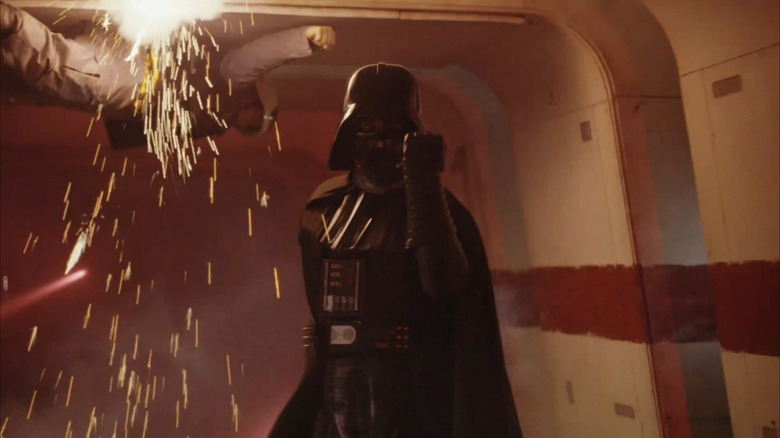
Disney-Era "Star Wars" media is filled with moments framing Vader as the ultimate badass. Take "Rogue One: A Star Wars Story," where Vader massacres a hallway full of rebel soldiers. Though this Vader scene was added at the last minute, it's now famous as the most terrifying that the Dark Lord has ever been onscreen — and the movie is banking on us enjoying him cutting down nameless cannon fodder.
The "Star Wars" sequel trilogy got meta with Vader worship, as Anakin's grandson Ben Solo (Adam Driver) follows in Vader's path as Kylo Ren. As Rey (Daisy Ridley) surmises in "The Force Awakens," Kylo Ren is scared he won't be as strong as Darth Vader. Unlike Vader's cool, stoic, and impressive evil, Ren is temperamental, unsure of himself, and ultimately pathetic. Ren's master Snoke (Andy Serkis) isn't wrong when he demeans his apprentice as "No Vader, just a child in a mask."
As children grow they should learn to revere more than strength, but Kylo Ren didn't.