

5 Movies From The '60s That Have Aged Terribly
No film is immune to history. There's a reason why film critics like to say that all films are political. It's because every single film is the direct result of the time in which it was made. Every film, whether or not the filmmakers even realized it, espouses whatever values might have been floating through the air at the time. All the political issues of the day are synthesized — consciously or unconsciously — through the mind of the artist, producing art that is always going to be a commentary on contemporary morals. If a film doesn't seem to have a politic, it's merely because it agrees 100% with the status quo. If you don't sense that a film is political, it's merely because you happen to agree with the film's opinion.
It's easier to see a film's politics — especially a film's irresponsible politics — with the benefit of a few decades' hindsight. The films made in the 1960s, which are now all over 50 years old, necessarily reflect the attitudes and social mores of that era. Many films of the 1960s were forward-thinking, progressive, or universal, allowing them to age well and still play like gangbusters to a modern audience. Many others, however, are assertively retrograde, bolstering the decades' more racist attitudes, sexist impulses, and lackadaisical messaging.
Even when the makers of 1960s media aimed to be progressive, they still often fell back into sexism or racism by default. Gene Roddenberry sought to make his 1966 TV series "Star Trek" somewhat progressive in terms of Earthly unity, but he still dressed the show's female cast members in miniskirts, and wrote episodes that had some pretty sexist ideas behind them.
Whether intentional or not, the following films from the 1960s aged like fine milk.
Breakfast at Tiffany's (1961)
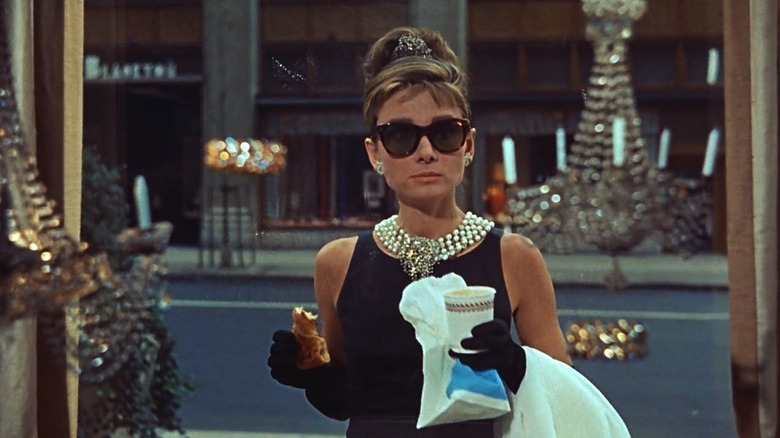
Blake Edwards' 1961 adaptation of Truman Capote's novel "Breakfast at Tiffany's" doesn't quite feel dated at the start, but it has certainly accumulated an old-fashioned feeling. Holly Golightly (Audrey Hepburn, although the part was written for Marilyn Monroe), a kooky socialite, is ditzy and worldly in turns, emanating a kind of freewheeling 1960s attitude that one doesn't see in movies too much anymore. The film is also loose in its structure, and one might remember the film's lengthy, chatty party scenes more than anything to do with its plot or characters. I, for instance, didn't remember until a recent re-watch how much drug dealers were involved in the story. Instead, I remembered the scene at the end where Paul (George Peppard) finally warmed Holly's heart.
But the loosey-goosey 1960s attitude it not why "Breakfast at Tiffany's" is dated. It's the casting of white actor Mickey Rooney as Mr. Yunioshi, Holly's Japanese landlord. By the 1960s, it was considered offensive for white actors to appear in blackface, but it seems that turning a white actor into a Japanese man was still considered okay, at least by mainstream studio standards. Rooney's performance is horrendously offensive, leaning into physical stereotypes and racist attitudes. Blake Edwards likely thought that Rooney was merely playing a "funny" character. I learned from a video on the Be Kind Rewind channel on YouTube that Rooney was credited as "Ohayo Arigatou" in early press materials. That same video pointed out that Edwards actually came to rely on the "funny Japanese stereotype" character as the best way to shoehorn comedy into the movie.
The result is a racist performance for the ages. Rooney plays up Mr. Yunioshi's accent and clumsiness, turning him into something modern audiences will not be able to stomach.
Zulu (1964)
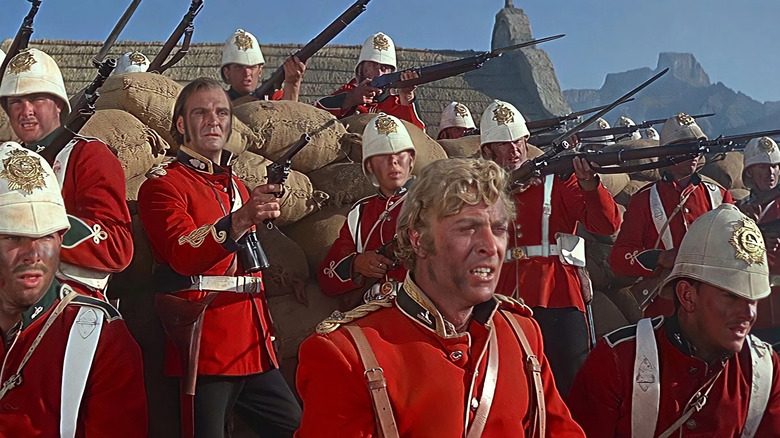
Cy Endfield's 1964 war epic "Zulu" follows the events of the the Battle of Rorke's Drift, an 1879 conflict between the British and the the Zulu Empire of southern Africa, fought during the Anglo-Zulu War. The battle was, in brief, an effort for the British to colonize the area. At the Battle of Isandlwana, the local Zulu people repelled the colonialists. Some Zulus broke off from the battle and also went after a British post at Rorke's Drift. The Brits managed to repel the attack, standing out as "heroes" against the "evil" African locals.
"Zulu" has nothing bad to say about British colonialism, and depicts the soldiers as beleaguered heroes fighting for a "lost cause." Paste Magazine once wrote a retrospective on "Zulu," pointing out that the film has received a lot of criticism over the years for is dismissive attitudes about the Zulu people, and its hard lean into jingoistic attitudes about the glories of fighting for the British Empire. The Times even once cited "Zulu" as potentially espousing ideas that can easily be glommed onto by white nationalists. That same article, though, mounted a defense of the film, arguing that it had scenes of tragedy and horror that undercut any jingoism. It seems "Zulu" remains controversial to this day. /Film still called it one of Michael Caine's best.
And while there may not be anything explicit in the text of "Zulu" that encourages white nationalism, the filmmakers still chose to make a film about this event, which could, in the wrong hands, be used as propaganda. In the 2020s, we're far more sensitive to media that may encourage a dark politic, and it's wise and necessary to point these things out.
"Zulu," then, cannot be watched without these conversations attached. That's a poor way to age.
The Taming of the Shrew (1967) and Romeo & Juliet (1968)
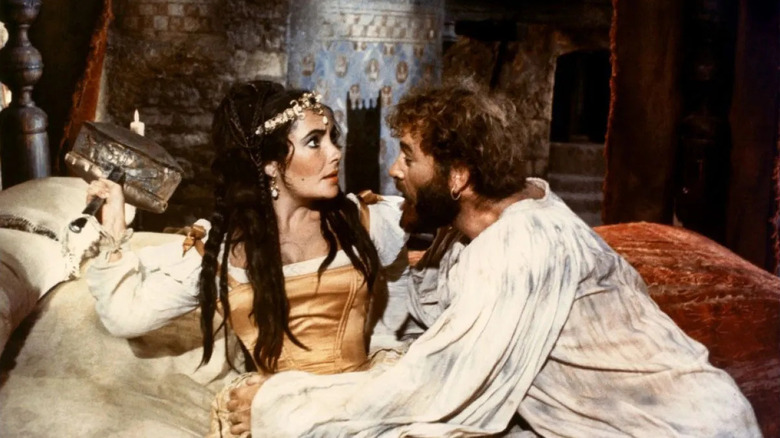
The offensive parts of Franco Zeffirelli's 1967 screen adaptation of William Shakespeare's "The Taming of the Shrew" aren't really the director's fault. Really, for this one, the fault lies with Shakespeare. "The Taming of the Shrew," a comedy written in the early 1590s, is about a willful unmarried woman named Kate who is "tamed" by an abusive suitor named Petruchio. Petruchio spends the play badgering and abusing Kate until her will is broken and she becomes an obedient wife. Even Shakespeare nuts have to bend over backward to interpret the play as anything but sexist.
Zeffirelli's rendition of "Shrew" doesn't flip the script enough, however, leaving all of Shakespeare's sexism intact. Elizabeth Taylor plays Kate, and it's a tragedy to witness her feistiness be broken by Richard Burton's Petruchio.
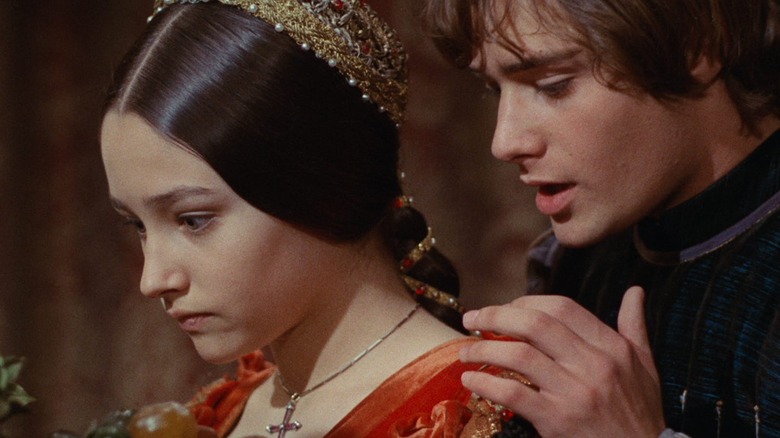
Something that is Zeffirelli's fault, though, was his treatment of teen sexuality in his 1968 adaptation of "Romeo and Juliet." While his "Romeo and Juliet" is honest to the text and may be one of the best adaptations the play has ever undergone, Zeffirelli might have gotten a little too frank with his lead actors. He wanted to show that Romeo and Juliet had been sexual, and infamously shot a scene wherein his two leads, Olivia Hussey and Leonard Whiting — both underage at the time — appeared nude.
In 2023, Whiting and Hussey sued Paramount, claiming the nude scenes were filmed under duress, and that the nudity was a last-minute decision on Zeffirelli's part. The lawsuit also falls in line with several other incidents of Zeffirelli allegedly being sexually inappropriate with young actors, including "Romeo and Juliet" actor Bruce Robinson. It's a great film, but it's now hard to watch, knowing what we do about Zeffirelli.
You Only Live Twice (1967) (and James Bond in general)
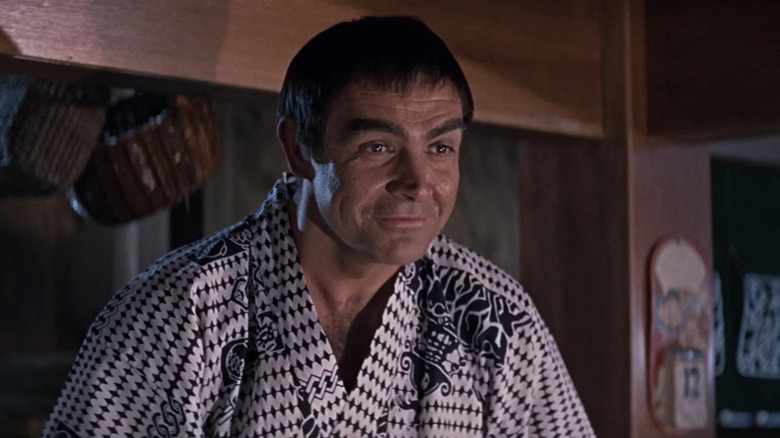
If we're being honest, most of the James Bond movies are problematic. Ian Fleming's super spy was, for the movies, transformed into an ultra-sexual ladies man, a charmer of the highest order. Through Sean Connery's depiction of the character (starting in 1962 with "Dr. No"), Bond became an incorrigible lothario who used his sexual prowess as a weapon more often than his Walther PPK. Bond's libido and accompanying sexism was so notorious, it was openly satirized in the 1967 version of "Casino Royale."
But of the early James Bond movies, none are more offensive than Lewis Gilbert's "You Only Live Twice," the fifth film in the Eon-produced James Bond series, and openly hated by Roald Dahl, its screenwriter. In "Twice," James has to travel to Japan in disguise ... as a Japanese man. He is outfitted with special makeup to give him Asian features, which are not the least bit convincing. Most women are typically objectified in early James Bond movies, and that's certainly true of the Japanese women who coo and stroke James Bond like an errant sex god.
James Bond movies tend to be set in cities all around the world, and their globe-trekking remains one of the series' more appealing features. But with "Twice," Japan is very much seen from an outsider's perspective, "othering" the Japanese people to an extreme degree. What once might have seemed like a whimsical jaunt to an exotic land now, to modern eyes, seems backward and racist. By 1967, Japanese filmmakers like Akira Kurosawa and Yasujiro Ozu were known around the world. More people could see actual Japanese movies. "You Only Live Twice," then, feels behind the times.
The Party (1968)
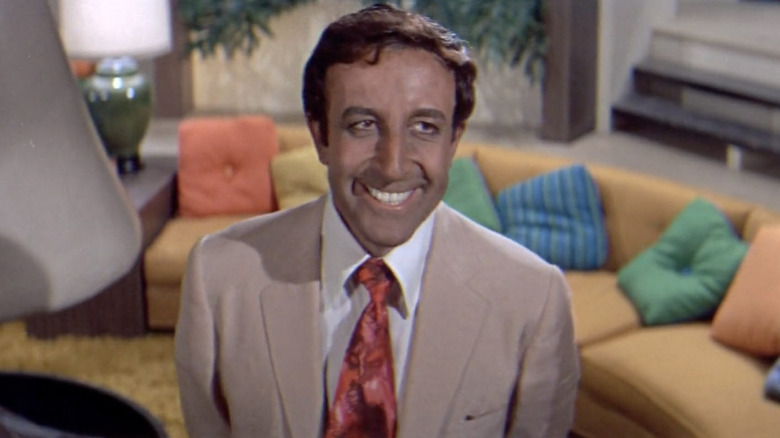
And here we are with Blake Edwards again. I don't have any personal beef with Edwards, mind you, but as a comedy filmmaker in the 1960s, he too often relied on "funny" stereotypes for his comedy. In "Breakfast at Tiffany's," he leaned into Mickey Rooney played a Japanese character. In "The Party," he employed the very talented Peter Sellers (star of Edwards' early Pink Panther movies) to paint his face brown and play an Indian man. This was unnecessary, as he had plenty of Indian comedians he could have cast in the role of Hrundi V. Bakshi, the central character of his movie.
The conceit of "The Party" is actually quite funny. The actor Bakshi, because he is something of a bumbling character, accidentally causes an explosion on the set of the movie he is appearing in. The angered studio head tries to write Bakshi's name on a literal blacklist, but instead writes it on the invite list for a high-end industry party. In defense of "The Party," it's not about how Bakshi is foolish, but the film industry itself. The guests at the party are even more ridiculous than the lead character.
But there's no getting around the fact that "The Party" banks in stereotypes, and that a white actor appears in brownface. Back in 2007, the Guardian wrote a piece about a general sense of ambivalence toward "The Party." Yes, the author says, Edwards' film is very funny. But, he adds, it's also led by a racist caricature.