

Nightcrawler's Signature BAMF Teleportation In X-Men '97 Came With Plenty Of Complications
We may receive a commission on purchases made from links.
The 1992 "X-Men" cartoon had to prune the huge cast of the comics down to a manageable (and gender-balanced) roster of nine. Inevitably, that meant even some fan-favorites got left out, such as the teleporting X-Man Nightcrawler/Kurt Wagner.
Nightcrawler made it into the animated "X-Men" show as a guest star, with an episode that broke a taboo of exploring religion in a superhero cartoon. Even with some unavoidable constraints, the episode did justice to Kurt's character: He practices a loving, not judgmental, Christianity. After all, with his blue fur, yellow eyes, and tail, Kurt knows what it's like to be unfairly judged.
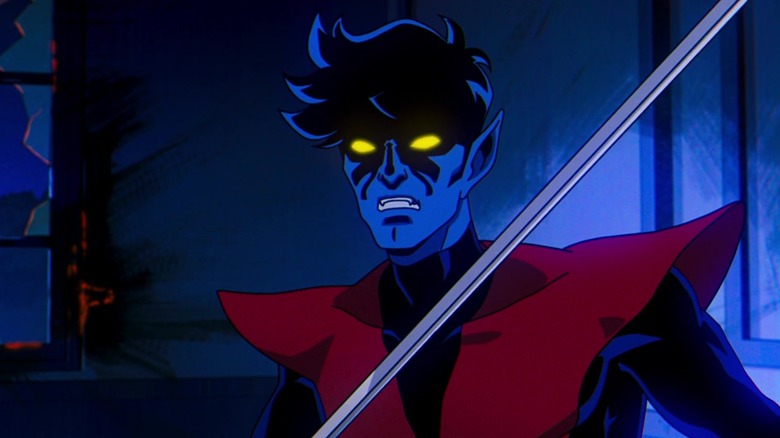
Since X-fans love Nightcrawler, it was an easy choice to bring him back for the revival series "X-Men '97" (voiced once more by Adrian Hough). Kurt got a title card in the revamped opening credits alongside the other X-Men like his adopted sister Rogue (Lenore Zann). But while the "X-Men '97" creative team was eager to reintroduce Nightcrawler, animating his powers came with some hurdles.
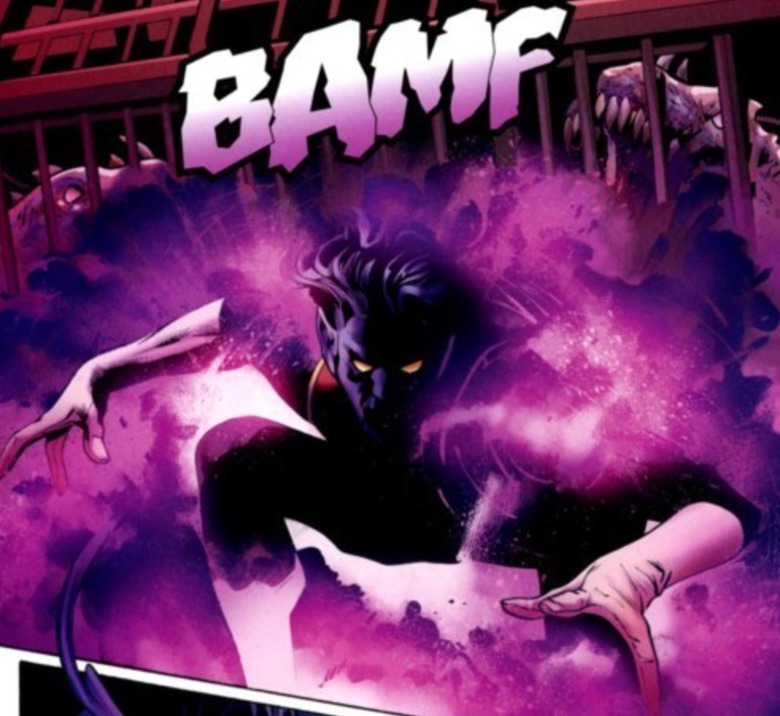
When Nightcrawler teleports, he disappears in a plume of smoke, then reappears in another. "X-Men" comics have a signature onomatopoeia sound effect for Kurt's teleporting: "Bamf!"
 Marvel Comics
This sound effect has been used since Nightcrawler's third ever appearance in "Uncanny X-Men" #95 (by Chris Claremont and Dave Cockrum). Nightcrawler disappears in "a crack of flame and a gusting stench of brimstone," with "bamf" written in bright letters across the top of the smoke cloud.
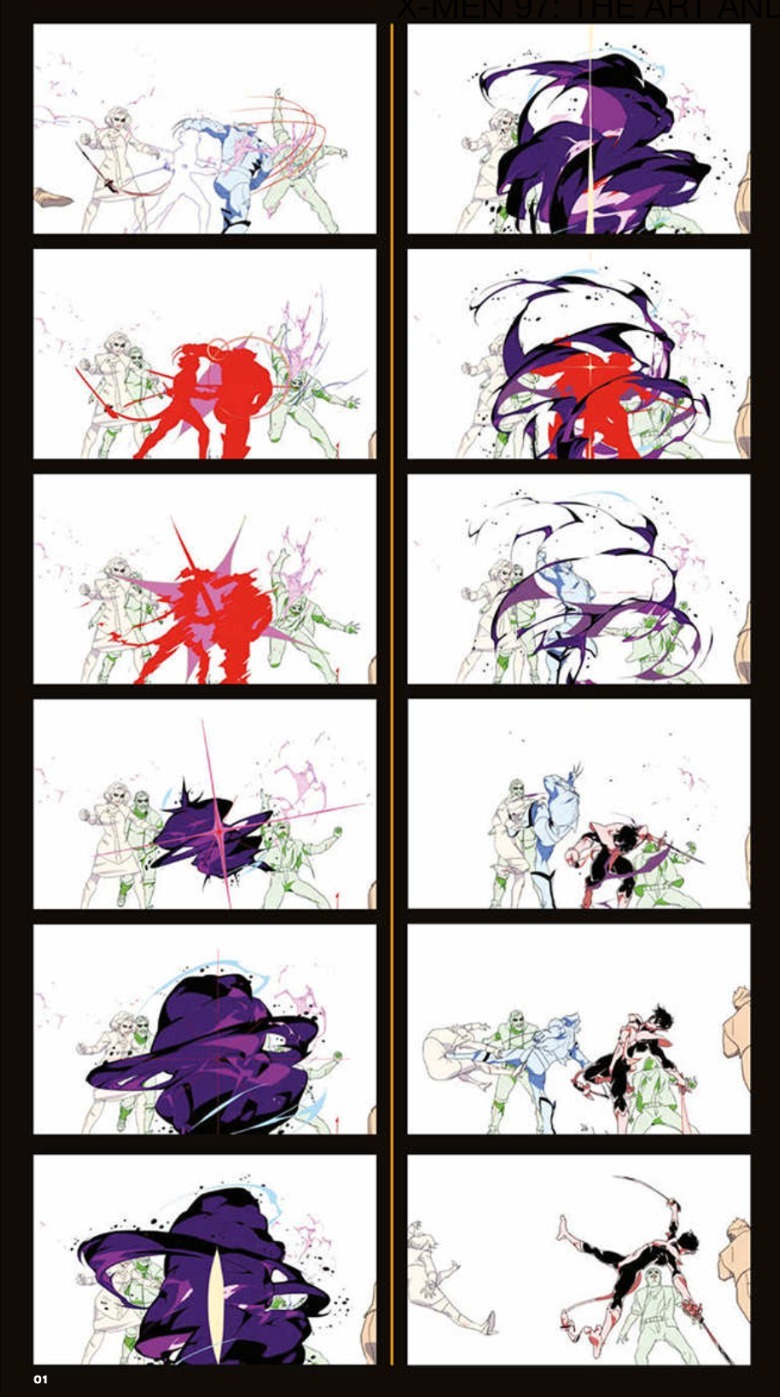
In "X-Men '97: The Art and Making of the Animated Series" by James Field, "X-Men '97" FX Lead Designer and Supervisor Chris Graf explained: "In the comics, [Nightcrawler's] teleport has a very iconic smoke shape that often looks fantastic as a still image but can be very tricky to animate on and off in a flash."
X-Men '97 delivered swashbuckling Nightcrawler action
In the original cartoon, Nightcrawler was pretty morose. It's understandable, since his few appearances focused on his faith, people's scorn for him, and his long-lost mother, Mystique (Jennifer Dale). But Nightcrawler is not only a tortured character. "X-Men '97" shows more of Nightcrawler's fun-loving side from the comics. He grew up performing in a circus, after all, so he's a natural acrobat and performer. He also favors swords when fighting, owing to his childhood fantasies of being like swashbuckler movie star Errol Flynn.
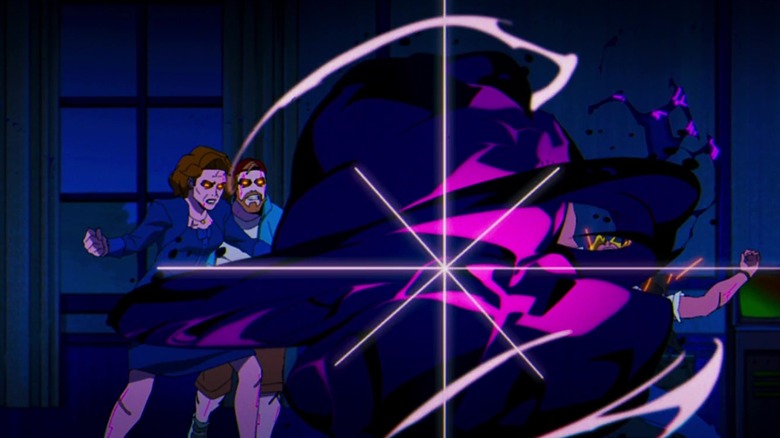
The "X-Men '97" opening titles show Nightcrawler with two rapier swords. In the show itself, he shows off his fencing skills (wielding three swords, one held by his tail) in "Tolerance is Extinction Part 1." Bastion (Theo James) sends brainwashed cyborg "Prime Sentinels" to attack the X-Mansion, so Wolverine (Cal Dodd) and Nightcrawler team up to fight them.
Now, as Chris Graf alluded to, comic artists like Dave Cockrum never actually draw Kurt's teleportation as a continuous sequence. Usually one panel will show a smoke cloud of Nightcrawler disappearing (cue the "Bamf!") then the next panel will have him reappear. In a cartoon, you have to animate that with full motion, surrounded by other moving characters. There, the smoke presents a problem; if it lingers onscreen too long, it'll block the audience from seeing the other characters, which can be fatal for an action scene.
"We needed to come up with a speed that starts and stops [Nightcrawler's] FX in under nine frames. That makes each drawing extremely important as it has to sell three ideas: the initial burst of light, the iconic smoke shape we're so used to, and the dissipation," Graf explained. Sure enough, Nightcrawler's teleportation in "X-Men '97" happens in the blink of an eye.
Nightcrawler's smokey teleportation demanded careful choreography
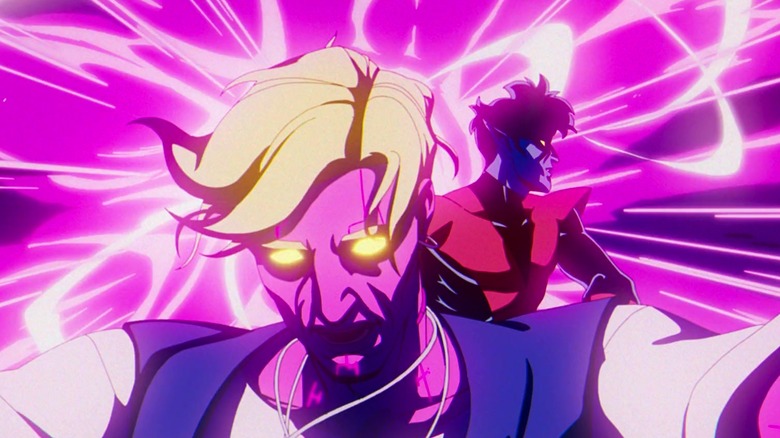
"I landed on an angled twist motion to the dissipation of his smoke, as well as including some embers that get pulled into existence from the dimension he uses to portal through," Graf continued. Indeed, when Nightcrawler teleports in "X-Men '97," the black-and-purple smoke appears with a flash. But after about a second, the smoke moves in a swirling motion, shrinking then disappearing.
"Tolerance is Extinction Part 1" even shows firsthand what happens between Nightcrawler's disappearances and reappearances. Wolverine and Nightcrawler stab a Prime Sentinel at the same time, then Nightcrawler teleports. The three then enter a dimensional tunnel that distorts/stretches them until they reach the place Nightcrawler was teleporting to, and the tunnel closes.
The money shot is Wolverine and Nightcrawler fighting back to back. With a wide shot and the swift FX work, Nightcrawler's smoke never crowds the fight. The fight even has similar staging as a comic action scene of heroes fighting many enemies at once, but with complete movement, not just a still frame of dynamic poses.
 Harry N. Abrams
Compare this to the famous opening of "X2," where a brainwashed Nightcrawler (Alan Cumming) attacks the White House. Early parts of the scene use quick cuts, selling the halls as a maze and the Secret Service's disorientation. Then, the films employs slow-motion of Nightcrawler teleporting around the Oval Office and knocking down guards; the movie slowed down what "X-Men '97" kept lightning quick.
Despite the animation challenges Nightcrawler posed to "X-Men '97," that's nothing compared to the nightmare Cumming endured being fitted with Nightcrawler makeup everyday of shooting. Cumming is coming back as Kurt in "Avengers: Doomsday," though — and maybe they can finally give him a sword or three.