

This Batman Animated Series Used Clayface To Deliver One Of Its Darkest Episodes
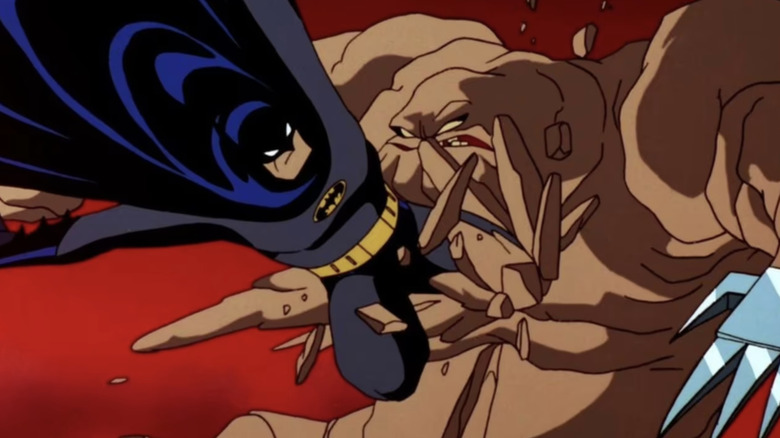
"Batman: The Animated Series" used a college-aged Robin/Dick Grayson (Loren Lester), which meant he and Batman felt closer to peers than father and son. In the sequel series "The New Batman Adventures," Dick had become Nightwing and Batman had a new Robin, Tim Drake (Mathew Valencia). Tim was an actual kid, so the show could use him to deliver messages about growing up to its young viewers.
Tim's darkest lesson comes, without a doubt, in the fittingly titled "Growing Pains." "New Batman Adventures" is sometimes dinged as lesser than the episodes before it due to a different art style and a greater emphasis on action-based storytelling, but excellent episodes of "New Batman Adventures" like "Growing Pains" are a counterargument that prove the series hadn't lost its touch.
Like many of the best "Batman: The Animated Series" episodes, "Growing Pains" puts Batman in a supporting role and lets a guest star take the spotlight. Here, that's Annie (Francesca Marie Smith, the voice of Helga from "Hey Arnold!"), an amnesiac girl darting through the dark streets of Gotham City. (Since she's a runaway, I'd imagine her name was chosen as a play on "Little Orphan Annie.")
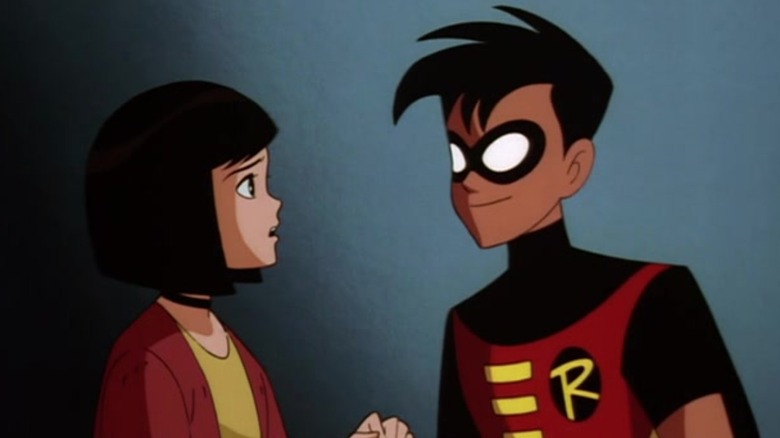
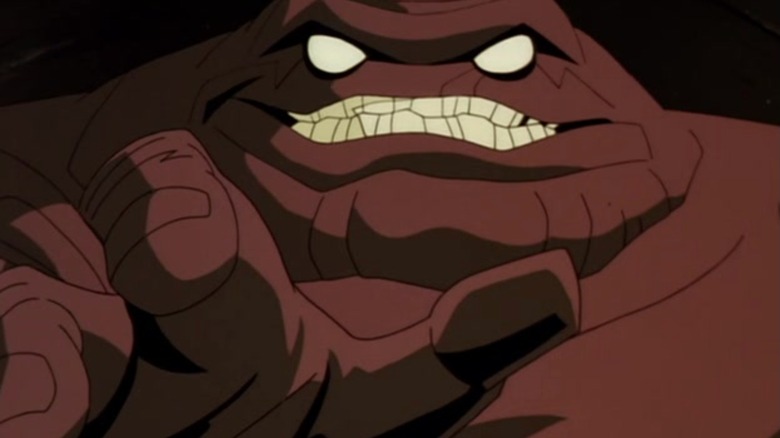
Robin saves Annie from a biker gang and later a terrifying man claiming to be her father. Smitten, Tim resolves to help her even as Batman (Kevin Conroy) suggests he stay away. The twist is that Annie's "father" is Clayface (Ron Perlman) — she's a piece of Clayface that developed its own will, and now he wants to absorb her to be whole again.
Clayface succeeds, with Annie sacrificing herself to save Robin. The final scene offers no relief; Batman can only muse, "Sometimes, there are no happy endings," as Robin bitterly suggests the cops book Clayface for murder.
Robin recieves some harsh lessons in Growing Pains
While "Batman: The Animated Series" aired on Fox Kids, "The New Batman Adventures" moved to Kids' WB. Writer/producer Paul Dini (who personally co-plotted this episode with writer Robert Goodman) has said that the latter network was less prohibitive about the show's content. So, "New Batman Adventures" often went even darker.
"Growing Pains" is downright bleak; the episode essentially ends with a super-villain murdering a child, onscreen. Compare this to "Robin's Reckoning," the "Batman: The Animated Series" episode which told the original Robin's origin but couldn't directly depict the murder of Dick Grayson's parents. This is not a slight on "Robin's Reckoning" — it won "Batman" an Emmy, after all – but merely illustrative of the shows' different creative restrictions.
Granted, Annie's death is bloodless; Clayface grabs her and she disappears inside his clay form, implicitly dissolved and reabsorbed into him. This touch of comic book fantasy is probably why the show got away with killing a child character. But while Annie's inhuman nature gives the episode plausible deniability to censors, Robin still calls her demise "murder."
The younger Robin is another reason "Growing Pains" could only have been made during "New Batman Adventures." Tim and Annie are barely old enough to be high schoolers, but their youth doesn't spare them from the world's harshness.
The episode's trust in its young viewers comes out most in a minute-long, dialogue-free scene of Robin searching Gotham for Annie and seeing several unhoused people. Annie's fantastical story is just one of many sad (and more mundane) tales in Gotham City. Before Batman took him in, Tim had been abandoned by his criminal father and was living on the street, too. When he sees those unhoused boys, he must be thinking how that could have been him.
Growing Pains is Robin's best New Batman Adventures episode
Mathew Valencia has said that "Growing Pains" is one of his favorite episodes of "The New Batman Adventures," and it's easy to see why. It doesn't just put Robin in a starring role, it's a haunting story with stellar animation. Japan's TMS Entertainment animated "Growing Pains" and Atsuko Tanaka (who has worked as an animator for Studio Ghibli) directed it, so it carries an anime-style expressiveness.
There's a striking bit where Clayface extends his arm and tries to block Robin and Annie's escape. Robin kicks Clayface, then bits of mud hang in the air as he and Annie run. (This ends up revealing the twist, as bits of Clayface fall on Annie and her body absorbs them.) Clayface's writhing form even resembles the body-expanding viscera of Katsuhiro Otomo's "Akira." (The opening with Annie dodging some aggressive bikers could be another "Akira" nod.)
Per series co-creator Bruce Timm, Annie's look was modeled on Mathilda (Natalie Portman) from "Léon: The Professional." It's a fitting homage, since that movie is about a hitman (Jean Reno) trying to help an orphan girl like Robin helps Annie.
As for the writing, "Growing Pains" continues another trend in "New Batman Adventures" showing the series' darker edge: once-sympathetic villains growing colder. In the original "Batman," Clayface had been transformed against his will. Even in his second appearance, "Mudslide," Batman offered to help cure him. Compare that to Clayface killing his "daughter" here with no remorse or regard.
It's not just the villains who got darker. When making "New Batman Adventures," actor Kevin Conroy made his Batman voice harsher to show Bruce Wayne had grown more cynical. When Gotham City produces stories like "Growing Pains," it's easy to see how it would wear people down.