

5 Essential Catherine O'Hara Movies And TV Shows Everyone Should Watch At Least Once
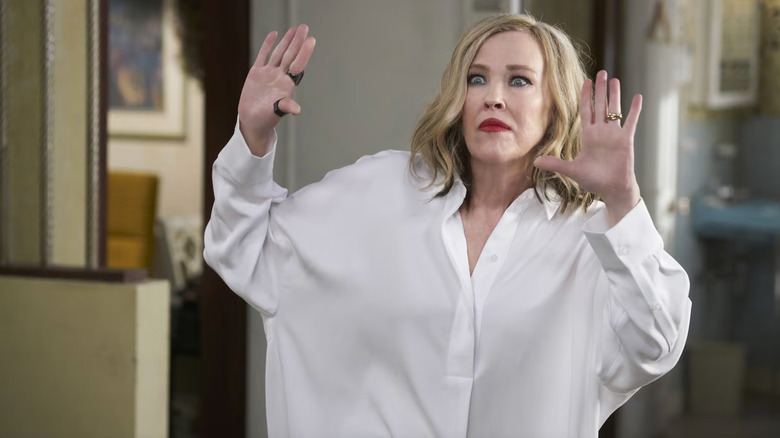
There is only joy in celebrating the uncommonly brilliant career of Catherine O'Hara, but having to summarize it, knowing that her mirthful work on this planet is complete, is a sorrowful thing. O'Hara was 71 years old when she died on January 30, 2026, and as vital as ever. She was in the midst of exploring the unsettledness of ousted studio executive Patty Leigh in the uproarious film industry satire "The Studio," and had flaunted her considerable, underexploited dramatic chops as Gail Lynden in the grim HBO horror series "The Last of Us." Her third act held untold promise. Then the curtain cruelly dropped.
O'Hara's commitment to a project was always total, and she always understood the assignment. She could dominate scenes when called upon, but she was just as comfortable playing comedy point guard, dishing out assists to her castmates. Most impressively, O'Hara simply couldn't be miscast. Every role was in her wheelhouse.
From the time I first saw her on "SCTV," O'Hara seemed destined for full-scale stardom. It might've happened, too, had she not bolted "Saturday Night Live" in 1981 before appearing on a single episode. There were rumors that she was turned off by head writer Michael O'Donoghue's tyrannical leadership style, but O'Hara said she just didn't like living in New York City. Though the show was in poor shape at the time, it's tempting to consider what she could've done opposite upstart genius Eddie Murphy, especially since she was an immensely talented writer as well (as she proved when she returned to "SCTV" and won a Primetime Emmy for her contributions to the "Moral Majority Show").
O'Hara preferred being an ensemble player, and no one did it better. It's impossible to pick just five essential O'Hara works, but let's give it a go!
SCTV
There are two types of Catherine O'Hara fans: those who've watched "SCTV," and those who've never seen the full range of her seemingly limitless comedic skills. While it's infuriatingly impossible to stream the sketch comedy series, you can watch individual skits on YouTube. And if you're not sure where to start, I highly recommend hitting up Paul F. Tompkins' Bluesky thread of her most memorable bits.
If O'Hara had a signature character on "SCTV," it was Lola Heatherton, a singing-acting-dancing dynamo whose Christmas special, "Lola's Love Spirit," will leave you gasping for air. She goes for broke with every performance, and has slept with many of the show's other fictional showbiz personalities (e.g. John Candy's Johnny LaRue, Eugene Levy's Bobbie Bittman and Joe Flaherty's station manager Guy Caballero). When sharing the stage with any of these men, she's prone to exclaiming "I wanna bear your children!"
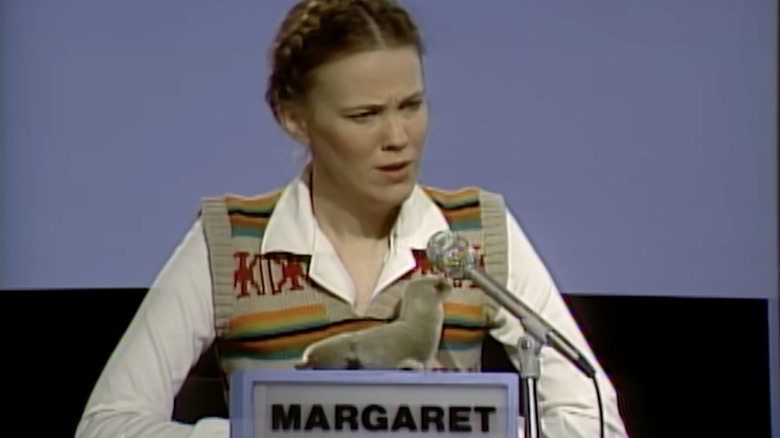
O'Hara was also amazing as Katharine Hepburn (an eerily spot-on impersonation), Dusty Towne and Brooke Shields (on the "Farm Film Report"), but my favorite character will always be Margaret Meehan, a frequent contestant on the Alex Trebek-hosted quiz show "High-Q" who compulsively buzzes in with answers before Trebek can ask the question (or, sometimes, name the category). This might sound like a one-note gag, but O'Hara takes us on an emotional rollercoaster ride as Meehan veers from cheerful to distraught. It's a master class in facial expressions, and I have to believe that sketch comedy masters like Jan Hooks, Kristen Wiig and Kate McKinnon sedulously studied this character.
After Hours
"Saturday Night Live" was the sketch comedy sensation of the 1970s, but "SCTV" routinely outdid Lorne Michaels' show in terms of smarts, talent and straight-up laughs. And yet, due to its smaller viewership, it took time for its abundantly talented performers like John Candy, Rick Moranis, Eugene Levy, Dave Thomas, Joe Flaherty and Andrea Martin to get their due in Hollywood.
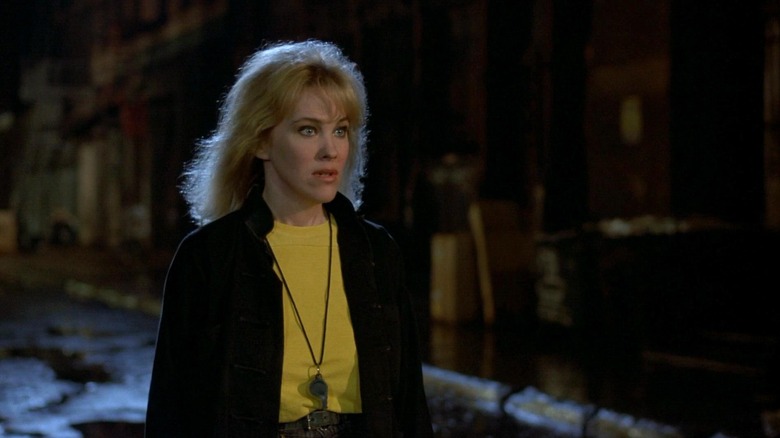
By 1985, most of the "SCTV" cast had established themselves as valuable comedic performers in studio movies, but O'Hara was still waiting for her big break. It didn't come in Martin Scorsese's "After Hours," but that's only because Warner Bros. couldn't figure out how to market the pitch-black comedy. Had the film found mainstream success, O'Hara's portrayal of Gail, a Mister Softee driver who briefly takes pity on Griffin Dunne's Paul Hackett as he attempts to extricate himself from a hellish evening in New York City's SoHo, could've easily been her ticket to stardom. Then again, this was often the challenge with O'Hara. No one could do oddball characters better, and few screenwriters were creating female lead roles worthy of her ineffable talent.
Scorsese was a massive "SCTV" fan (he directed a reunion special for Netflix in 2018 that has been shelved indefinitely), but was particularly enamored of O'Hara. Upon her passing, he called her a "true comedic genius, a true artist and a wonderful human being." He gave O'Hara leeway to craft a volatile character who's impulsive, compassionate, mischievous and ultimately outraged. Gail isn't the linchpin of "After Hours," but she's the wild-card that leaves you buzzing.
Beetlejuice
As a movie mom, Catherine O'Hara presented us with a Beatles-Rolling Stones Rorschach test. Were you a Kate McCallister person, or a Delia Deetz partisan? There's not a wrong answer here, but I was 17 when "Home Alone" came out, and its grating mix of warmed-over Looney Tunes gags and over-the-top sentimentality sat wrong with me. O'Hara's overwhelmed mother struck me as the hero of the piece (she's certainly the most fleshed-out character), and I couldn't hold her forgetfulness against her. A vacation without a brat like Kevin would've been heavenly.
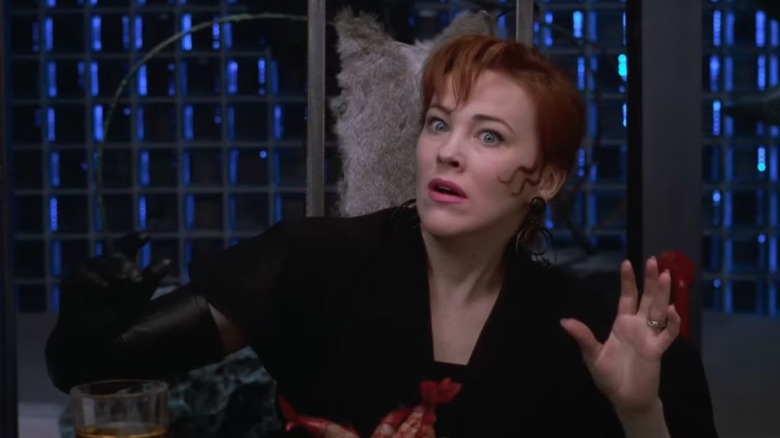
Delia Deetz is another matter entirely. She's an inspired comedic invention: a horrible sculptor who believes completely in her creative genius, and overrides her meek real-estate developer husband (Jeffrey Jones) as she turns their recently purchased small-town house into a SoHo art scene monstrosity. There's some interesting connective tissue here, given that Burton was the first choice to direct "After Hours," but Delia is no Gail. She's confident, focused and largely disinterested in her husband's daughter-from-another-marriage Lydia (Winona Ryder). Her early scenes with Glenn Shadix's haughty interior designer Otho Fenlock turn us against her (largely because she's defiling the cozy dream home designed by the Maitlands), but O'Hara's facility for finding the humanity in wholesale weirdos draws us right back in. She quarterbacks the iconic "Day-O (The Banana Boat Song)" possession sequence, and locates the compassion in a woman who's never cared about anyone other than herself. She's neither the star nor the soul of "Beetlejuice" (those titles respectively belong to Michael Keaton and Winona Ryder), but, as with "Home Alone," she gets the most meaningful character arc.
Waiting for Guffman
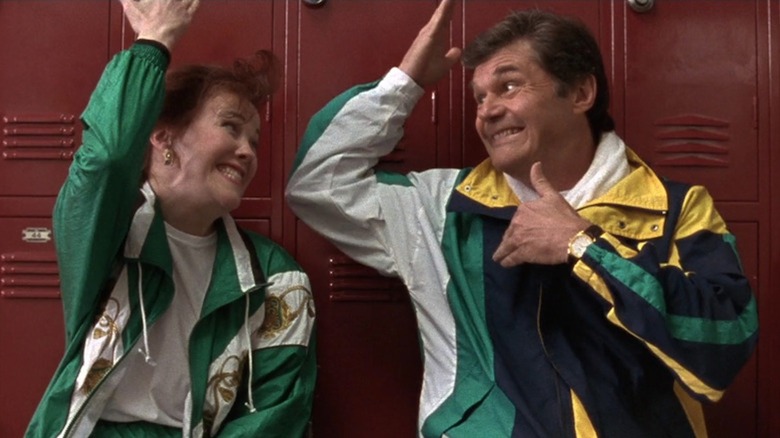
Picking a favorite Christopher Guest-directed comedy is impossible, and singling out O'Hara's best work in one of his movies is a fool's errand. The theater kid in me connects deeply with her portrayal of travel agent Sheila Albertson in "Waiting for Guffman," as Sheila and her business partner husband Ron (Fred Willard) pour their untalented hearts and souls into their town's community theater productions. I know these people. I've worked with them. I've directed them. For a few months out of the year, they get to escape the doldrums of their workaday lives and put on a show for their neighbors. It's a beautiful gesture.
This is a perfectly sustainable cycle until the city's local theater director Corky St. Clair (Guest) irresponsibly emboldens his cast with dreams of a breakthrough musical production with "Red, White and Blaine." He tells them that an influential Broadway producer, Mort Guffman, is coming to see their show. Suddenly, it's game-on for these Missouri folk who'd never dared to dream beyond their Midwest trappings.
It's a coin-flip for me. I think O'Hara did much of her finest work opposite her longtime scene partner Levy, but the indefatigable Sheila is just so familiar to me, so painfully real — even though she can't register the pain, which is the armor that shields her from a degree of misery that would crush most people — that I have to place her performance here over her laudatory work in "Best in Show," "A Mighty Wind," and "For Your Consideration." You might connect more palpably to her performances in Guest's other movies, and I get it. Again, no wrong answers here. O'Hara was always, always great.
Schitt's Creek
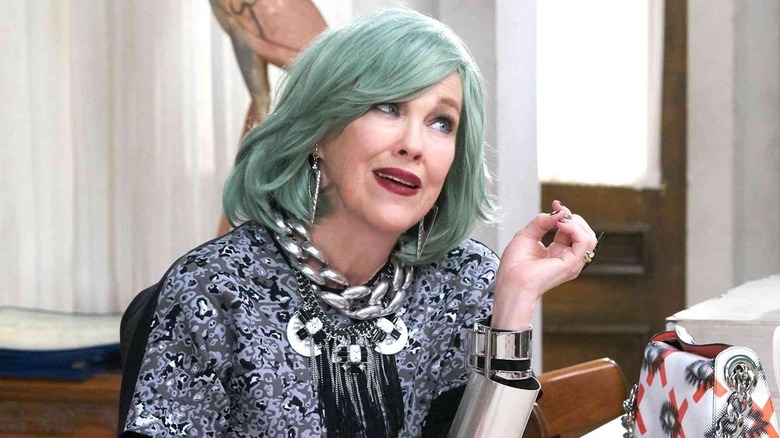
I can't think of an actor who mined enunciation and malapropisms for bigger laughs than Catherine O'Hara as Moira Rose in "Schitt's Creek." The Canadian sitcom reunited her with Eugene Levy (who co-created the series with his son Dan Levy), and it didn't get off to a terribly promising start. The first season reminds me of how "Parks and Recreation" navigated a rocky launch before emphatically finding itself in its second season. And while the entire ensemble of "Schitt's Creek" was terrific, it was O'Hara's former soap-opera star Moira that elevated the series to something that was Primetime Emmy-worthy.
O'Hara was tapping into the vanity of Lola Heatherton as Moira, but this character fancied herself an intellectual. O'Hara delivered a clinic in awkward pronunciation. She also set the tone, allowing her co-stars to get into a grin-inducing groove. No one overdid it on "Schitt's Creek." It wasn't the funniest show on television, nor was it groundbreaking. But it was a showcase for a wildly talented ensemble, all of whom benefitted from O'Hara's generosity of creative spirit. She made everything better because she had an unerring sense of what every scene needed, and she derived tremendous enjoyment from watching her collaborators soar. I cannot accept that she's gone.