

What Does Return To Silent Hill's Box Office Mean For The Franchise?
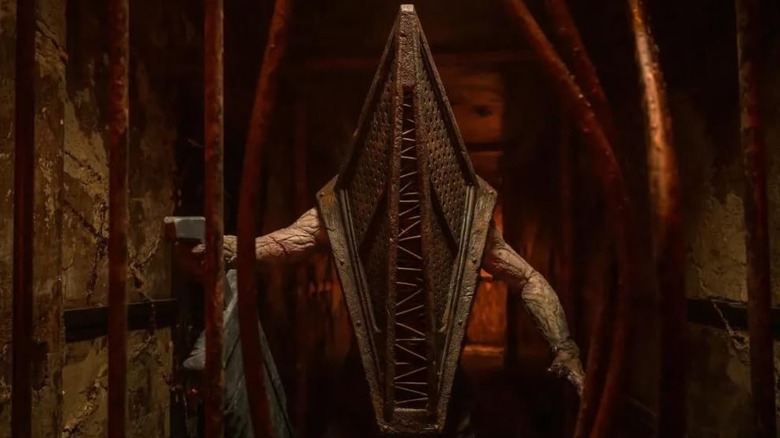
The "Silent Hill" franchise has recently come back to life on the video game side of things in a big way, thanks to the widely acclaimed "Silent Hill 2" remake and, since then, "Silent Hill F." Unfortunately, despite Konami's attempt to also revive the survival/horror property as a film franchise, things didn't go as hoped. "Return to Silent Hill" isn't the reboot that fans were hoping for, as evidenced by its domestic box office haul on opening weekend.
"Return to Silent Hill" was released by Cineverse, the same studio behind the "Terrifier" franchise. The video game adaptation opened to a mere $3.2 million in North America, which was only good enough for seventh place on the charts. Chris Pratt's new sci-fi thriller "Mercy" came in at number one with $11.2 million, meaning it was a weak weekend overall. That was, in no small part, due to the snow storm that ravaged much of the U.S. Still, that's not a great result for a movie with a reported $23 million production budget.
The saving grace for Cineverse and Konami came internationally. The third live-action "Silent Hill" movie pulled in $16 million overseas, including a pretty impressive $9.3 million in China, which put it at number one in the country. That means a $19.3 million global opening. So, it's not a flop, but it's not a big hit either, leaving things on shaky ground.
The latest installment in the franchise takes inspiration from the much-beloved "Silent Hill 2" video game. It centers on James (Jeremy Irvine) after he receives a mysterious letter from his lost love Mary (Hannah Emily Anderson). He is then drawn to Silent Hill, a town consumed by darkness. There, James faces monstrous creatures and is forced to unravel a terrifying mystery.
A Return to Silent Hill sequel is wildly unlikely
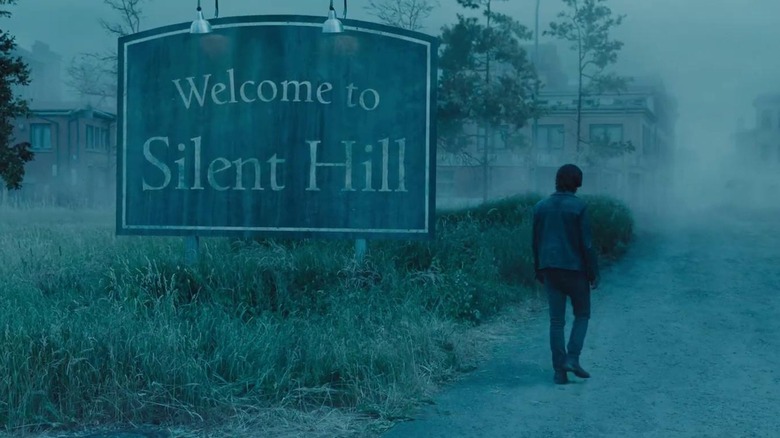
Christophe Gans came back to direct "Return to Silent Hill." He previously helmed 2006's "Silent Hill," which was a modest hit with just over $100 million at the global box office. However, the movie failed to generate a meaningful franchise cinematically, as a sequel didn't materialize until 2012 in the form of the much-maligned "Silent Hill: Revelation." That effectively killed the "Silent Hill" film brand for more than a decade.
It was first revealed that Gans was working on a new "Silent Hill" movie in 2020, with the news being officially confirmed in 2022. Fans had high hopes since the filmmaker's first entry, though imperfect, went over well enough. Working with treasured source material at a time when Hollywood has largely defeated the video game movie curse also gave people reason to be optimistic.
Sadly, "Return to Silent Hill" didn't deliver. Aside from having to rely on a bailout from overseas audiences, the movie has been thrashed by critics and audiences alike. It currently carries a dismal 15% critical approval rating on Rotten Tomatoes to go with a lousy 30% audience rating. Cineverse, Konami, and Gans were all hoping for better when they set out on this venture. They may have narrowly avoided delivering a financial bomb thanks to China, but in terms of reviving the franchise? A movie that was received this poorly isn't going to move the needle.
Things are only going to get worse at the domestic box office, too, with both the Sam Raimi-directed "Send Help" and Markiplier's "Iron Lung" opening soon. Those films will provide a lot of direct competition in the horror space, meaning this movie will have weak legs, at least stateside. Taken together, this all but effectively kills any chance of a direct sequel.
The Silent Hill movie franchise is probably dead again
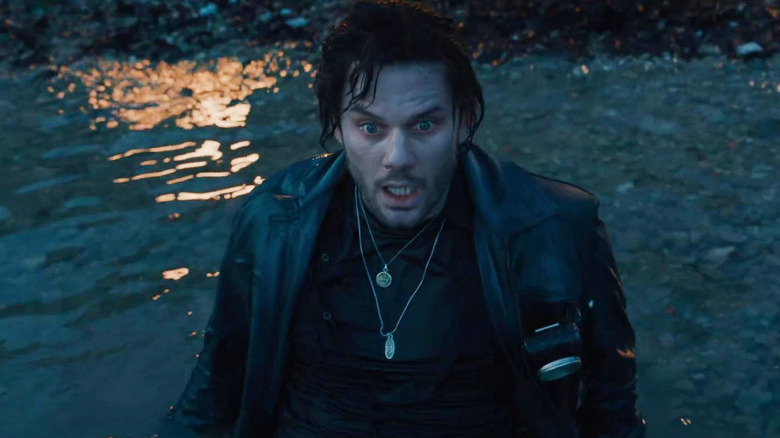
In all likelihood, "Return to Silent Hill" will make just enough money globally to avoid disaster. That's the benefit of keeping a budget low. After VOD, streaming, and other revenue streams are factored in, nobody is going to lose their ass over it. But that's not enough to encourage Konami to continue pursuing the course as it relates to cinematic adaptations of its beloved games. That begs the question: What happens next?
Hollywood can't depend on a robust Chinese box office anymore, as the country is generally favoring homegrown titles these days, making this situation more of an exception. That's all the more reason why "Silent Hill," as a movie franchise, is probably going to be dead again for a little while. A sequel wouldn't be viable, and serving up another reboot quickly wouldn't be wise, either, as fans need time to forget what just happened.
The other option would be for Konami to explore a live-action TV show or perhaps even an animated project. "Resident Evil" went the live-action series route on Netflix in 2022 after the movies stopped working. Even though it didn't pan out, in that case, it's an avenue worth exploring. What's clear though is that Hollywood has, by and large, had a difficult time interpreting the world within this particular gaming property in a satisfying way on the big screen. Whatever comes next, it needs to be a radically different approach with different creatives involved. That much is clear.
"Return to Silent Hill" is in theaters now.