

Starfleet Academy Upholds A Classic Star Trek Tradition (But Some Fans Are Missing The Point)
School's in session, and so are spoilers. This article discusses major plot details up to episode 3 of "Star Trek: Starfleet Academy."
A deep, passionate rebuttal of the latest "Star Trek" controversy incoming ... just as soon as we can think of some relevant plant puns. On the surface, "Starfleet Academy" can probably be considered a major swerve from what fans are accustomed to from this franchise. Setting the action at school and centering on a class of impressionable cadets is something we've never seen before, at least to this degree. The young adult genre trappings may also be new, as is the emphasis on emotionally undeveloped teenagers and all the messy complications that come with that. But, at its root (get it? Like a plant? Never mind), it's perhaps not quite as radical as some of its detractors would have you think. If anything, it's abiding by one of the most fundamental, time-honored "Trek" traditions of all.
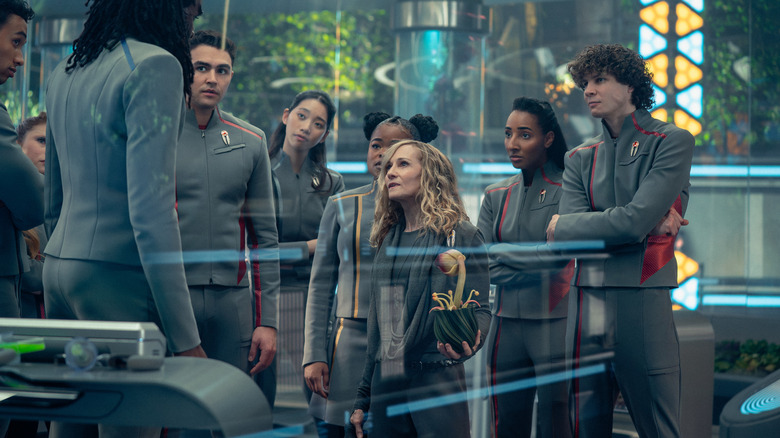
That's probably why episode 3 almost feels like a direct response to growing discontent — at least, among certain predictable circles of the "Star Trek" fanbase. Far more comedic than either of the first two episodes, "Vitus Reflux" tackles the classic idea of rival students engaging in a prank war. Rather than simply embrace the chaos for chaos' sake, however, the real heart and soul of the episode lies elsewhere. It's less to do with which competitive overachiever will come out on top between classmates/prospective team captains Genesis Lythe (Bella Shepard) and Darem Reymi (George Hawkins) and more about Holly Hunter's Chancellor Nahla Ake imparting crucial, plant-based lessons on empathy, leadership, and strategic thinking.
To some, this proves "Starfleet Academy" is too "preachy" and "lecturing" to its viewers. To the rest of us, well, this is what "Trek" has always been about.
Starfleet Academy isn't the first time Star Trek has taken us to school -- and it won't be the last
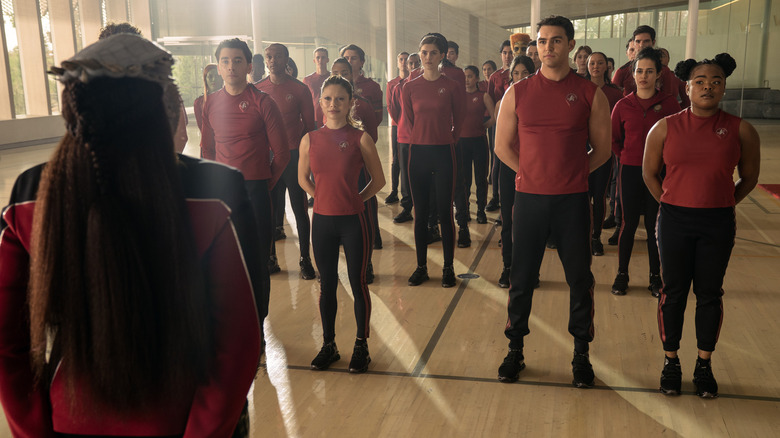
"Man, why does everything have to be a full-on lesson in this place?" sulks Caleb Mir (Sandro Rosta) in Nahla Ake's office towards the end of episode 3. "Because it's a school, Caleb," she shoots back with a laugh. In the most telling exchange of the entire series, co-showrunners Noga Landau and Alex Kurtzman essentially lay down their mission statement for "Starfleet Academy." It's practically a no-brainer for anyone who approaches the show in good faith, understanding that the basic conceit of a series set entirely at an academy will, you know, deal with rambunctious kids desperately in need of learning lessons. It may not make for the slickest or edgiest "Star Trek" production ever made (that's what the now-defunct Kelvin-verse movies were for), but that doesn't make this any less "Trek" than the original shows and movies.
"Trek" history is worth learning from, lest we forget it. Despite what some of the loudest voices may try to say online, this is what Gene Roddenberry's idealistic vision of the future has always been about. As far back as "The Original Series," classic episodes like the Gorn-centric "Arena" or "Errand of Mercy" which first introduced the fearsome Klingons, set out with the implicit goal of serving up a didactic moral lesson. (Though a well-intentioned swing and a miss, #NeverForget the controversial racial allegory of "Let That Be Your Last Battlefield.") "The Next Generation" kept this flame alive with unsubtle hours like "The Drumhead," "Darmok," and plenty more. Even "Deep Space Nine," one of the darker and more transgressive shows in the entire canon, went back to this well again and again.
"Starfleet Academy" is hardly unique in this regard.
Starfleet Academy is at its best when it lets its main characters be flawed

So, if a "Star Trek" series being a little preachy isn't the issue here, what is that critique really about? This brushes up against the simplest and most prevalent of mindsets among viewers these days. If there's any example of widespread media illiteracy that we can pinpoint, it's this: Modern audiences have a major problem with flawed characters behaving in flawed ways. (This tweet by comedian Avery Edison skewers the phenomena with laser-focused, satirical precision.) And whenever "Starfleet Academy" has the gall to remind us that young protagonists like Caleb, Genesis, and Darem have a lot to learn (especially in comparison to wiser and more established veterans like Nahla, Tig Notaro's Jett Reno, and Gina Yashere's Lura), well, it becomes much easier to blame the show's writers for, I don't know, ruining the sanctity of "Star Trek" or whatever, rather than grapple with the discomfort of imperfect characters.
And, man, does the ensemble of "Starfleet Academy" have plenty of room to grow. Not too dissimilar from the Vitus Reflux plant that gives this episode its name, the various cadets all have the potential within themselves to move and lash out in the most uncontrollable ways. Particularly as embodied by the hothead Caleb, these kids are nothing but unbridled possibilities born into a broken world and with only the barest remnants of Starfleet to help mold and guide them to the best versions of themselves. Is it a little cheesy and corny? You bet. Can the tonal swings sometimes tip a little out of balance so far? Sure, that's fair. But is any of this even remotely antithetical to the spirit and ideals of what "Trek" has always represented? Absolutely not.
"Starfleet Academy" is streaming on Paramount+.