

James Cameron's Real-Life Inspiration For Avatar: Fire And Ash's New Na'vi Clan
In science fiction, there's a tendency to depict alien races as having a monoculture. Take "Star Trek," where Vulcans are logical by nature, Klingons are bloodthirsty, etc. Allegorical sci-fi, like "Trek," will often use aliens as coded versions of real human cultures, after all. Yet that impulse to alien-code sows the trope's folly; in real life, we humans have many different cultures, so why wouldn't aliens be the same?
James Cameron's "Avatar" films are ahead of the curve here. The Na'vi species are split among different tribes, each with unique cultures and aesthetics, and each "Avatar" film has introduced a new Na'vi tribe. The 2009 original focused on the Omatikaya clan, or the "Forest People," which Jake Sully (Sam Worthington) joins. The 2022 sequel "Avatar: The Way of Water" switched focus to the semi-aquatic Metkayina clan, "Sea People," who live in a coastal village and commune with the whale-like tulkun.
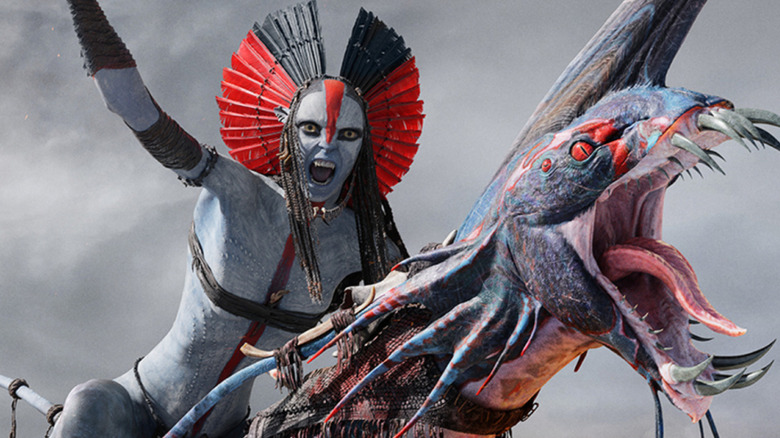
Now the third film, "Fire & Ash," has brought in a third and much more violent Na'vi people: the Mangkwan, "Ash People," who ally with the human colonists against Jake and his family. The Ash People, fittingly, live in a burned out volcano. Once their home was lush, before an eruption destroyed it. Thus, they turned their back on Eywa (the living super-intelligence of Pandora) while their leader, a witch named Varang (Oona Chaplin), learned to master fire herself.
Cameron recounted in an interview with the Hollywood Reporter that the Ash People were inspired by his trip to meet the Baining people of Papua New Guinea. The Mangkwan's fire-dancing and burned out village are ripped right from what Cameron witnessed while visiting the Baining people.
The Mangkwan Clan's fire dances were inspired by the Baining People
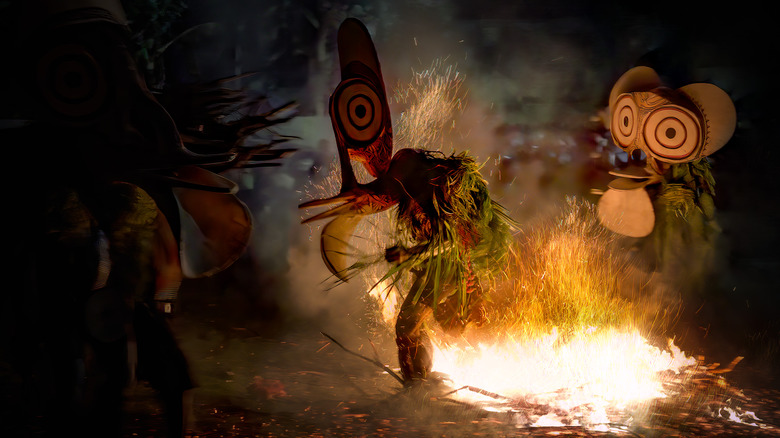
In "Fire & Ash," the Mangkwan are seen fire dancing after they capture the Sully family children. Like Varang's other rituals, the dance appears to involve some sadomasochism, including slight blood spilling. Real fire dances as conducted by the Baining people do involve running through fire and kicking sparks all around where they can singe flesh.
Real Baining fire dancers (exclusively men) also wear large animal masks and welcome the local spirits to dance alongside them. The dances are done for special occasions, such as celebrating new births or harvests. Though outsiders can see them, it's a rare opportunity — one perfect for a real-life explorer like James Cameron.
Cameron, recounting the experience to Condé Nast Traveler magazine, said it happened in 2012 when he was visiting Papua New Guinea for a submersible expedition into the New Britain Trench. While there, he took a hike to witness the Baining people's fire dancing. As he told THR:
"They were in this trance state, dancing for seven hours on end in actual fire. Then I was seeing these kids go into this ash field, joyfully playing in this almost postnuclear devastation. I wasn't thinking, 'I can use this for 'Avatar,” but it was one of those things that informs my dream landscape."
How James Cameron feels about the cultural appropriation criticims of Avatar
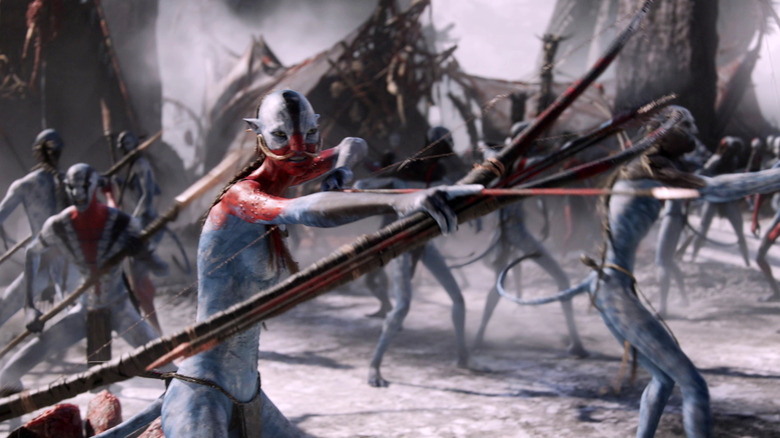
This influence opens up old arguments (lobbed back-and-forth since 2009) about cultural appropriation and indigenous representation in "Avatar." Circling back to racial coding, the Na'vi are coded as Hollywood-ized Native Americans: tribal people, dressed in little clothing, painted skin, and braided hair, who are in tune with nature, fight with bows-and-arrows, and who face the threat of colonization. There's a reason "Avatar" is so often compared to "Dances with Wolves," Kevin Costner's 1990 film about a U.S. cavalryman (played by Costner) who joins a Sioux tribe.
The Metkayina take more from other indigenous cultures, such as the Māori people. Cliff Curtis, who plays Chief Tonowari, is even Māori himself. The cultural coding of the Na'vi tribes have brought Cameron criticism from actual Native people, but to his credit, the filmmaker at least seems aware of it and willing to hear it out.
"The people who have been victimized historically are always right. It's not up to me, speaking from a perspective of white privilege, if you will, to tell them that they're wrong," Cameron said (via the Washington Post). Cameron has also said, in reference to bringing in Māori influence for "Way of Water," that: "I don't think you just go in and grab from different cultures as a writer, I think you have to be respectful."
Again, it's not for Cameron (or me, for that matter) to decide if his cultural allusions — including the Ash People's fire dancing — meet the bar he set for himself.
"Avatar: Fire and Ash" is now playing in theaters.