

A Star Trek: Deep Space Nine Star Added Nuance To A Character Who Could Have Been One-Dimensional
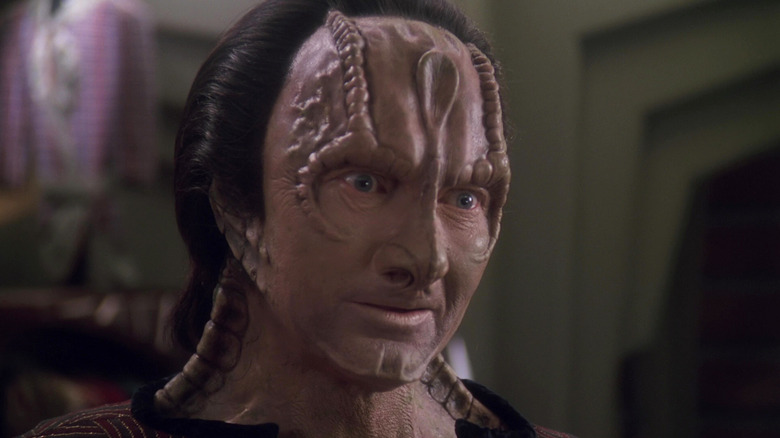
There's a long history of "Star Trek" actors contributing to their characters in some way, and that holds especially true for "Star Trek: Deep Space Nine." While franchise creator Gene Roddenberry was very hands-on for the original series and "Star Trek: The Next Generation," his passing in 1991 meant that future "Star Trek" shows had a bit more wiggle room. In particular, the alien races were able to be fleshed out more, with new storylines and depth given to the Ferengi, Klingons, and even the villainous Cardassians (who were originally inspired by Nazi Germany). One Cardassian even ended up becoming a fan favorite, and it was all thanks to the man who portrayed him.
In a 2020 interview with TrekMovie.com, actor Andrew Robinson, who portrayed Cardassian tailor/spy Elim Garak on "Deep Space Nine," revealed the lengths he went to in order to give Garak more depth, and it sounds like he was responsible for a fair amount of what fans came to love about the character. It's not a huge shock since Robinson eventually went on to write an excellent epistolary "Star Trek" book about Garak called "A Stitch in Time," containing Garak's diary entries and letters to his closest friend, Dr. Bashir (Alexander Siddig). And while Robinson wasn't the only "Star Trek" actor who took a character and really made them their own, he might have done it the most intensely.
Andrew Robinson helped make Garak much more nuanced
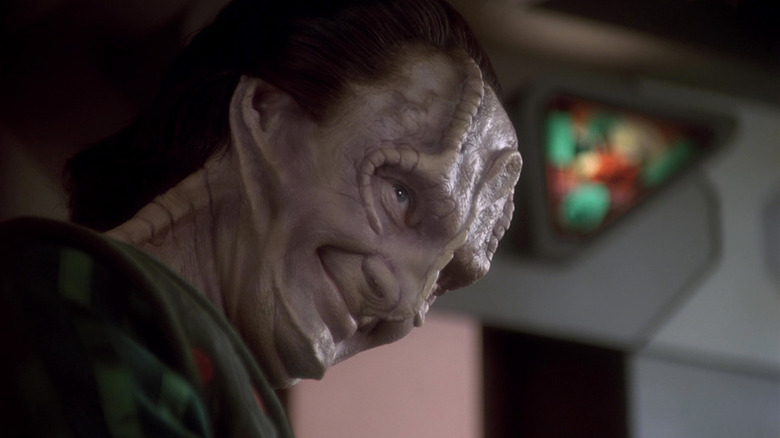
In "Deep Space Nine," the planet Bajor had just been freed from a Cardassian occupation that was very similar to that of the Nazi regime in 1940s Europe. There are some truly incredible episodes about the Cardassian Occupation on the "Star Trek" series that clearly mirror our own terrible history, but that doesn't mean that all Cardassian characters have to be sneering, cartoonish villains. Robinson wanted to ensure that there was some nuance to Garak, and thankfully, he got it:
"The historical parallel that I glommed on to was the Germans in World War II and the Nazi occupation of a place like Paris. And they did appear to be a militant and aggressive race that did some very cruel things. But what was nice, since it would have been boring for me to just to play a badass Nazi dressed as a Cardassian, was I was allowed to play Garak as a character with layers, in terms of his position. Was he a spy? Was he a tailor? And so forth. I often likened Garak being left behind or remaining on Deep Space Nine after the Cardassians had left as if there was this there was a German Wehrmacht officer in Jerusalem. What is this guy doing here where he is universally hated?"
Though Garak starts out as an enigmatic oddity, he eventually becomes one of the show's most complex and charismatic characters, even saving the day on more than one occasion (not that he would ever admit it). He also develops a begrudging mutual respect for the former Bajoran freedom fighter Major Kira Nerys (Nana Visitor) and ultimately makes up for some of his past evils with his heroism in the Dominion War by the time "Deep Space Nine" ends.
Deep Space Nine had some of Star Trek's most complicated villains
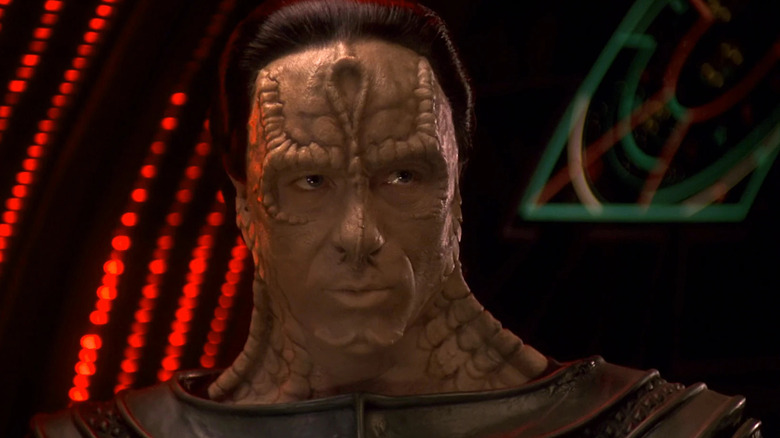
While Garak was probably more of an anti-hero than anything by the end of "Deep Space Nine," his complexity helped pave the way for other Cardassian characters to evolve in later seasons. Marc Alaimo's super-villain-y Gul Dukat was given moments of empathy and shown that he truly believed he was good, which was more interesting than if he had just been cruel for cruelty's sake. Not only that, but his right-hand man, Damar (Casey Biggs), ends up having one of the most complex arcs in all of "Star Trek," going from a dedicated law-abiding soldier to the leader of a rebellion.
With their clearly evil inspirations, the Cardassians could have easily been one-dimensional baddies, but Robinson's love for Garak and the willingness of the "Deep Space Nine" writers to give him depth helped make them one of the best-written and most important "Star Trek" alien species. Moreover, by allowing its various non-humans to be more than just simple tropes, "Deep Space Nine" created some of the greatest characters in the history of the "Star Trek" franchise. After all, that kind of open-mindedness is what "Star Trek" is all about.