

Hollywood As We Know It Is Dying – But The Next Generation Will Lead An Artistic Revolution
We must start with the gloom and doom, I'm afraid.
Hollywood is undergoing an inflection point. As we have all noticed, several major film studios have merged in recent years. Back in late 2009, Disney purchased all of Marvel, setting the Marvel Cinematic Universe into motion. This was successful, so Disney next purchased Lucasfilm. This was also successful, so Disney just went for the whole kit 'n' caboodle and purchased 20th Century Fox, a century-old film studio.
And that wasn't the end of it. Warner Bros. and Discovery mushed together, bringing about a horrid dystopia of slate-clearing and film-hating from the widely reviled CEO David Zaslav. Then Skydance/Paramount became a thing. A lot of these panicked mergers have been done to combat the rise of streaming and the fallout from the streaming wars.
It's no secret that studio CEOs are not movie lovers, but in recent years, they have been much more cutthroat. Art is vanishing as a result. It should also be acknowledged that several major companies have capitulated to a capricious presidential administration by settling fallacious lawsuits and giving the president millions of dollars. One might recall the Jimmy Kimmel debacle. Studios are under threat, and they're proven willing to bend the knee to survive. They also seem happy to scrap century-old businesses if it makes them a buck and puts them in the president's good graces.
Now, as of today, there is a bidding war over whether Paramount/Skydance or Netflix will absorb Warners. Netflix made an offer, and Paramount/Skydance offered a hostile takeover in return. According to Axios, the president's son-in-law is behind the hostile takeover.
This is the worst thing for mainstream entertainment.
But it may, if we can find some hope, be a good thing for art in the long run. Gen-Alpha may save us.
How did Hollywood get here?
How did we get here?
Beginning in the mid-1990s, and throughout the 2000s, Hollywood feared that the rise of the internet would eat into theatrical profits. One can see this in terrified anti-piracy PSAs and multiple feature films about how scary it was to use computers. (Remember the anti-A.I. messages of "The Matrix?") Then, in the aftermath of 9/11, Hollywood panicked again, sensing it could no longer bank on widespread mainstream action films that relied on images of citywide destruction (not to mention "bad guy" stereotyping) to carry the money. Also, the internet fractured culture, introducing a glut of online entertainment options that Hollywood felt it had to fight through.
Hollywood eventually settled on a surefire way to grab people's eyes: remakes, reboots, and re-imaginings. If a new film carried a familiar title, known characters, or a legacy of some kind, then studios could save money on advertising. Nostalgia would do all the hard work for them. Adapting established properties and recycling known franchises became a massive moneymaker, and for 15 straight years, the internet was obsessed with Marvel, "Star Wars," "Star Trek," slasher films, and many, many other remakes. Films have always been remade, of course, but by the 2010s, it seemed that the bulk of Hollywood's output was remakes or pop adaptations.
This, in turn, led to the vaunting of artistic "same-ness" across the board. A very specific kind of non-complex pop art was making billions, and Hollywood felt it could lean into I.P. in perpetuity. This is the only reason anyone is talking about A.I. as a viable creative tool: Studios have found that a lack of creativity has made them more money.
Hollywood's current model will certainly fail
The rise of reboots and the weakening of vertical integration, along with the fallout of the streaming wars, led directly into where we are today: a bidding war for a larger and larger piece of the pie, fueled not by creativity or a passion for film but by control over moribund I.P.
Warner Bros. has announced in recent years that it wants to go all-in with a "Harry Potter" TV series remake. Amazon, meanwhile, has been pouring billions into a "Lord of the Rings" prequel series. Over-milking I.P. has been a problem for a decade, of course, but studios have openly announced that they want to make the problem worse.
And there's no way this can hold. Indeed, it's already failing. Marvel films aren't the surefire hits they were in the 2010s. I suspect the "Harry Potter" show will be hurt by the anti-trans bigotry of the franchise's creator. And while remakes of animated films like "Lilo and Stitch" and "How to Train Your Dragon" have been making money, it's also proof that a new generation's nostalgia is required to keep this cycle going. Gen-X nostalgia for the 1980s is over, as Gen-Xers have aged out. Do young kids want to see more "Ghostbusters" movies? Another "Gremlins" film? The practice of revisiting pop culture wells has only resulted in a creative drought. Even trying to mine 100-year-old superheroes for cash isn't working as well. 2025's "Superman" was not an overwhelming super-hit, and its studio wants to keep it going. Cinematic universes are played out. This can't hold any longer. And it's all Hollywood wants to do anymore.
This is only anecdotal, but this Halloween, I saw fewer kids dressed as Superman than ever before.
The new generation has the solution for Hollywood at large
So, the immediate future looks bleak. We, the audience, are going to be offered nothing but pap until further notice. Studios will do everything they can to sell something they have already sold a hundred times. We the people will try to reconcile the decisions from a creative standpoint, of course (e.g. "Where does the new 'X-Men' universe fit in with the old one?" and so on), but we'll always know in the back of our heads that these are all commercially mercenary moves being made by a smaller and smaller handful of ultra-rich moguls who are quite openly in the back pocket of the presidential administration. Commercial art as we know it has heard the death rattle already.
But it's important to remember that the kids don't give a damn.
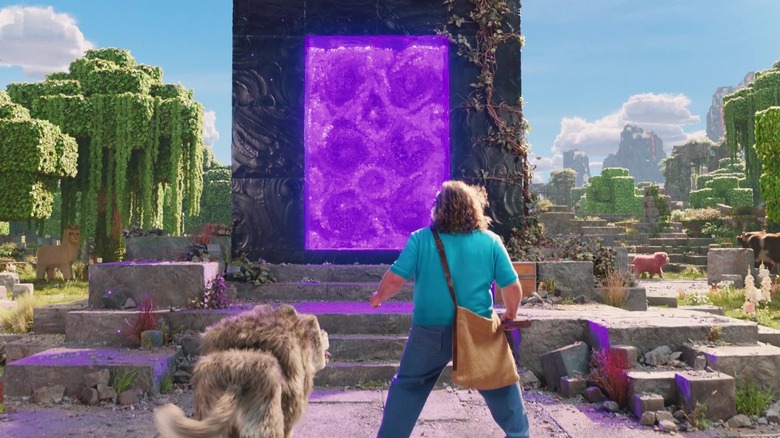
Gen-Alpha has not been touched by the current Hollywood model. They don't see movies as much. They might want to see "A Minecraft Movie," perhaps, but they would rather watch "Minecraft" videos at home. Object shows like "Battle for Dream Island" have bypassed the traditional modes of distribution to find audiences that pop culture at large is not aware of. The merge-monotony of modern Hollywood will kill the monoculture. But the fringe of Gen-Alpha kids will thrive in its rotting corpse.
It has always been in the indie world — outside of the studio system — that new voices, daring ideas, and stellar art has thrived. The best art never comes from within, anyway. It has always started on the fringe.
A kid posting on YouTube can get more eyeballs than any billion-dollar dead horse. The big studios are only offering curdled milk to the masses, and the kids are happy to say "no thanks." Gen-Alpha will save us.