

12 Sequels To Box Office Hits You Didn't Know Existed
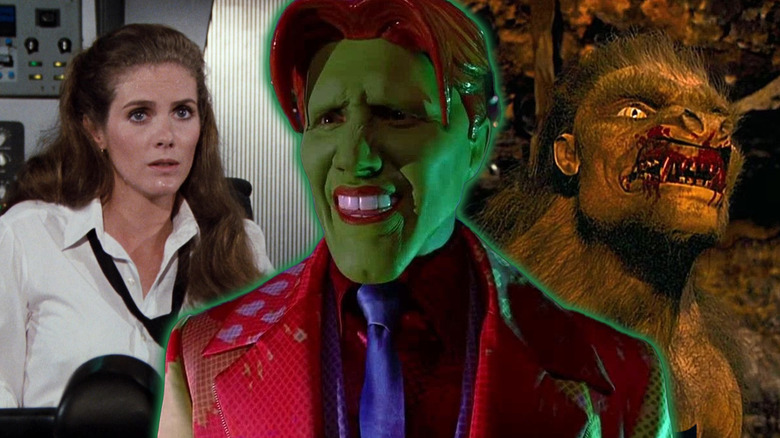
For every classic blockbuster movie, it feels like there are a multitude of sequels poised to capitalize on its success. In some rare cases, the sequel is better than the original movie, but in many instances, the same level of cinematic magic goes unmatched. More than just sequels that are notoriously bad, tarnishing the legacy of their predecessors, there are sequels that have largely become forgotten by modern audiences. Even some of the most beloved movies around have received follow-ups that most people wouldn't know existed at all.
To be fair, some of these are actually decent movies in their own right, but they never could compare to the film that preceded them, critically or commercially. Other follow-ups deserve their discarded status, feeling every inch the cheap cash-in that they are. For the purposes of this list, we're going to avoid the straight to home video sequels and focus on movies that got a wide theatrical release. Here are 12 sequels to box office hits that you didn't know existed and why they fell into obscurity.
French Connection II
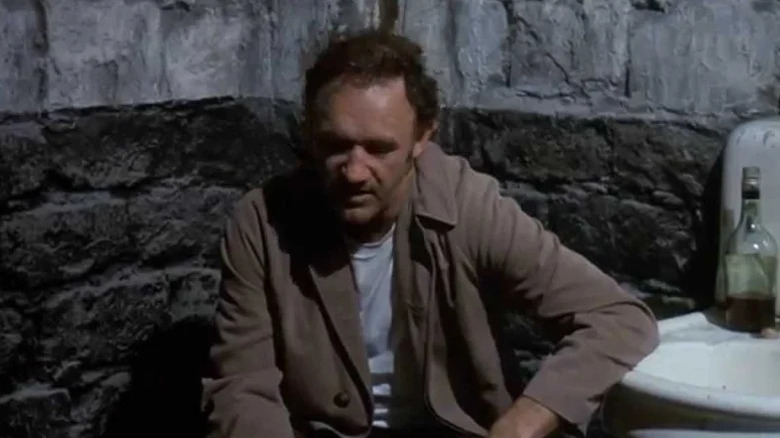
1971's "The French Connection" saw cop thrillers grow up and get real, with its villains either receiving light sentences or avoiding conviction altogether. The movie's 1975 sequel, "French Connection II," undercut the somber reality of its predecessor's ending, with Popeye Doyle (Gene Hackman) back on the case. The movie has Doyle sent to Marseille to apprehend drug kingpin Alain Charnier (Fernando Rey) and dismantle his narcotics empire funneling drugs into New York. Detecting Doyle's presence, Charnier resumes their feud, targeting the New York police detective with a heightened fury.
Although "French Connection II" was a modest box office success, earning over $12 million at the box office, it paled in comparison to the first movie's $41.1 million earnings. This is a shame because, while admittedly not as good as its predecessor, the 1975 film is a solid crime thriller with a unique setting in southern France. Hackman is back in fine form as a fish-out-of-water Doyle, delivering what is arguably his most underrated performance, particularly as Doyle and Charnier's vendetta intensifies. With its sequel failing to make the same splash, "The French Connection" didn't become a cop thriller franchise to rival "Dirty Harry," leaving its story contained to two movies.
Airplane II: The Sequel
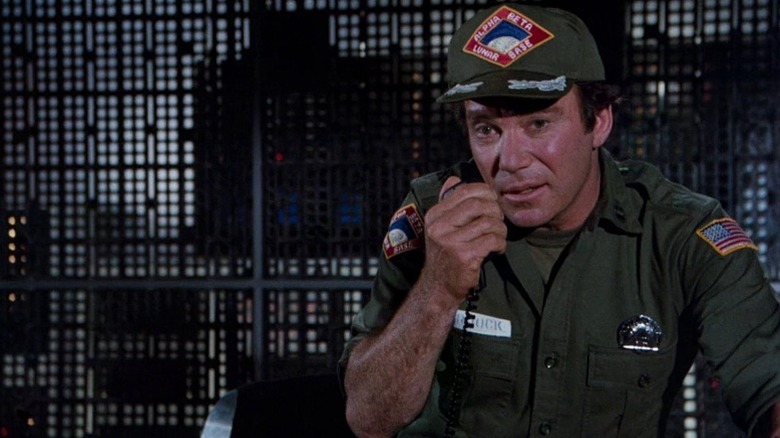
The fast-paced comedy style full of sight gags, slapstick, and parody embraced by franchises like "Scary Movie" got its start with 1980's "Airplane!" The landmark comedy's success led to a sequel being fast-tracked, reuniting several major actors from the original movie. Released in 1982, "Airplane II: The Sequel" took the zany disaster premise to outer space, following a commercial space shuttle traveling to a lunar colony. Ted Striker (Robert Hays) is back, this time overcoming his trauma to pilot the shuttle when its artificial intelligence program goes rogue.
Without the writers and directors from the first movie, "Airplane II" spends much of its runtime recycling gags from its predecessor. Even with the change in scope and sci-fi shift, the entire film just feels stale and uninspired. The best bit in this largely forgotten comedy sequel involves William Shatner parodying "Star Trek," complete with a surprise appearance from the Enterprise. Bringing in $27.1 million at the box office, a fraction of its predecessor's earnings, "Airplane II" grounded its franchise permanently.
The Sting II
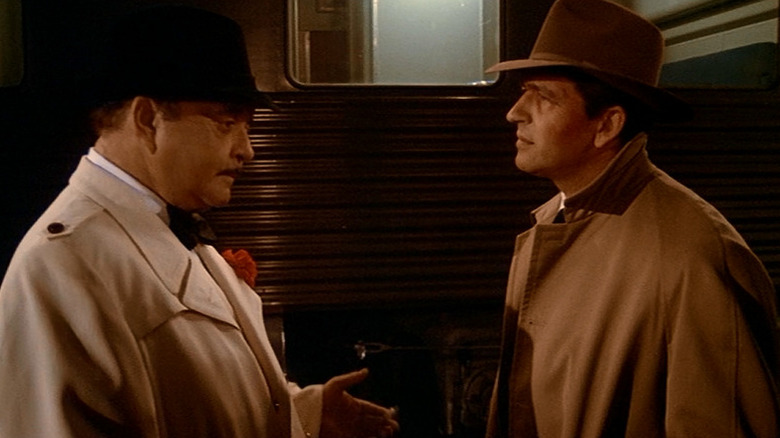
Screenwriter David S. Ward followed up the award-winning and enormously lucrative success of 1973's "The Sting" with a sequel exactly 10 years later. 1983's "The Sting II" swaps out Paul Newman and Robert Redford for Jackie Gleason and Mac Davis. Set in 1940, the movie has Fargo Gondorff (Gleason) out to avenge a fellow con artist murdered by a notorious mobster. Gondorff is joined by his protege Jake Hooker (Davis), targeting the murderous crime boss Doyle Lonnegan (Oliver Reed) around a planned boxing match.
Despite its title and some of the dialogue in the movie, "The Sting II" feels more like a remake of the original movie than a continuation. The character names, including Lonnegan's, are changed slightly, but the broad narrative strokes are retained. Unfortunately, none of the first movie's charm carried over to the 1983 sequel, despite its cast's best efforts. A dud at the box office and with critics, "The Sting II" is best left by the cinematic wayside for all parties involved.
Staying Alive
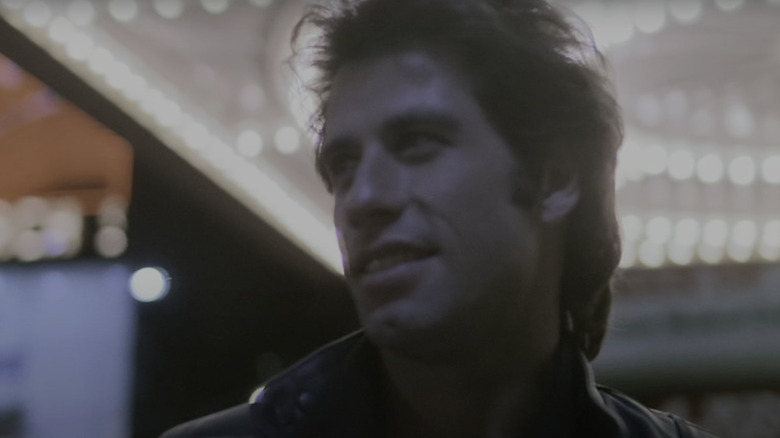
1977's "Saturday Night Fever" made John Travolta a full-on movie star in his breakout role as disco dancer Tony Manero. Six years later, the movie got a sequel, "Staying Alive," named for the iconic Bee Gees disco song of the same name. Tony is now trying to make his big break as a Broadway dancer, joining a lavish new production named "Satan's Alley." The 1983 sequel was directed, produced, and co-written by Sylvester Stallone, who makes a small cameo as a pedestrian.
"Staying Alive" is the only movie Stallone has directed without also starring in it, and it was a huge critical flop. Though a commercial success, earning over $164.8 million at the worldwide box office, the film didn't stay alive beyond its theatrical run. Instantly reviled by critics, the sequel is one of the many Travolta movies considered a total failure by Rotten Tomatoes, and that criticism isn't without merit. A complete disservice to the working-class story of Tony Manero, "Staying Alive" is best left ignored when thinking of the legacy of "Saturday Night Fever."
2010: The Year We Make Contact
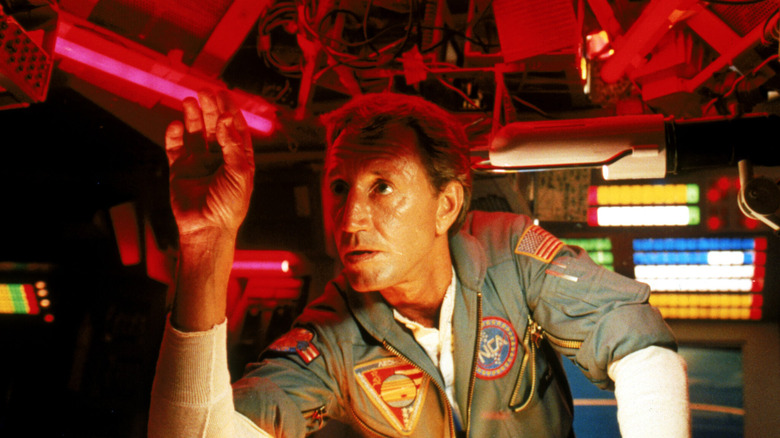
"2001: A Space Odyssey" is a landmark science fiction movie that revolutionized the genre and perception of space flight. Stanley Kubrick's classic had plenty of confusing moments, including its open-ended conclusion, making a sequel a tricky proposition. However, author Arthur C. Clarke wrote a follow-up novel titled "2010: Odyssey Two" in 1982, which was then adapted into the 1984 movie "2010: The Year We Make Contact." The film follows separate American and Soviet missions to Jupiter and its moons as the mystery of the monoliths and HAL 9000's lethal malfunction is explored.
"2010" is another one of those sequels that, even compared to the impressive legacy of its predecessor, is a surprisingly solid follow-up. The movie is easier to follow without compromising the story's interplanetary scope, though it does noticeably lack Kubrick's auteur-level vision. The production values are also strong, with the visual effects and art design largely meeting the bar set by its predecessor. "2010: The Year We Make Contact" is one of the most underrated sci-fi movies you need to watch, and it definitely deserves more recognition.
Caddyshack II
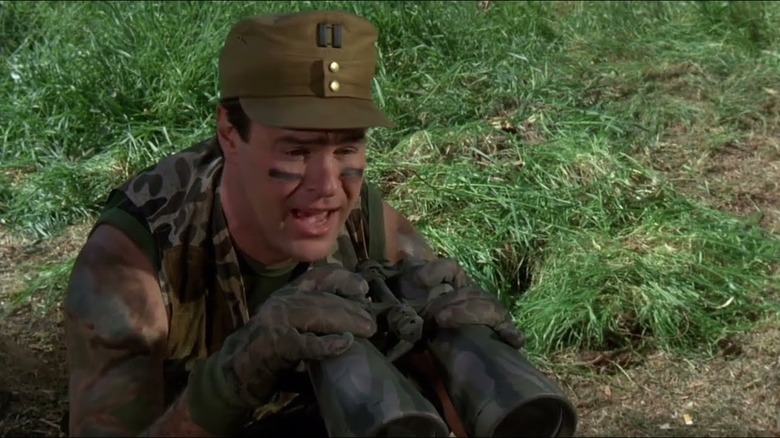
The 1980 sports comedy "Caddyshack" is one of the funniest movies released in the '80s, cementing Chevy Chase and Bill Murray as comic legends. A sequel was planned for years, though most of the main cast and creative team weren't interested in returning. What resulted was 1988's "Caddyshack II," which saw a new group of misfit golfers sticking it to the upper-crust figures of Bushwood Country Club. The movie revolves around land developer Jack Hartounian (Jackie Mason) challenging club president Chandler Young (Robert Stack) to a golf match to determine the fate of the club.
All due respect to Jackie Mason, but replacing him in the archetypal role previously held by Rodney Dangerfield was just never going to work. Dan Aykroyd does his best as a ridiculous survivalist who battles the club's notorious gopher, not unlike Murray's character in the original film, but it's still not enough. All of the jokes fall flat, the plot feels like an uninspired retread of the first movie, and it just seems like none of the cast wants to be there. The audience didn't want to be around for "Caddyshack II," either, with the 1988 sequel only earning $11.7 million at the box office.
The Two Jakes
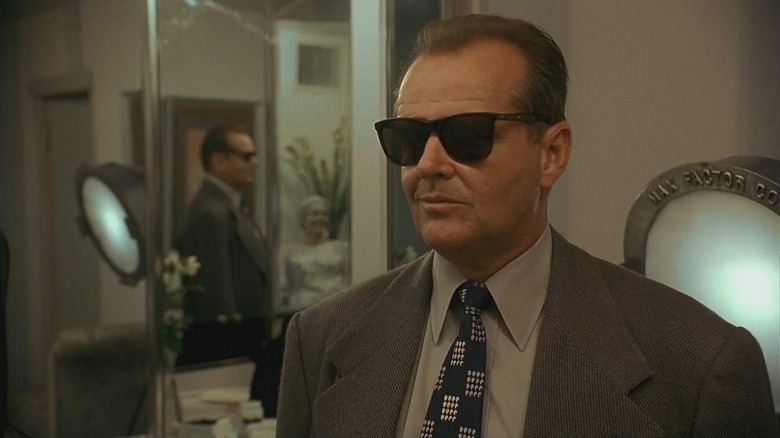
One of the four Jack Nicholson movies that dominate the IMDb top 250 list is 1974's "Chinatown," with Nicholson starring as private investigator Jake Gittes. Nicholson reprised his role as Gittes in the 1990 sequel "The Two Jakes," with Nicholson also serving as the movie's director. Set in 1948 Los Angeles, Gittes becomes embroiled in an apparent adultery case involving powerful businessman Jake Berman (Harvey Keitel) and his unfaithful wife Kitty (Meg Tilly). When this escalates into the murder of Berman's partner, who was having an affair with Kitty, Gittes has to prove his innocence and discover the truth behind the killing.
Yes, "The Two Jakes" has the benefit of not having an icky association with the original film's director, Roman Polanski, but it still falls far short of its predecessor. The mystery that Gittes is investigating this time around isn't as compelling as the one in its predecessor, nor does Nicholson bring the same level of easygoing neo-noir charisma. Contemporary audiences responded accordingly, with the movie becoming a box office bomb, barely earning $10 million during its theatrical run. Nicholson would never direct another movie again, and "The Two Jakes" became Jake Gittes' swan song from the big screen.
An American Werewolf in Paris
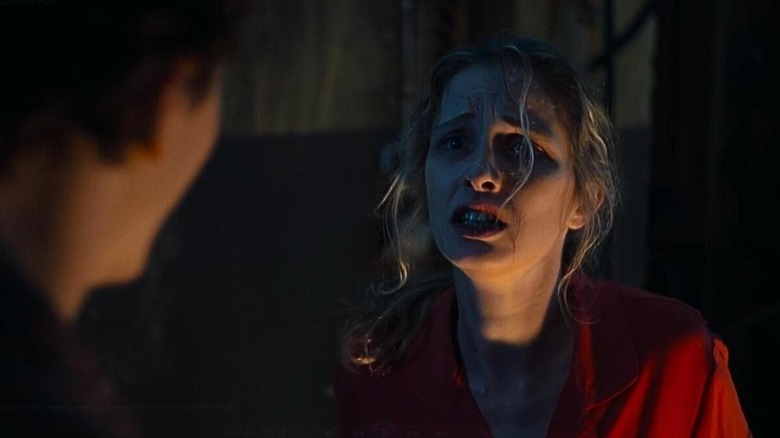
We almost got an "American Werewolf in London" sequel from John Landis in the '90s; instead, what we ended up with is 1997's "An American Werewolf in Paris." The movie follows American tourist Andy McDermott (Tom Everett Scott) as he encounters an intriguing young woman named Sérafine Pigot (Julie Delpy). Andy and his friends then stumble upon a nightclub that its operator, the enigmatic Claude (Pierre Cosso), uses as a front to lure prey for him and his fellow lycanthropes. Newly cursed, Andy must kill Claude and devour his heart to free himself and Sérafine from their lives as werewolves.
From its use of cheap visual effects for the werewolves to a generally nonsensical story, "An American Werewolf in Paris" is a sequel in name only. Any laughs to be had from this horror comedy are unintentional at best, and the attempted scares aren't all that scary. Whereas "An American Werewolf in London" manages its disparate tonal balance well, its 1997 follow-up has no idea what it wants to be. A cheap cash-in on its predecessor's name and legacy, "An American Werewolf in Paris" is bargain bin garbage.
Blues Brothers 2000
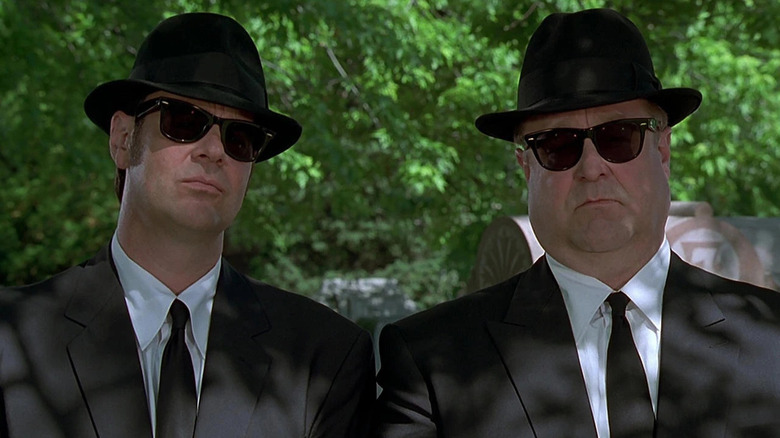
1980's "The Blues Brothers" is a modern musical classic, juxtaposing rhythm and blues legends with police chases throughout the greater Chicago area. While hope for a sequel seemingly died with the passing of original star John Belushi, a follow-up eventually materialized with 1998's "Blues Brothers 2000." After being released from prison, Elwood Blues (Dan Aykroyd) mentors a young orphan nicknamed Scribbles (J. Evan Bonifant) while reforming the Blues Brothers Band. As they head to Louisiana for a big blues competition, the band is pursued by both the police and the Russian mafia, whose wrath Elwood has incurred.
Even without Belushi's presence, "Blues Brothers 2000" feels like an incredibly watered-down version of what made the original movie great. Relegated to a PG rating, all the humor that helped make the first movie memorable is significantly neutered, while the replacements for Belushi never quite feel up to the task. To the movie's credit, it does have even more musical numbers and blues and soul music legends than its predecessor, culminating in an all-star battle of the bands. Ultimately, "Blues Brothers 2000," a film that didn't even have the decency to come out in 2000, is a sequel that truly didn't need to happen.
Dirty Dancing: Havana Nights
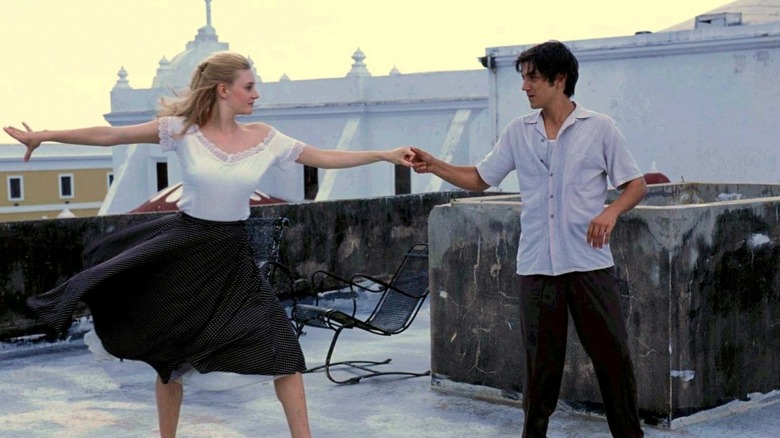
If we're getting technical, "Dirty Dancing: Havana Nights" is actually a prequel to 1987's "Dirty Dancing," with the 2004 movie set five years before its predecessor in 1958. The movie follows American high schooler Katey Miller (Romola Garai), who relocates to Havana with her family during the Cuban revolution. Initially socially withdrawn, Katey becomes infatuated with local dancer Javier Suarez (Diego Luna), despite her family and their peers' disapproval. As the romance between Katey and Javier blossoms, they enter a dance competition, all while the revolution intensifies around them.
Apart from Patrick Swayze appearing in a glorified cameo as a local dance instructor, there is little connecting "Havana Nights" to the original "Dirty Dancing." The film tries to deepen the class divide themes present in the first movie with its period piece Cuban setting, but it fails to do anything particularly interesting with it. Similarly, Luna is reliably good in one of his earliest Hollywood projects, but he doesn't get substantial material to work with. A legacy follow-up in name only, "Dirty Dancing: Havana Nights" tried and failed to capitalize on the "Dirty Dancing" name-brand association for its uninspired coming-of-age story.
Son of the Mask
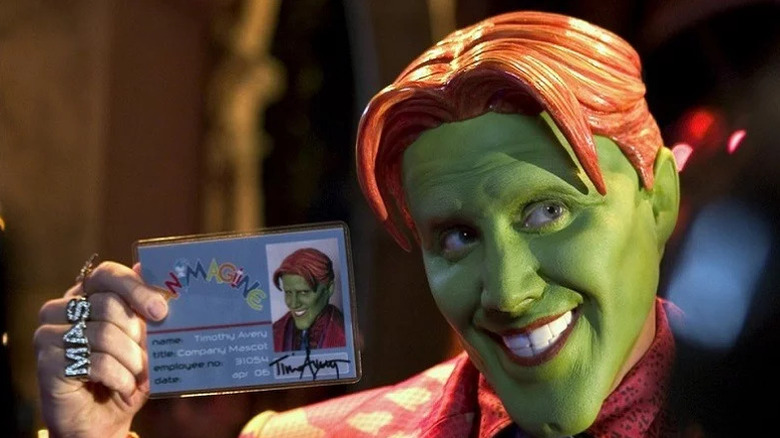
"The Mask" is one of three Jim Carrey comedy movies released in 1994 that catapulted him to being one of Hollywood's top comedic lead actors. A follow-up was in various stages of development but, despite the original film's success, Jim Carrey never made a sequel to "The Mask," leaving those plans to be heavily retooled. This resulted in 2005's "Son of the Mask," building on the first movie's backstory that the titular mask belonged to the Norse God of Mischief Loki (Alan Cumming). In the film, the mask comes into the possession of animator Tim Avery (Jamie Kennedy), who impregnates his wife while wearing the object, resulting in a baby who inherits the mask's chaotic powers.
What makes the original "Mask" work is that Carrey can sell the zany energy required by his role, coming off memorably as a living cartoon. Kennedy and the other actors who wear the mask in "Son of the Mask," on the other hand, have none of that charm or charisma, coming off as loud, unfunny, and just thoroughly grating. The movie tries to echo Looney Tune dynamics by featuring a baby and dog with mask powers in a slapstick standoff, but it's unable to generate a single laugh. Yet another sequel that deserved to go straight to home media rather than garnering a theatrical release, "Son of the Mask" was dead on arrival.
Basic Instinct 2
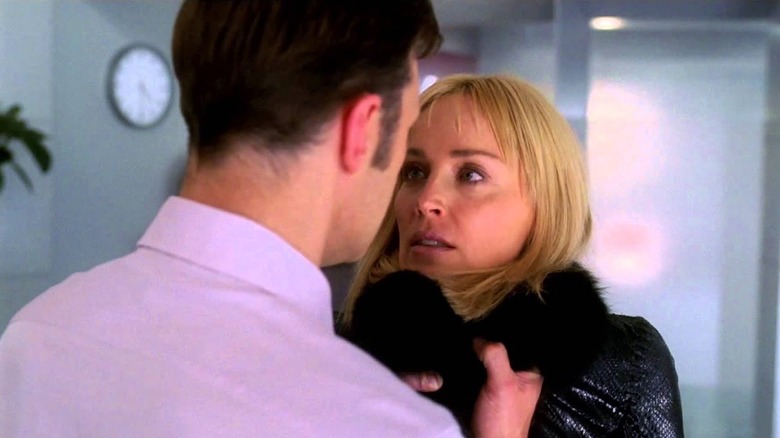
As far as erotic thrillers go, the gold standard is 1992's "Basic Instinct," which starred Sharon Stone as the murderous novelist Catherine Tramell. Stone eventually reprised her iconic role 14 years later for 2006's "Basic Instinct 2," revealing that Tramell had since relocated to London while maintaining a dangerous reputation with her lovers. After being suspected in the death of her latest boyfriend, Tramell is mandated to regularly visit a psychiatrist, Michael Glass (David Morrissey), who becomes intrigued by her. As the pair's dynamic evolves into a bad romance, a string of killings connected to them creates a mystery concerning the killer's identity and motives.
"Basic Instinct 2" is more lurid and salacious than its predecessor, but an increased emphasis on sex doesn't equate to a better movie. At this point in her career, Stone could've played the confident and manipulative Tramell on autopilot, but that couldn't save the film's half-baked plot. There's just a general unpleasantness that permeates through this sequel along, along with noticeably clumsier production values from top to bottom. A feel-bad movie with no discernibly redeeming qualities, "Basic Instinct 2" failed to reinvigorate Stone's career as she revisited her most memorable role.