

The Lord Of The Rings: The Rings Of Power Timeline, Explained

Prime Video's sweeping fantasy series "The Lord of the Rings: The Rings of Power" offers its own telling of J.R.R. Tolkien's stories set in the world of Middle-earth. Starting millennia before the events of "The Hobbit," "The Rings of Power" changes Tolkien's "LOTR" timeline in one key way by significantly compressing it. The history of Middle-earth is divided into three eras known as Ages, with "The Hobbit" and "The Lord of the Rings" taking place in the Third Age. The majority of "The Rings of Power" takes place in the Second Age, albeit admittedly not always as explicitly chronicled in various published works by Tolkien describing the era.
For those curious about how these moments compare to Tolkien's works, we've laid out the major events depicted in the Prime Video series with their literary years of their occurrence. For those who haven't fully caught up with the show and don't want to learn potential details about what could occur in future seasons of "The Rings of Power," be aware there are spoilers from Tolkien's text ahead. Here is the "The Lord of the Rings: The Rings of Power" timeline explained in comparison to its literary source material.
First Age 465: Death of Finrod
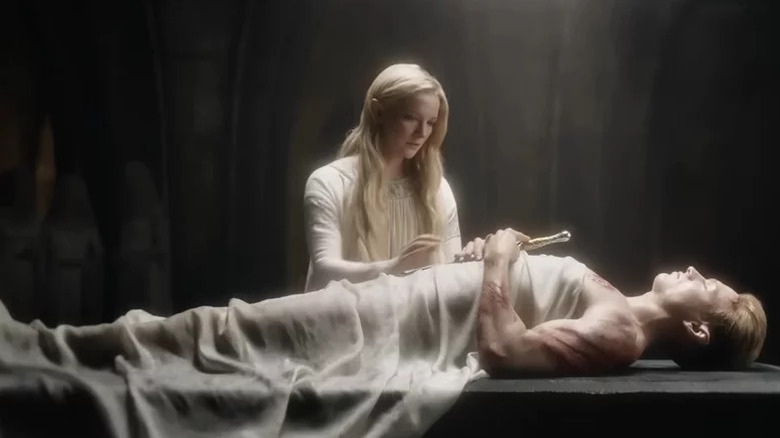
Of the things glimpsed in the opening prologue to "The Rings of Power" is the death of Finrod (Will Fletcher), the brother of Galadriel (Morfydd Clark). Killed while hunting for Sauron (Charlie Vickers), Finrod's death galvanizes Galadriel to obsessively hunt for the Dark Lord herself. The show's main narrative picks up thousands of years after this killing, with Galadriel continuing her search for Sauron as determined as ever. This relatively stays in line with Tolkien's published Middle-earth history book "The Silmarillion," which places Finrod's death during the First Age in 465.
Finrod's feud with Sauron began after the fall of the villainous Morgoth, also known as the Dark Lord Melkor. It was Morgoth who created the first orcs in Middle-earth, and Sauron was the heir apparent to the tyrant's dark legacy. This prompted Finrod to seek Sauron out and defeat him before he could rival Morgoth's power, only to be killed unsuccessfully in his quest. In "The Silmarillion," Finrod is killed by a werewolf sent by Sauron while "The Rings of Power" suggests Finrod and his companions were overwhelmed by Sauron's orcs.
Second Age 1000: Sauron claims the region of Mordor
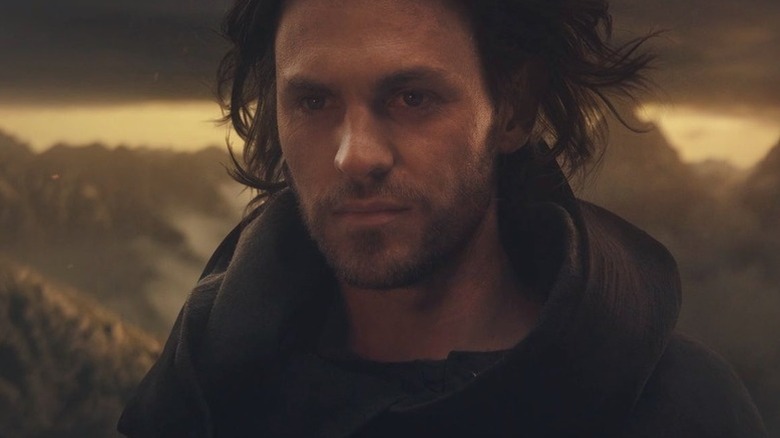
One of the biggest moments in the first season of "The Rings of Power" was the eruption of Mount Doom, effectively creating hell on Middle-earth as the Southlands are devastated. The series proclaims that this region is now known as Mordor, the ominous region where Sauron still holds dominion in "The Lord of the Rings." While Sauron did claim Mordor as his own during the Second Age, in the year 1000, Mount Doom was already active and Mordor had its name long before. "The History of Middle-earth," a collection of text by J.R.R. Tolkien edited and published by his son Christopher Tolkien, reveals Morgoth created Mount Doom and Mordor in the First Age.
After seizing control of Mordor, Sauron immediately begins constructing his fortress tower of Barad-dûr which looms over the region. Unlike in "The Rings of Power," there is no antagonistic Adar (Sam Hazeldine) who opposes Sauron's return to command the orcs and other dark forces of Mordor. This makes Sauron's dominion over the region relatively unchallenged for this period of the Second Age as he steadily builds power. However, ready to spread his conquest across Middle-earth, Sauron sets his sights on the elves in their realm of Eregion.
Second Age 1200: Sauron arrives in Eregion
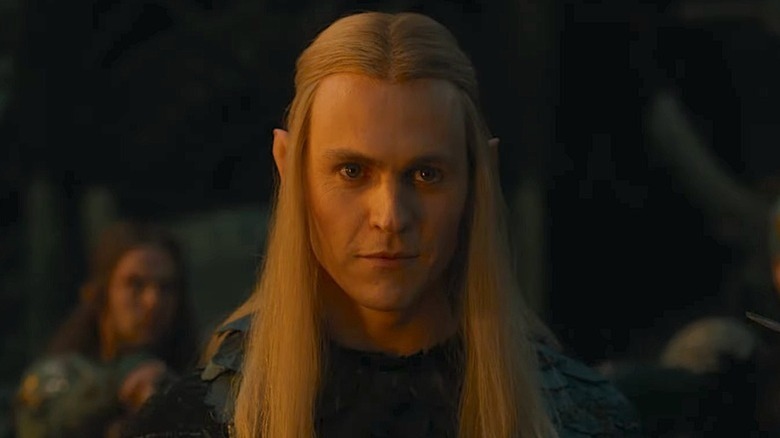
The elven craftsman Celebrimbor (Charles Edwards) came from a long line of noteworthy elven artisans, with his grandfather Fëanor creating the legendary Silmarils in the First Age. Sauron preys upon Celebrimbor's quiet ambitions to match or surpass his grandfather's celebrated accomplishment through disguise and deception to create something more sinister for himself. Sauron takes on the elaborate guise of Annatar, claiming to be an emissary of the Valar, angelic beings revered by the elves. With this disguise, Sauron charmed Celebrimbor and began steering him towards creating something that could secretly channel his dark power.
This is where the timeline between Tolkien's text and "The Rings of Power" begins to noticeably diverge in service of the series' story. In the Prime Video show, Celebrimbor starts forging the rings shortly after being deceived by Sauron in his illusionary form of Annatar. In "The Silmarillion," Sauron doesn't befriend Celebrimbor right away, instead deceiving other elven craftsmen around Eregion when he first arrives in 1200 of the Second Age. Sauron is playing a patient longer game in the text that the show understandably sped up to maintain its momentum and sense of urgency.
Second Age 1500: The forging of the Rings of Power begins
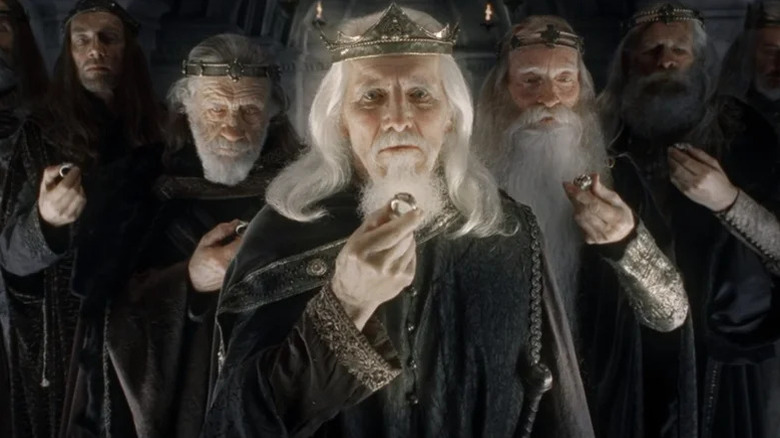
In "The Silmarillion," the forging of the Rings of Power begins three centuries after Sauron first visits Eregion while disguised as Annatar in 1500 of the Second Age. Having earned Celebrimbor's trust, Sauron tricks him into forging the Rings of Power under the disguised Dark Lord's wishes. These rings are intended for the nine human kings and seven dwarven kings, with Celebrimbor moving to forge three rings for the elves after growing more confident in his craft. This is the order in "The Silmarillion," anyway; "The Rings of Power" significantly changes up the order in which the rings are forged.
With the show's accelerated timeline, "The Rings of Power" depicts the rings as being forged within a matter of weeks or months, not the decades that transpire in Tolkien's text. There's a lot to explain about the lesser rings, but simply put, the human rings are controlled by Sauron's meddling. "The Rings of Power" elaborates that Sauron contaminated the human rings with his blood, corrupting them on an elemental level. This magic proved less effective for the dwarven rings, and the elven rings are a completely different story altogether.
Second Age 1590: The elven Rings of Power are completed
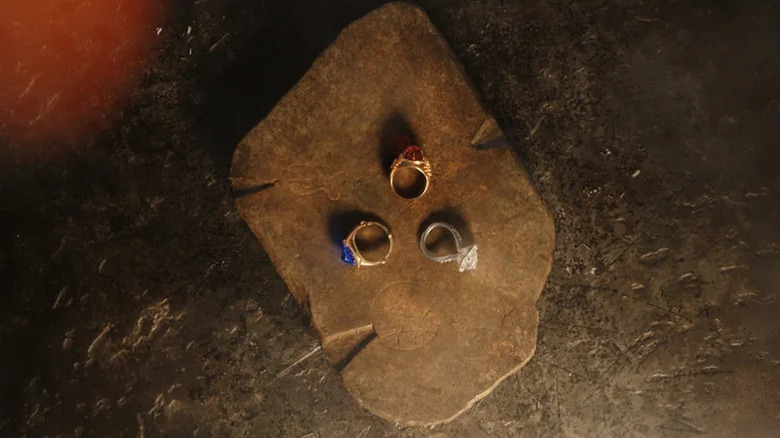
"The Silmarillion" details the elves eventually learning the truth behind Sauron's longstanding deception and forging their own rings in secret in 1590 of the Second Age. In Tolkien's text, Sauron's attention is diverted back to Mordor for several long-term projects nearing their own clandestine completion. This meant Celebrimbor was able to create the three elven Rings of Power without Sauron's meddling, making their wearers able to avoid being corrupted by Sauron's influence. This is another one of those plots that was rearranged for the sake of story in "The Rings of Power."
When "The Rings of Power" season 1 came to its epic end, it had Sauron arrive in Eregion under the human guise of Halbrand. Though the disguised Sauron was still able to inspire Celebrimbor to forge the Rings of Power, the elven smith did so under the direction of Galadriel instead. This occurs before Sauron resurfaces in Eregion as Annatar and before Celebrimbor is deceived into making corrupted rings for the other races. The attempt to mitigate Sauron's deceit is still present, albeit under much different circumstances than depicted in "The Silmarillion."
Second Age 1600: The One Ring of Power is completed
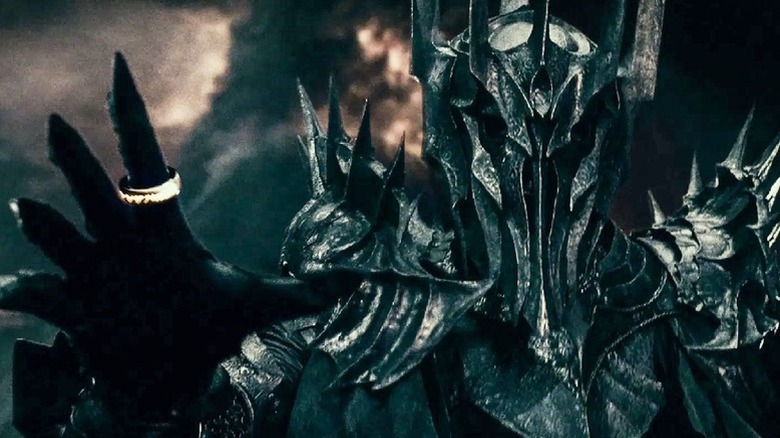
In his time visiting the elves disguised as Annatar, Sauron learned the magical ring-smithing secrets from Celebrimbor and other craftsmen in Eregion. Taking this knowledge back with him to Mordor, Sauron began forging his own ring in the fires of Mount Doom in secret. By 1600 in the Second Age, this forging was completed, with the resulting project becoming known as the One Ring of Power. Due to Sauron's influence over the forging of the Lesser Rings, the One Ring gave him dominion over the human rings and fueled malevolence in those wearing the dwarven rings.
"The Rings of Power" also rearranges this element from "The Silmarillion" in its own way to serve its version of the story. Though Tolkien placed the One Ring's completion before the siege of Eregion, the series has this event occur afterwards. Another major development in Mordor in 1600 is the completion of Barad-dûr, Sauron's sinister tower fortress, years before the attack on Eregion. There are certainly references to Barad-dûr in "The Rings of Power," but in the show, the fortress hasn't quite been completed just yet.
Second Age 1695-1697: Sauron attacks Eregion
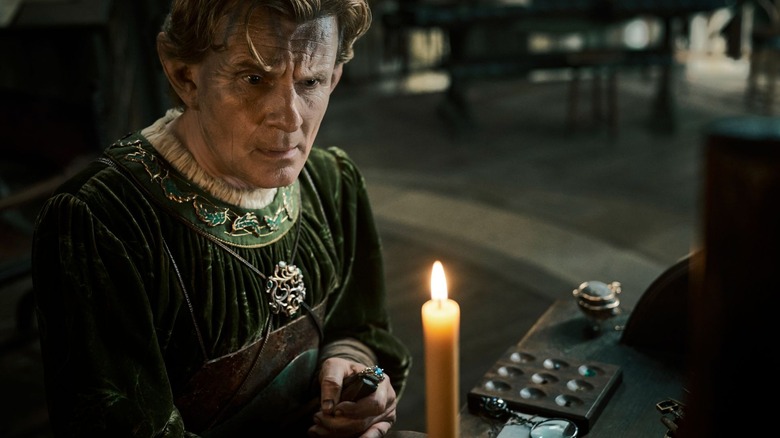
In the books, after realizing his deception had been discovered and that the elves had forged rings unaffected by the One Ring, Sauron decided to attack Eregion. Sauron's orc army lays siege to Eregion in 1695 of the Second Age, with the elven kingdom falling two years later. In "Unfinished Tales of Númenor and Middle-earth," a collection of incomplete text by Tolkien edited and published by his son Christopher, Celebrimbor is revealed to have been captured. Sauron personally tortures Celebrimbor for the location of the Lesser Rings of Power, but when he refuses to divulge the location of the elven rings, Sauron executes him.
"The Rings of Power" significantly accelerates the fall of Eregion, rather than presenting it as a protracted multi-year siege. What both the text and the show reveal is that the elven refugees create the realm of Rivendell after the siege is completed. Tolkien's text specifically places both the sacking of Eregion and the founding of Rivendell taking place in 1697. Eregion has special significance in "The Rings of Power," and it was always going to play in the role even if the timeline placement didn't quite match.
Second Age 3255: Ar-Pharazôn seizes power in Númenor
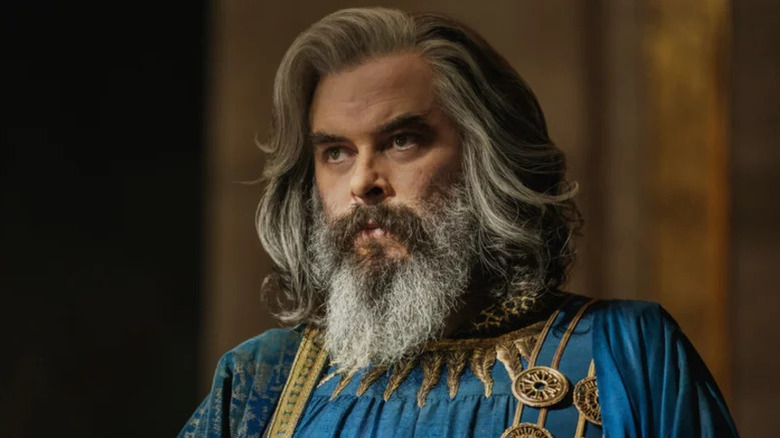
The course of the Second Age wasn't decided entirely by elves and Sauron, with humanity playing a vital role in Middle-earth. During this period, the greatest human city is Númenor, an island kingdom with one of its more prominent rulers being King Tar-Palantir (Ken Blackburn). In 3255 of the Second Age, Ar-Pharazôn (Trystan Gravelle) seizes power to become the 25th and final King of Númenor. In "The Rings of Power," Ar-Pharazôn takes power by accusing Tar-Palantir's daughter, Tar-Míriel, of aligning herself with Sauron, whereas "The Silmarillion" has him take power by forcibly marrying Tar-Míriel instead.
Númenor is one of the most important locations in "The Rings of Power," derived straight from Tolkien's text. As with other previously mentioned events, Ar-Pharazôn usurping the throne of Númenor is something rearranged for the show's timeline. Something that the television series is unlikely to follow is that Ar-Pharazôn ruled Númenor for over 60 years. In a version of the story that feels more urgent and immediate, Ar-Pharazôn's dictatorial rule in "The Rings of Power" will likely be more short-lived.
Second Age 3319: Númenor is destroyed
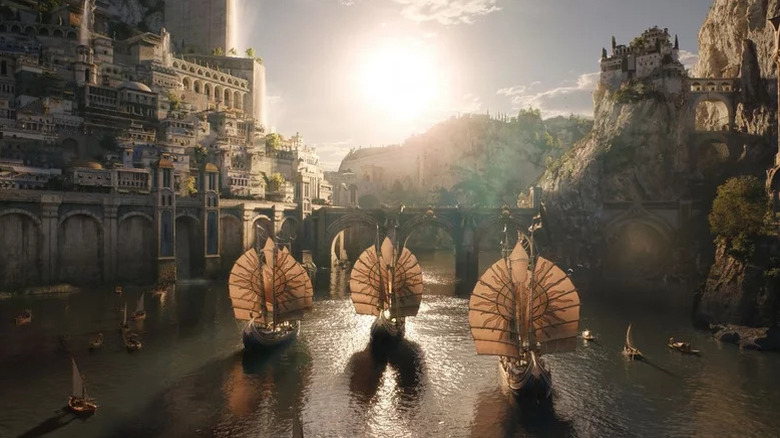
Across his reign as King of Númenor, Ar-Pharazôn alienates humans from their allies, particularly the elves, under the malevolent influence of Sauron. "The Rings of Power" already illustrates Ar-Pharazôn's paranoia of other races in his populist speeches and political grandstanding. Under his rule, the glory of Númenor swiftly faded while Ar-Pharazôn grew increasingly erratic in his advancing age. This led to Ar-Pharazôn commanding the Númenorean military to attack the Undying Lands when Sauron tricks him into believing he could claim elven immortality by force.
This final injustice proves to be the last straw for Middle-earth's supreme deity Eru Ilúvatar, who destroys Númenor with a mighty tidal wave in 3319 of the Second Age. The surviving humans recognize Elendil (Lloyd Owen) as their next true king the following year, with him establishing his kingdom in Arnor on the northern end of Middle-earth. With "The Rings of Power" featuring a compressed timeline, Ar-Pharazôn is about to lead Númenor to wickedness and betrayal of its allies sooner than the text. This comes as Elendil already takes a stand against the usurper, placing his family on the road to royal ascension.
Second Age 3430: The humans and elves ally to defeat Sauron
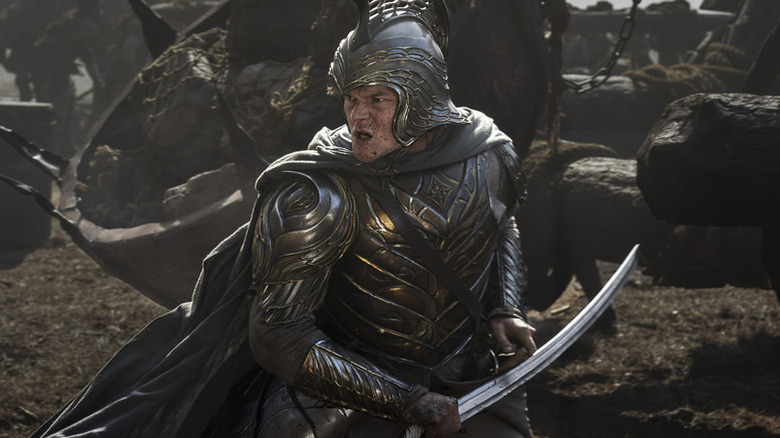
With humanity united under the leadership of King Elendil, they began to repair the relationships that Ar-Pharazôn had fractured. The most important renewed alliance was between humanity and the elves, particularly between Elendil and the elven High King Gil-galad (Benjamin Walker). Elrond had also become an increasingly important figure among the elves ever since the founding of Rivendell in 1697, which had only grown in the ensuing centuries. This restored alliance faced its greatest challenge when Sauron raised a new army of orcs and marched on the neighboring human Kingdom of Gondor.
Gil-galad and Elendil form a unified army of humans and elves to push back Sauron's invading army, though the subsequent war against Mordor is a long and costly one. The appendices to "The Lord of the Rings: The Return of the King" list this military alliance as being created in 3430 of the Second Age. All the key players from this alliance have already been introduced in "The Rings of Power," setting the stage for its formation. And given that Elendil and his line are blessed with incredibly long lifespans, he and his children could certainly survive a time jump.
Second Age 3441: Sauron is destroyed by Elendil's son Isildur
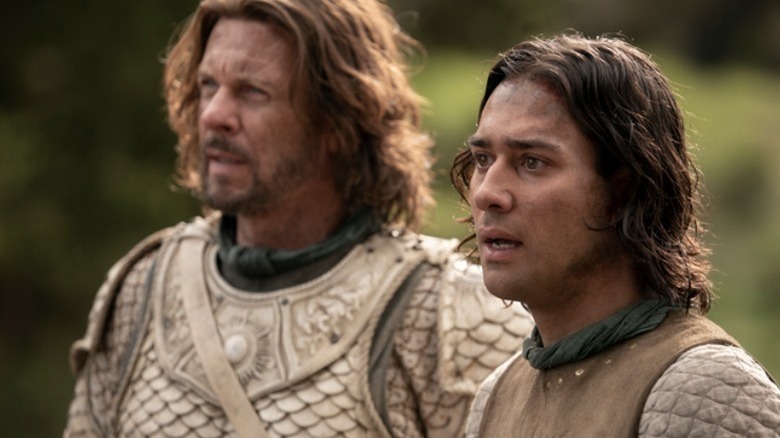
By 3441 of the Second Age, the human and elven alliance had pushed back Sauron's forces back into Mordor as the grueling war entered its final stages. This culminated in a grand battle at the foot of Mount Doom where Sauron himself entered the fray. During this frenzied fracas, Sauron managed to kill both Elendil and Gil-galad personally, which was witnessed by Elendil's son Isildur (Maxim Baldry). The appendices to "The Fellowship of the Ring" elaborate on this moment, noting that Sauron burned Gil-galad to death with his very touch.
As Isildur engaged Sauron to avenge his father, he seized Elendil's shattered sword Narsil to defend himself as the duel grew more desperate. With its broken blade still incredibly sharp, Isildur manages to cut off Sauron's finger bearing the One Ring, destroying him in an instant. "The Rings of Power" unveiled this important object from "The Lord of the Rings" in its second season finale, with Elendil claiming the mythical sword. Of course, Sauron wasn't completely destroyed, but would be severely weakened for millennia as he tried to recover from being separated from the One Ring.
Third Age 1000: Gandalf arrives on Middle-earth
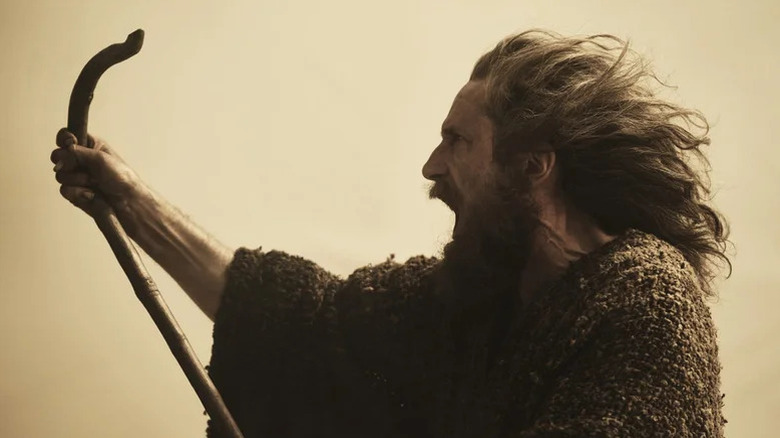
The last major event to date depicted in "The Rings of Power," though at a significantly earlier date than the text, is the arrival of Gandalf. Played by Daniel Weyman, the wizard is depicted as a tall and strange man who crash-lands on Middle-earth and is discovered by Nori Brandyfoot (Markella Kavenagh). Initially referred to simply as the Stranger, the "Rings of Power" season 2 finale reveals the Stranger's identity as Gandalf after widespread speculation given his magical powers and appearance. The fascinating thing is that in the show, this occurs millennia before Gandalf is cited as arriving on Middle-earth in Tolkien's text.
In "Unfinished Tales," the wizards are described as arriving on Middle-earth separately during the Third Age, sent by the Valar. Gandalf is the last wizard sent to Middle-earth, arriving in 1000 of the Third Age, appearing clad in grey, slightly older than his counterparts, and armed with his staff. In "The Rings of Power," Gandalf's earlier introduction serves as a counterpoint to Sauron's resurgence after being overthrown by Adar. And with "The Hobbit" not starting until 2941 of the Third Age, "The Rings of Power" strengthens the history between Gandalf and the halflings earlier in the timeline.