

Liam Neeson's Derry Girls Cameo Explained
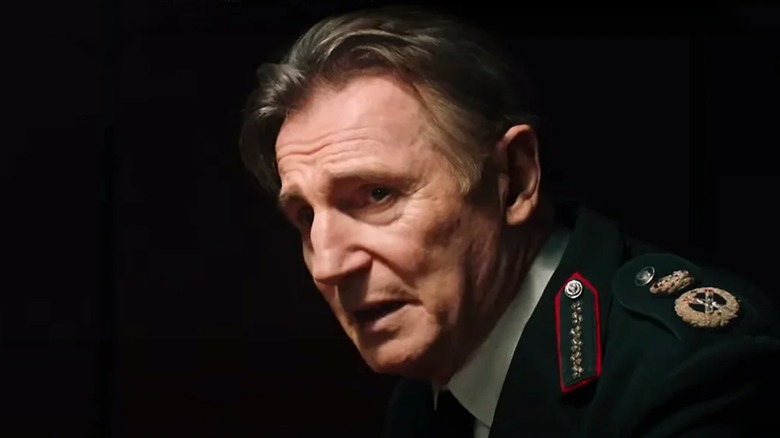
Northern Ireland-set sitcom "Derry Girls" is beloved at home and abroad. By the time its third and final season came around in 2022, it even scored a cameo from a genuine Irish acting icon: Liam Neeson, who plays Inspector Byers of the Royal Ulster Constabulary (RUC).
Like most "Derry Girls" episodes, the season 3 premiere "The Night Before" packs a lot into 20ish minutes. The girls break into their school to get an early peek at some exam results, and are duped into helping two burglars posing as janitors. The Derry Girls are left holding the bag when the RUC arrive, so they're arrested and faced with questioning from Byers.
On one hand, casting a huge Irish celebrity like Neeson in a bit part can't help but feel gratuitous. Yet, Neeson still fits the scene and disappears into it as much as a movie star like him can. For the cold, serious policeman, you need an actor who is intimidating and commands immediate respect, but can play that for comedy. If Neeson's turn in "The Naked Gun" reboot somehow didn't make you laugh, check out his "Derry Girls" cameo.
The Derry Girls, being Catholics, fear the RUC — a Protestant-run organization that serves the British crown — will frame them for a quick conviction. Indeed, the question that finally stumps Byers is Erin (Saoirse-Monica Jackson) asking how many Catholics serve in the RUC: Three, counting one "Jewish fella from Ballymena." (This could be an inside joke, because Ballymena is Neeson's real hometown.)
But the Girls have an ace-up-their sleeve. Since they're minors, they call Erin and Orla's (Louisa Harland) boring and long-winded great-uncle, Colm (Kevin McAleer). By the end of Colm's inane story, Byers is telling the girls to leave and "for the love of suffering Jesus, take [Colm] with you."
Liam Neeson is a 'huge' fan of Derry Girls
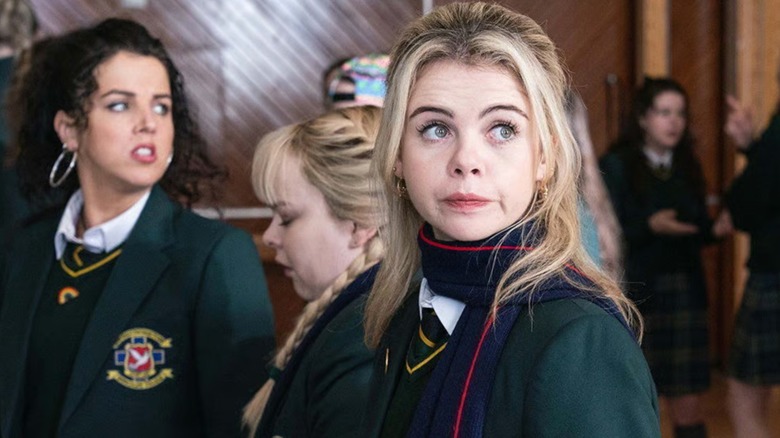
"Derry Girls" creator Lisa McGee, who wrote all 19 episodes of the show, grew up in Northern Ireland during the Troubles (the guerilla conflict between Catholic Irish nationalists and Protestant U.K. loyalists). Like Erin and her friends, McGee was a teenager when the conflict finally came to an end in the late 1990s, and she drew on her youth in writing the show.
The success of "Derry Girls" has been credited to its authenticity as much as its gut-busting humor. Both of those qualities must've resonated with Neeson; he called himself a "huge fan" of the show in a statement released by the U.K.'s Channel 4, home of "Derry Girls":
"I was delighted to be able to play a wee part of the final series of Derry Girls. [...] It's such a unique and special show with real heart and amazing to see the lives of ordinary, funny people living in Northern Ireland during The Troubles played out in a Channel 4 comedy. It was lovely to be back filming there and having fun with them all."
The third season of "Derry Girls" was delayed by the COVID-19 pandemic. (This also gave the first two seasons time to take off, especially with the show streaming internationally on Netflix.) That makes it all the more impressive the show managed to wrangle Neeson in for a small role.
Neeson's cameo in "The Night Before" has a rule of three running gag; Erin, paranoid about a trumped up conviction, recites exactly what is happening aloud to prevent a frame job. She specifies she is speaking "for the tape," and Byers replies in increasing frustration: "There is no tape." Neeson's delivery makes the gag all the funnier.
Derry Girls draws on Liam Neeson's own Irish upbringing
When the Derry Girls are arrested, an anxious Clare (Nicola Coughlan) mentions the 1993 Daniel Day Lewis film, "In The Name of the Father." That movie is based on the real Guildford Four who were wrongfully convicted of IRA bombings in England during the 1970s. Like that movie, "Derry Girls" spins fiction out of all-too-true political history in Northern Ireland.
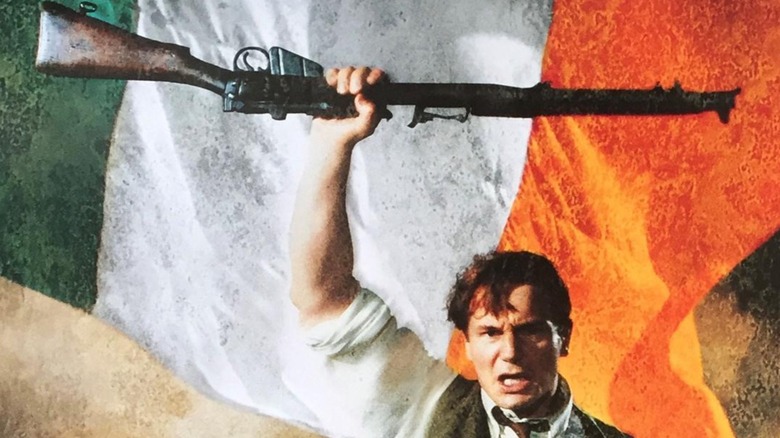
In 1996, Neeson starred in an eponymous biopic about Michael Collins, the father of an independent Ireland. Neeson's best known role then was Oskar Schindler, so he was the natural choice to play a historical hero from his own country. Collins was a leader in the Irish Republican Army (IRA) during the early 20th century, and he helped negotiate the 1921 partition that freed 26 Irish counties from British rule, but not the six majority Protestant northern counties. Lasting tensions between Northern Ireland's Protestants and the Catholic minority boiled over into the Troubles from the 1960s to 1998.
Neeson was born in Northern Ireland in 1952, so he came of age during the Troubles; he's of the same generation as the parent characters in "Derry Girls." Some perspective on how long-lasting the Troubles were is that they were ongoing when "Michael Collins" hit theaters. (For a more dramatic exploration of the Troubles, there's the mini-series "Say Nothing," following PIRA soldiers.)
You see the Troubles reflected in contemporary Irish music; think U2's "Sunday Bloody Sunday," commemorating a 1972 massacre of protestors by British police in Derry itself, or the Cranberries' "Zombie," tributing bombing victims and lamenting the ongoing violence. ("Zombie" plays in "Derry Girls" season 2 episode "The Prom" after an IRA ceasefire is called.) Like "Derry Girls," these were popular hits spun from a history of blood.
Like the Derry Girls, Liam Neeson grew up during the Troubles
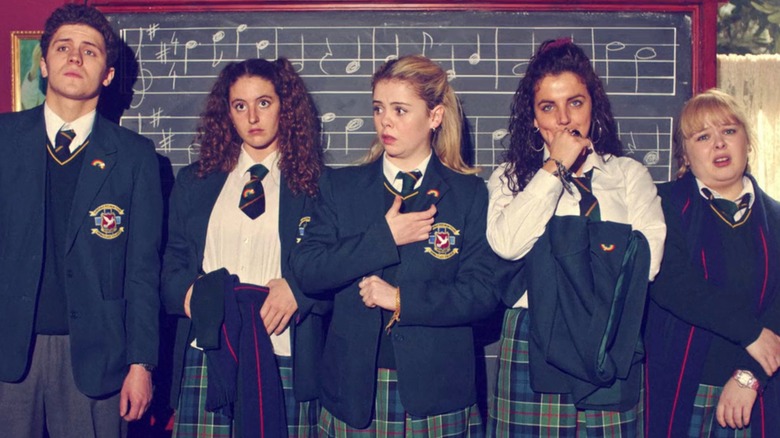
"Derry Girls" follows the tail-end of the Troubles with humor, footnoted by true history. The "Derry Girls" season 2 finale "The President" is centered around U.S. President Bill Clinton's real visit to Derry in 1995. Then, the series finale "The Agreement" follows the 1998 referendum on the Good Friday Agreement that created a soft border between Ireland and Northern Ireland. Neeson shows up in "The Agreement" for another small appearance as Inspector Byers. Reflecting the split loyalties of Protestant Unionists, he seems conflicted about the agreement (another step to a united Ireland) passing.
The history that "Derry Girls" explores also carries the irony of Neeson's casting. Far from an RCU Protestant, Neeson himself is a Northern Irish Catholic. He once said that being a Catholic in the North made him feel like a "second-class citizen," though he's also said (reported by the Belfast Telegraph) that he never felt "inferior" at his majority Protestant school. Neeson added then that he didn't pay much attention to the Troubles until Bloody Sunday, which spurred him to educate himself about his country's history.
You see Neeson honoring that history in his acting, from "Michael Collins" to his 2009 role in "Five Minutes in Heaven" (as Protestant Alistair Little who, as a teen, joined a Unionist paramilitary) to "Derry Girls." Neeson has also supported calls for greater Catholic and Protestant integration in Northern Irish education. One imagines he loved the "Derry Girls" episode "Across The Barricade," where the girls go on a retreat with Protestant students.
A United Ireland is still a dream but conflict in the North has cooled enough that people who lived through it — like Neeson — can look back on it with the good humor seen throughout "Derry Girls."