

Willem Dafoe Was The Best Part Of This Controversial Netflix Live-Action Anime Movie
While Netflix has had a bit more success in recent years with its take on "One Piece," the streamer's track record of adapting anime classics into live action is, to put it mildly, not great. Just look at what Netflix did with "Cowboy Bebop," which — even with a great cast and some of the best source material you could ask for — was as about as universally hated as the original anime is universally loved.
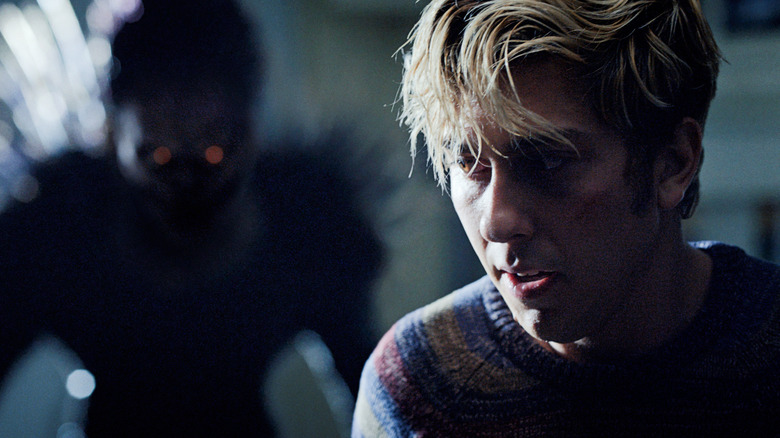
Long before either of those hit the screen, though, Netflix dipped its toes into bringing anime to live action with a movie version of "Death Note" in 2017. Like "Cowboy Bebop," the adaptation had a great cast that included LaKeith Stanfield as the bizarre young detective L. And, like "Cowboy Bebop," it is not fondly remembered. There is, however, one thing that even the most die-hard haters can agree on: Willem Dafoe was absolutely perfectly cast as a nihilistic god of death, and his performance almost makes the whole thing worth watching just by itself.
Death Note is the story of supernatural serial killer
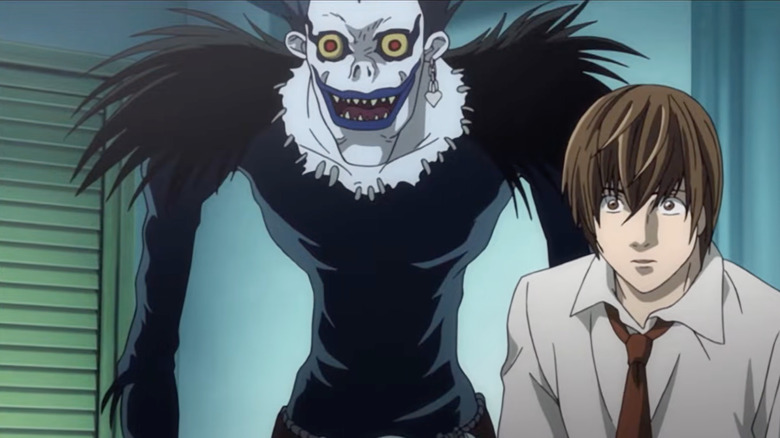
The original "Death Note," by Tsugumi Ohba and Takeshi Obata, was originally published as a manga over the course of 108 chapters and was adapted into a 37-episode anime series in 2006. That's a pretty short run when you compare it to, say, "One Piece," which currently weighs in at over 1,100 chapters of manga with no sign of stopping anytime soon. The story follows a high school student named Light Yagami, who discovers a notebook with the power to kill anyone whose real name is written on its pages — as long as the writer can picture their face while doing so. Light soon discovers that the notebook belongs to a shinigami (a god of death) named Ryuk, who initially claims to have dropped it by accident while going about his duties, but later reveals that he was bored and wanted to see what happened if he gave the power of a death god to a human.
Light quickly sets about using the Death Note to weed out what he sees as evil people with the nominal goal of making the world a better place. He quickly gains a reputation in the press as the mysterious "Kira," a transliteration of "killer," and rapidly becomes the most prolific serial killer in history by a pretty huge margin. To stop him, a genius teenage detective who goes by the codename "L" starts investigating Light, and the two equally brilliant and equally paranoid teenagers find themselves in a high stakes game of cat and mouse as they try to out-think each other.
The live-action Death Note did not make a lot of good decisions, but casting Dafoe was one of them
Despite the premise of a magic notebook that kills people being pretty silly and the way that Light and L's traps and counter-traps get increasingly convoluted as the series goes on, the original "Death Note" excels at creating tension, plot twists, and memorable characters. The live-action movie ... does not. Stanfield turns in a typically great performance as L, but Light Turner (Natt Wolff) is pretty far from the ultra-competent, manipulative sociopathy of his Japanese counterpart, and that awful pun of his name doesn't help matters.
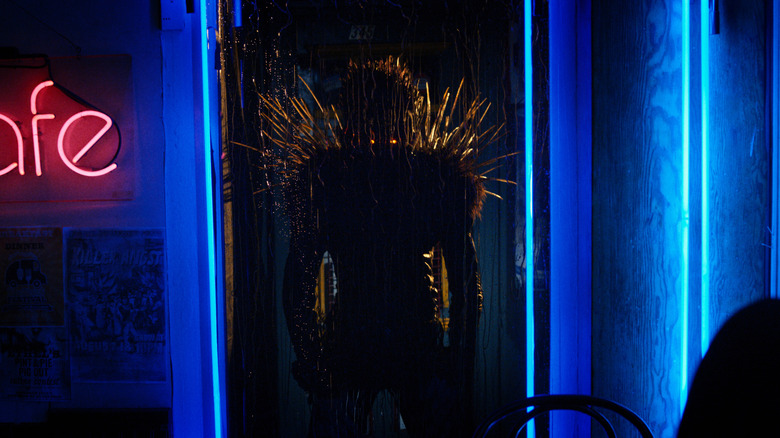
Willem Dafoe, who performed Ryuk's voice and facial expressions while Jason Liles wore the costume on set, is genuinely great. He plays the part with the same charismatic menace that made him so memorable as the Green Goblin in "Spider-Man," and since director Adam Wingard spends most of the film wisely keeping Ryuk obscured by shadow, Dafoe's signature rasp does all of the heavy lifting of making the character work. It makes sense that he'd be so good in the part, though. No offense to one of the greatest actors of our time, but when you imagine what a sinister death god sounds like, you absolutely hear Willem Dafoe in your head.