

Blade Runner 2099 Proves The Saga Does One Thing Better Than Any Other Sci-Fi Franchise
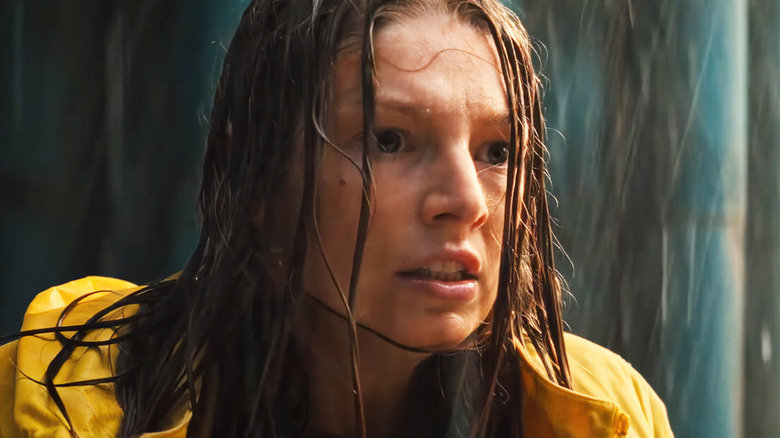
Continuing the legacy of two of the greatest sci-fi movies ever made is a big enough challenge. Doing so on the small screen adds an extra element of difficulty. Incredibly, "Blade Runner 2099" has overcome the odds to deliver yet another intoxicating excursion into the techno-industrial urban decay-scape so magically realized back in 1982's "Blade Runner" and so faithfully recreated in 2017's "Blade Runner 2049." As such, the Blade Runner franchise is now surely the most consistent on-screen sci-fi saga ever made. (Setting aside sci-fi sagas that are directed by the same person the whole time, like James Cameron's "Avatar.")
It's hard to imagine, but "Blade Runner" had a tiny VFX budget. Yet director Ridley Scott and his production team managed to create one of the most believable and immersive worlds in cinema history. The famous "Hades" opening shot immediately plunges you into a future post-ecological collapse, in which technology seems to have almost grown on the wreckage of a fallen world like moss on fallen trees. The debris of society is adorned with neon and machinery, creating an environment in which past and future collide. "Blade Runner" might have been buried at the box office by "E.T. The Extra-Terrestrial," but it was an absolutely enthralling sci-fi adventure that came to define the genre.
As such, when Denis Villeneuve managed to both emulate the feel of Scott's classic and push the production design in new directions with "Blade Runner 2049," it was nothing short of a miracle. The "Dune" director's take on the world first introduced to audiences in 1982 was immediately familiar as the same one in which Harrison Ford's Rick Deckard did battle with Rutger Hauer's Roy Batty and his band of rogue Replicants. Yet it also felt appropriately evolved for the three-decade time jump. Surely "Blade Runner 2099" couldn't pull off the same trick — especially across eight episodes? Well, it has.
Blade Runner 2099 both recreates and refreshes the classic Blade Runner formula
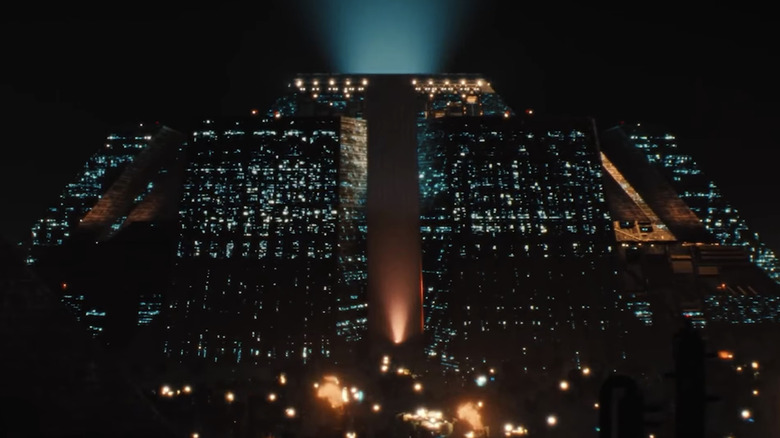
/Film's Bill Bria has hailed "Blade Runner 2099" as the best sci-fi show in years, and it's hard to disagree based solely on the production design. From the moment the show begins, we're immersed in the same world to which Ridley Scott introduced us back in 1982. In fact, "2099" recreates the "Hades" sequence so faithfully you'd think you were watching the original. It's a clever move, too. As the camera slow-zooms on the Tyrell Corporation building and evokes the tone and feel of Scott's film, it establishes "2099" as very much belonging to the "Blade Runner" legacy. But we soon discover that this is not Rick Deckard's future.
80 years after Harrison Ford's Blade Runner absconded with Rachael (Sean Young), Replicants have now overthrown their human masters to become the dominant race. It's a major change that refreshes the franchise and helps make it more relevant than it's ever been at a time when the looming AI garbage future has prompted widespread talk of machines taking our jobs.
As such, it's more important than ever to maintain a tone and design language that's consistent with what came before, so as to reassure fans of the saga that this isn't some sort of wholesale reinvention of the franchise they love, but an evolution that plays out in the same world. "Blade Runner 2099" impressively pulls that off with its opening scene, and it only gets better from there.
Blade Runner 2099 pulls off a trick that basically no other sci-fi franchise has yet managed
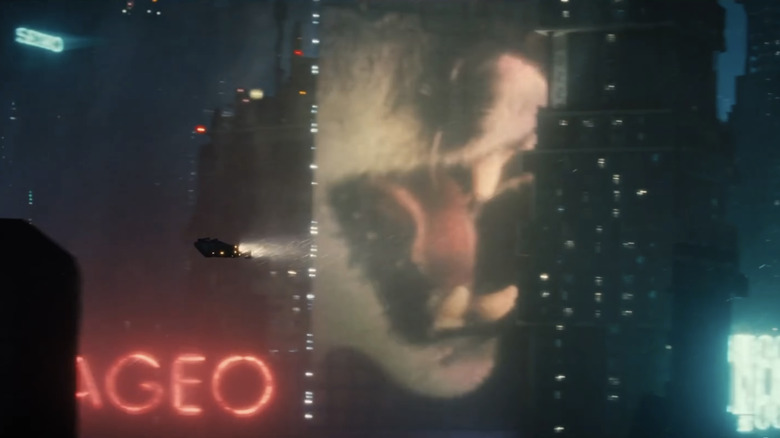
When it comes to the world of "Blade Runner," fans know the deal: Retro futurism and cyberpunk aesthetics meet noirish expressionism in a technological nightmare future. Many franchises have tried to emulate the aesthetic to varying degrees of success, but there is only one "Blade Runner." As Christopher Nolan once told the Directors Guild of America while discussing Ridley Scott's film, it conjures "that feeling that there was this whole world outside the frame of the scene. You really felt there were things going on outside of those rooms where you've seen the film take place."
"Blade Runner 2099" has somehow managed to make every one of its scenes feel like they belong in that same world. With that in mind, it's truly remarkable how consistent the Blade Runner universe has remained across almost a half-century's worth of projects, each of which has been separated by many years. Even the best sci-fi franchises struggle to pull off what is, admittedly, an almost impossible trick.
The "Terminator" movies have never been able to recapture the intoxicating, doom-laden sci-fi slasher tone that made the first two films so memorable. The "Alien" franchise, meanwhile, has made a point of switching up its style and tone with each successive film — though more recent projects have tried to evoke the feeling of the 1979 original. "Blade Runner" films, however, all feel part of a cohesive whole that gives the entire saga this uncanny sense of existing in a real alternate timeline somewhere — as if we're witnessing an epic, decades-spanning dream play out in the mind of a dying Replicant. Regardless of how you feel about "2099" as a whole, its visual and tonal achievements simply can't be denied.
"Blade Runner 2099" Season 1 is now streaming on Prime Video.