

Dark Matter Creator Doesn't Have 'Respect' For Marvel's Multiversal Storytelling [Exclusive]
There's just something appealing about the idea of the multiverse, as "Dark Matter" author and series creator Blake Crouch knows all too well. When he first published his heady sci-fi novel in 2016, it came at a time when pop culture had already become familiar with this subject matter (as any "Doctor Who" or "Star Trek" fan can attest to) ... but before it took off to another level with the glut of superhero media throughout the last several years. "Avengers: Endgame" and its universe-hopping hijinks were still years away, as were blockbusters like "Spider-Man: No Way Home" and the very subtly-titled "Doctor Strange in the Multiverse of Madness."
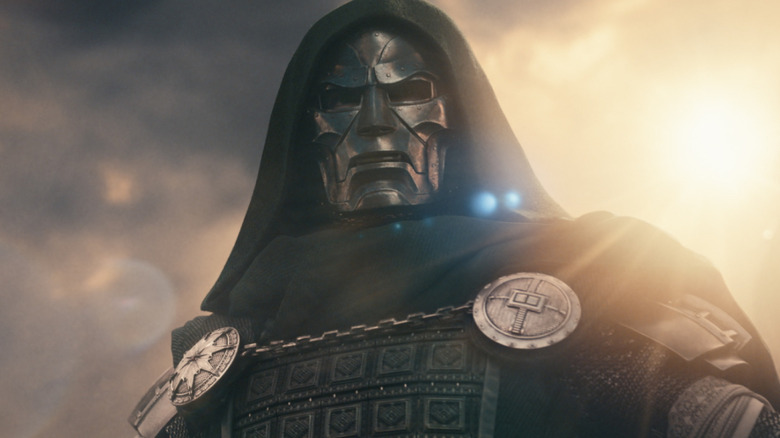
The one commonality linking practically all of these various multiverse stories together, of course, is that writers mostly used this as an excuse to smash action figures together and revel in nostalgia. You love Spider-Man? How about a bunch of different Spider-Mans from different franchises! You loved Robert Downey Jr. as basically the main character of the entire Marvel Cinematic Universe? Good news, his (hilariously short-lived) retirement is done and he's back as Doctor Doom!
In short, this is the exact opposite approach Crouch took with "Dark Matter." As Season 2 approaches its conclusion, I spoke to Crouch over Zoom and asked whether he's noted the irony. To put it mildly, he sure has:
"Marvel comes along, and they make [multiverses] the plot device of every single movie. I know why they do it, it's because it's easy, and it's because ... I'm sorry, I don't have an extraordinary amount of respect for that kind of storytelling, just for what you said. This is literally the antithesis, what we're doing, of that. We're using it as a way to explore character, to explore what our characters are capable of."
Blake Crouch reveals the one line in the book that explains Dark Matter's take on the multiverse
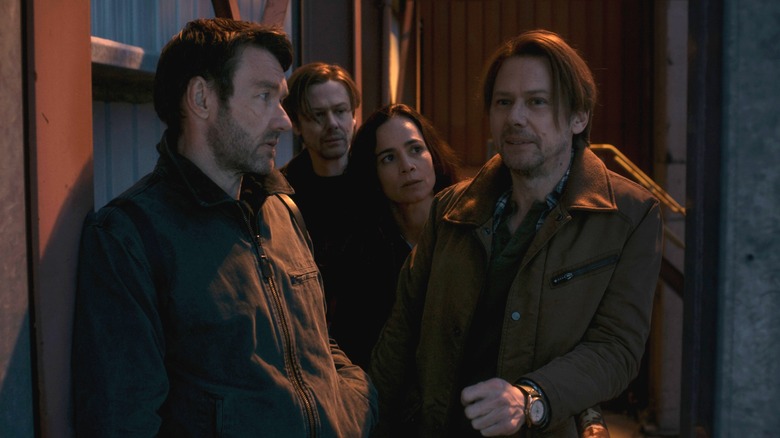
Even the biggest superhero fans would have to admit that franchises like Marvel and DC treat the premise of multiversal storytelling very differently than "Dark Matter" does. Both the source material and the Apple TV adaptation are very much a cautionary tale about the dangers of traversing infinite worlds and reshaping reality according to what we prefer it to be. In Season 1, Joel Edgerton's "Jason2" is presented as such a disturbing, villainous figure because he uses his multiverse-traveling invention to hijack the life of the original Jason Dessen and "fix" the worst mistakes from his past. In Season 2, even Leighton Vance's (Dayo Okeniyi) most idealistic plans to build a better world with the box fall by the wayside.
This gets to the heart of what he hoped to accomplish with "Dark Matter," Blake Crouch reveals. "There's a line in the book towards the end, when Jason has this kind of epiphany as he's driving his family to the power plant to escape, and he says, 'I realize I'm not just one man, I'm just one facet of a multifaceted man called Jason Dessen.'" Readers have come to view Jason2 as a malignant entity and the manifestation of all the worst instincts of the original Jason, but in truth, even our main hero is capable of similar darkness ... and so are we.
Season 2 expands on that theme even further, Crouch points out, by exploring different versions of the entire ensemble, too:
"And that's really what the show is. And the difference of the show is we're not just showing you multifacets of Jason, we're showing you multifacets of most of our main cast."
Dark Matter didn't coast on Marvel's multiverse trend
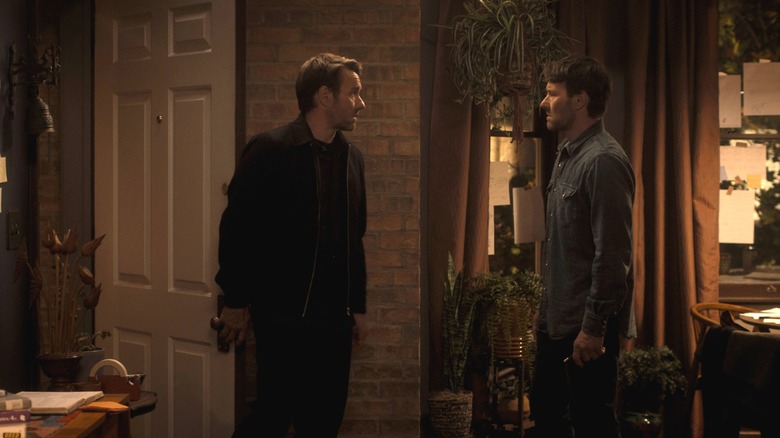
With all that in mind, it's worth noting how "Dark Matter" — both Blake Crouch's book and his ongoing series — managed to tap into a topic that clearly resonates with audiences. It stands on the shoulders of several movies and shows that have tackled the concept of multiverses in decades past, he readily admits to me, but there is a reason why the novel ended up becoming as popular as it did. Crouch has one theory as to why that ended up being the case:
"The book, it came out in 2016, and it wasn't like — it did not invent multiverses. 'Sliders,' there have been plenty of things before that did the multiverse. But it wasn't really in the zeitgeist. They were sort of one-offs. I think that's part of why the book found the audience it did: I think it was one of the first times a story crossed mainstream with the multiverse."
Considering his desire to fully interrogate the multiverse, in all of its potential for greatness and all of its potential for horror, it's easy to see why Crouch would be so protective of "Dark Matter." Any real comparisons between this particular narrative and what big-budget studios are doing with similar sci-fi ideas can't help but fall apart pretty quickly.
The author and showrunner puts a button on our conversation by reflecting on the show's place in pop culture. "So, yeah, I mean, it's annoying because a lot of times when we started making the show, when it came out, a lot of people were like, 'Oh, just riding that multiverse trend, aren't you?' And I'm like, 'We were here before.'"
The Season 2 finale of "Dark Matter" streams on Apple TV October 30, 2026.