

This Star Trek Actor's Canceled Sci-Fi Show Has A Terrifying Premise
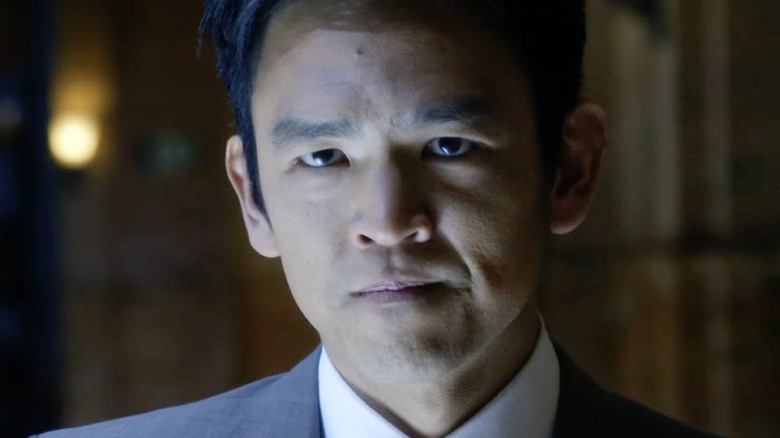
The ABC mystery-box sci-fi series "FlashForward," based on the 1999 novel by Robert J. Sawyer, was co-created by "Star Trek" luminary Brannon Braga (who briefly quit the franchise after "Star Trek: Voyager") and celebrated superhero scribe David S. Goyer, and, boy howdy, does it have an intriguing premise: On October 6, 2009, every single person on Earth mysteriously faints and stays unconscious for exactly two minutes and 17 seconds. When everyone comes to, they have all had visions of their own futures, specifically what they will be doing on April 29, 2010, about six months from the present. Too bad the short-lived show couldn't foresee its own fate.
John Cho (himself a "Star Trek" veteran who joined the property without even reading a script) and Joseph Fiennes star in "FlashForward" as Demetri Noh and Mark Benford, two partnered FBI Special Agents who are assigned to find out what caused the bizarre flash-forward. Half of the series is devoted to untangling the cosmic mystery, while the other half consists of all the personal drama that arise from the characters knowing what will happen to them in the near future. Special Agent Janis Hawk (Christine Woods), for instance, will have a vision of getting a pregnancy sonogram, despite her being single at the time of the blackout. Meanwhile, Dr. Olivia Benford (Sonya Walger) sees herself having a romantic evening with a man who is not her husband.
Most chillingly, Noh's flash-forward reveals nothing at all, making him suspect that he is destined to die within the next six months. As for Benford, he sees himself investigating the flash-forward event when men with guns burst into his office.
FlashForward was convoluted, but it showed promise
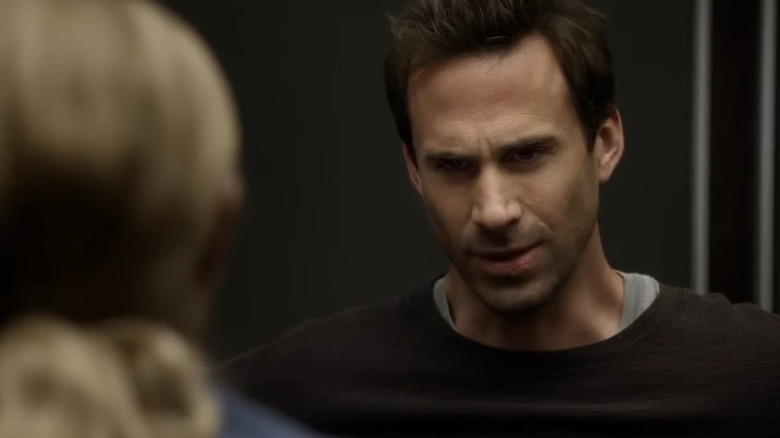
The setup for "FlashForward" is perfect for manufacturing personal drama, has some philosophical sci-fi intrigue (Can you change the future?), and contains an ineffable mystery to be solved. But in spite of its terrifying ideas and opportunities for mystery and drama, the show just didn't fare well enough ratings-wise to last beyond a single 22-episode season. In the end, it proved to be one of many "Lost" imitators that came and went in the wake of that ABC series' massive success.
Like "Lost," the mystery in "FlashForward" gets pretty convoluted pretty quickly. Dominic Monaghan and Jack Davenport co-star as Dr. Simon Campos and Dr. Lloyd Simcoe (respectively), two individuals who may have caused the blackout or possibly just enhanced its effects. In addition, at least one character is in possession of a high-tech ring that allowed them to stay awake during the blackout, and there is, perhaps predictably, a shadowy cabal of government agents who seek to control any future blackouts. Indeed, the FBI is searching for an enigmatic individual nicknamed Suspect Zero, as well as D. Gibbons or Dyson Frost, a figure who definitely has some kind of arcane knowledge that adds to the mysteries.
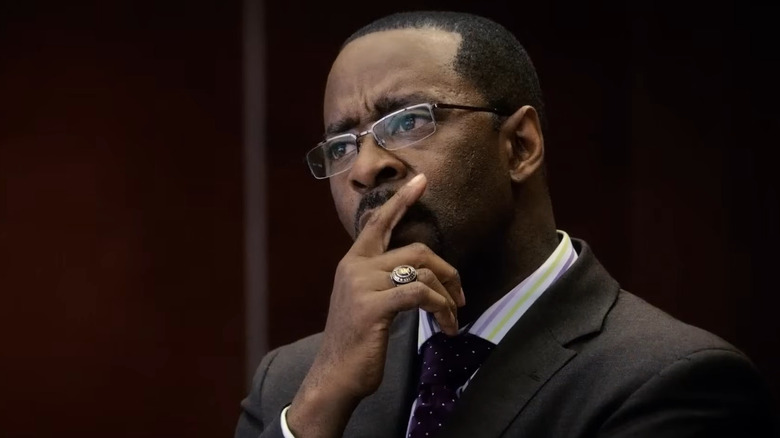
"FlashForward" is dripping with conspiracies, so it's difficult to talk about without giving away its many secrets. For me, though, the most interesting aspect of the series is its constant pondering of predetermination. Philosophically, "FlashForward" is all potential energy and, in a refreshing twist, not all of the flash-forwards are intriguing. For example, FBI Assistant Director Stanford Wedeck (Courtney B. Vance) merely sees himself merely sitting on a toilet reading a newspaper. It seems to me that his would be the more common experience.
FlashForward mostly fared well with critics
"FlashForward," in addition to being a little too convoluted, was also overpopulated. Yes, it was a global series, and everyone on the planet was wrestling with the same questions of destiny, but the main cast included at least 10 characters, which was a lot of ground to cover. On top of that, the show snagged a huge roster of captivating guest stars, which only made things more complex. Pay attention, though, and you'll be impressed by visits from the likes of Michael Ealy, Gabrielle Union, Annabeth Gish, and the late, great Ricky Jay.
Structurally, the first and only season of "FlashForward" was presented in two parts. Part 1 ran from September to December 2009, while Part 2 aired from March to May 2010. The series cleverly butted up against its own future.
Critically, "FlashForward" received generally good reviews. Writing for Salon, Heather Havrilesky listed it as the best of that year's fall TV, comparing it favorably to shows like "Lost" and "Fringe." As she put it:
"You have to love a fall pilot that can incite paranoid thoughts within minutes. And who doesn't enjoy the eerie mood and the sense of mystery and doom built into this picture? No one has any idea what's going on. And in contrast to the limited scope of similar serial dramas, this phenomenon affects everyone on the planet."
That said, Havrilesy admitted that the "FlashForward" pilot is "wildly cheesy, cheesy in ways that only an aggressively slick, suspenseful heir to '24's' throne can be." Similarly, many critics loved the show's premise but tended to agree that its plotting is weak. At the very least, everything pays off when the series catches up to the forward flashes.