

You Can See Everything: What Happened At Elizabeth Holmes' Theranos
We may receive a commission on purchases made from links.
The meteoric rise and catastrophic downfall of Elizabeth Holmes and her startup company Theranos is one of the biggest feats of corporate fraud in the 21st Century. It's also one of the rare instances where justice was served, albeit lightly, in a white-collar criminal case.
How Holmes managed to snow investors to the tune of $700 million, leading to a $9 billion valuation of Theranos (at which point Forbes declared Holmes to be one of the wealthiest women in the United States), is a fascinating story, one that's been told many times. The Wall Street Journal covered the scandal as it unfolded throughout the 2010s. The author of these pieces, John Carreyrou, summarized the whole sordid story with his 2018 book "Bad Blood: Secrets and Lies in a Silicon Valley Startup," which Adam McKay nearly turned into a movie starring Jennifer Lawrence. (Big "whew" there.) In 2019, HBO aired Alex Gibney's Theranos documentary "The Inventor: Out for Blood in Silicon Valley," which was followed in 2022 by the TV series "The Dropout," where Amanda Seyfried won a Primetime Emmy Award for her portrayal of Holmes.
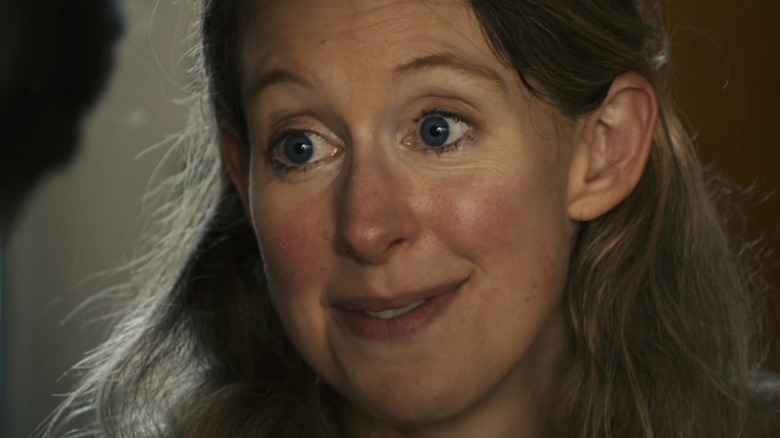
This was all unexpectedly prelude to Nathan Fielder and Lance Oppenheim's convention-shattering documentary "You Can See Everything," where the deadpan Fielder embeds himself in Holmes' home life prior the commencement of her federal prison sentence. The film is being hailed as one of the year's best, with critics exhorting moviegoers to go in ice cold so every twist and turn can land like a haymaker. But if you're not up on the extent of Holmes' crimes (which she carried out with former partner Sunny Balwani), here's a brief primer.
Theranos was a medical pipe dream that attracted many wealthy investors
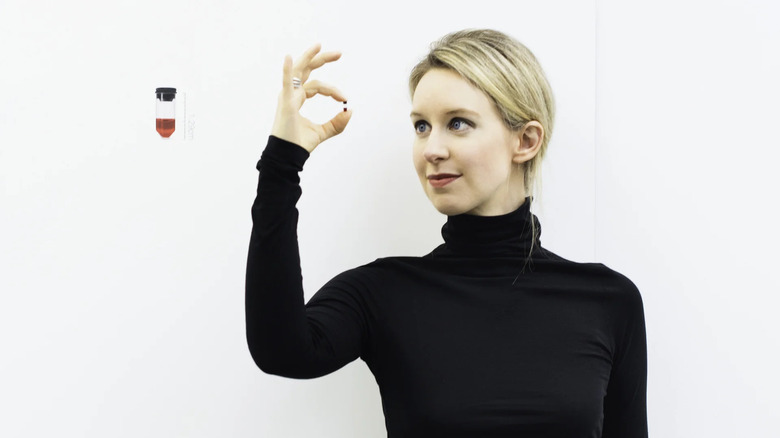
Elizabeth Holmes matriculated to Stanford University in 2002 to study chemical engineering. She then dropped out during her sophomore year to focus on her health care startup Theranos. Holmes's big idea was to obviate the need for needle-in-the-arm blood draws with droplets obtained through a simple, relatively painless finger prick. (She has a fear of needles.) While most medical experts believed this was impossible, Holmes received backing from the dean of Stanford's School of Engineering, and she was off and running.
In 2009, Pakistani businessman Sunny Balwani loaned Holmes $10 million, which earned him the title of Chief Operating Officer and president of Theranos. (The two became romantically involved, though they hid the relationship from their employees and the public in general.) Holmes thereafter began courting high profile public figures to join the company's board and succeeded at landing big fish like former U.S. Secretaries of State George Schultz and Henry Kissinger. At this point, Theranos looked legit, which allowed Holmes to strike a deal to place Theranos Wellness Centers in Walgreens drug stores.
By 2014, Theranos had raised $400 million, which is when Forbes reported her personal wealth at $4.5 billion. And while Theranos hadn't produced much in the way of tangible results by that point, the FDA still approved its finger-stick method for herpes simplex 1 testing. That's when The Wall Street Journal's first investigative piece hit.
Elizabeth Holmes' big dream was a big lie
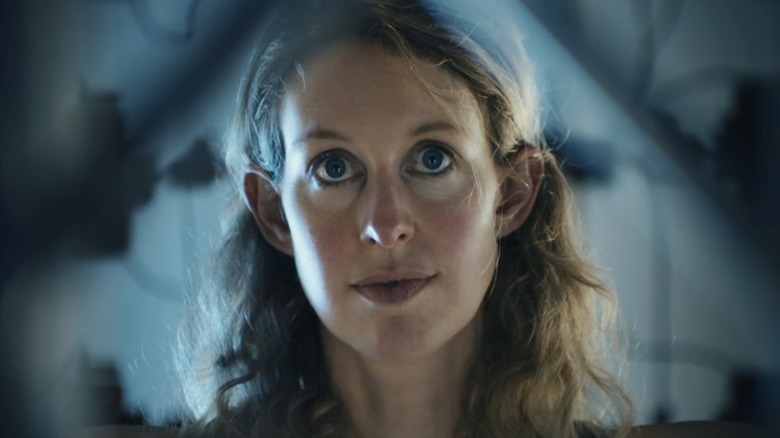
The Wall Street Journal struck a major blow to Theranos' legitimacy when they discovered that, of the 240 tests the company conducted, the vast majority were arm draws. Elizabeth Holmes and Sunny Balwani immediately went on the defensive, and they stayed there until the company dissolved.
From there, George Schultz and Henry Kissinger were removed from the board of directors near the end of 2015, and, in early 2016, Walgreens discontinued its use of Theranos' testing. Later that year, Theranos announced it was voiding two years of finger-prick blood tests. That same year, the Centers for Medicare and Medicaid Services pulled Theranos' license to run blood testing labs. With the company crumbling, Forbes downgraded Holmes net worth to $0. Yes, zero U.S. dollars.
The SEC finally lowered the boom in 2018 when it charged Holmes and Balwani with having defrauded investors of more than $700 million. After the indictments were announced, Holmes resigned as CEO of Theranos and mounted a defense that claimed she was the victim of abuse from Balwani. Her trial was delayed twice, once due to Covid and again when she became pregnant. Eventually, she was found guilty on four of 11 federal charges and sentenced to 11 years in prison. She'll be transferred from a minimum security prison to a halfway house in 2027.
This is the thumbnail sketch of what went down at Theranos, which is probably all you need to know before checking out "You Can See Everything." It's in theaters this weekend, and you need to see it ASAP.