

Robin Williams' Forgotten Fantasy Movie Was A Box Office Bomb That Deserved Better
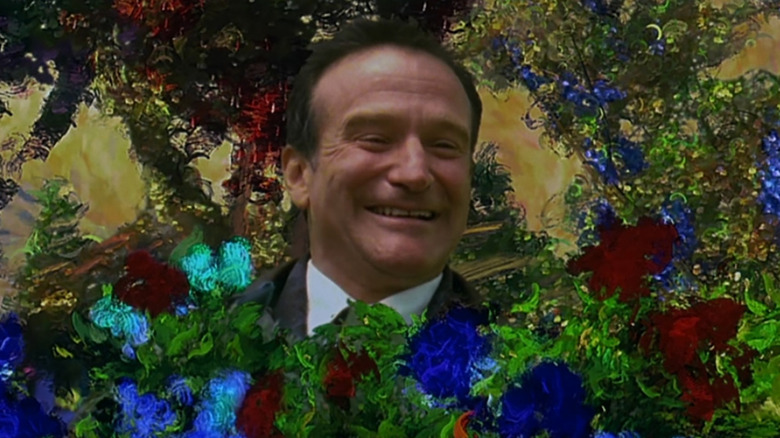
The title of Vincent Ward's 1998 afterlife fantasy "What Dreams May Come" comes from the famous "To be or not to be" speech from "Hamlet," in which the melancholy Dane contemplates the nature of the afterlife. As such, Ward's film, starring Robin Williams, takes place largely in the afterlife, with the spirit of a dead pediatrician exploring the bizarre, colorful, painterly landscapes of Heaven and Hell. The film was based on the 1978 novel by Richard Matheson, the most influential sci-fi author you've never heard of, meaning it was thoughtful in ways Hollywood movies rarely are. The film cost a boatload of money to make, boasting a budget of around $90 million (not factoring in marketing costs). It tanked at the box office, however, making just over $70 million back.
This is a pity, as "What Dreams May Come" is a heartbreaking, if sentimental, contemplation of life, love, and the meanings therein. It's as tragic as it is gorgeous to look at. The film's thanatology may be a little adolescent at times, but its heart is in the right place. Perhaps its maudlin qualities kept audiences away, and critics at arm's length. "What Dreams May Come" has a 51% Rotten Tomatoes score, based on 67 reviews.
Some critics loved it; Roger Ebert gave the film three-and-a-half stars (out of four), admiring its spectacular, imaginative visuals. He did also acknowledge some disappointment, wishing that it had been a little more bold with its ultimate messages. "The movie is so good it shows us how it could have been better," he wrote. "It seems headed for a great leap, we can sense it coming, and then it settles."
What Dreams May Come is a spectacular, arty Hollywood blockbuster about death and sadness
It could be the film's "happy ending" that feels like a letdown. A film like "What Dreams May Come" is all about death, loss, suicide, mourning, and pain. A "Hollywood ending" may not have been appropriate.
I suppose, though, that we can be happy that any Hollywood studio decided to invest in such a wild, sad, visually overwhelming film like "What Dreams May Come." The film begins with Dr. Chris Nielsen (Williams) meeting a gorgeous painter, Annie (Annabella Sciorra), while they are vacationing in Switzerland. The two fall madly in love, get married, and have two lovely children. Then, seemingly right away, both children are killed in a car crash, leaving Chris and Annie emotionally destitute. Four years pass, and then Chris, too, is killed in a car crash. Annie is left alone and fighting an ineffable sadness.
Chris remains on Earth as a ghost, trying to contact Annie. His efforts only result in reminding Annie of the happiness that was ripped from her, and she's driven deeper into her sadness. Only then does Chris decide to move to Heaven, where he belongs. In the world of "What Dreams May Come," Heaven is a personalized mini-dimension constructed from the imagination of its inhabitant. Chris' Heaven looks like an impressionistic painting, as he always admired Annie's art.
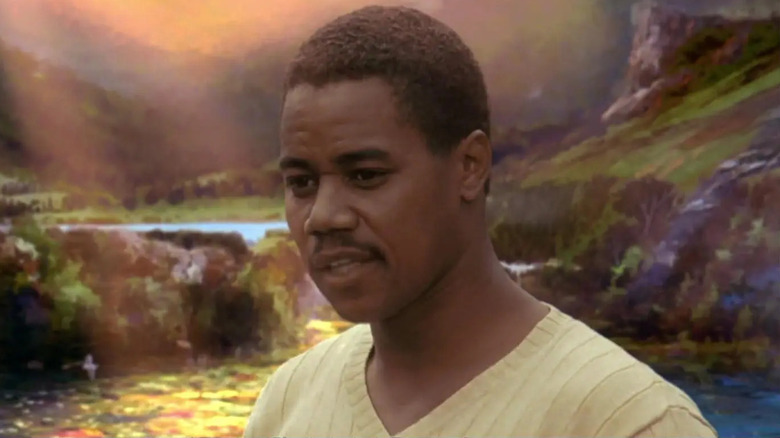
Chris has two angelic guides in the afterlife. One takes the form of Albert (Cuba Gooding, Jr.), an old friend from when Chris was a medical resident, while the other takes the form of a pretty stewardess (Rosalind Chao) that Chris once seemed to admire. Max von Sydow also appears in the film as a character named the Tracker. It's he who aids Chris and Albert on a "Divine Comedy"-like descent into Hell. Annie has died by suicide, and people who take their own lives end up in the Bad Place.
What Dreams May Come at least won an Academy Award
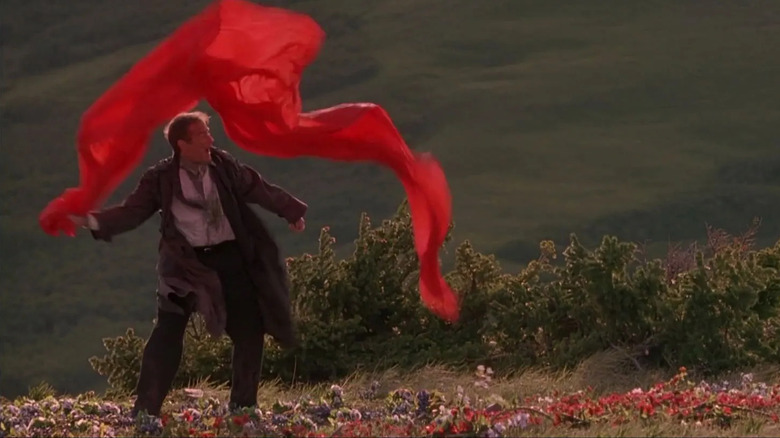
The visual palate of "What Dreams May Come" is endlessly dazzling. Heaven is a fluid, imaginative place that adapts to our minds. It looks like a collection of Impressionist paintings. Meanwhile, Hell looks more like the works of Hieronymus Bosch set in a drawing by M.C. Escher. It's bleak, angular, and unsettling. The film posits that those in Heaven have learned to embrace life, while those in Hell have succumbed to despair; in some cases, they don't quite understand that they're dead. For those in Hell, the world merely seems to have transformed into something where little light or logic exists. Some have been afflicted with amnesia. It's a very intriguing depiction of the underworld.
"What Dreams May Come" was enough of a bomb to put New Zealand director Vincent Ward into so-called "director's jail." He has only directed two films since. Despite the movie's box office failure, though, it was effective enough to be nominated for two Academy Awards, for its Art Direction and for its Visual Effects. It won for Visual Effects, beating out Michael Bay's end-of-the-world space actioner "Armageddon." (Perhaps not incidentally, Roger Ebert absolutely hated "Armageddon.")
Robin Williams seemed drawn to ambitious-but-flawed movies in the 1990s. "What Dreams May Come" can be ranked alongside another legendary Robin Williams box office bomb, "Being Human," which was released only a few years earlier. That was an historical, philosophical tale of a man reincarnated as callow cowards throughout human history. Say what you will about Williams, but the man loved to take big swings.