

You Can See Everything Ending Explained: More Questions Than Answers
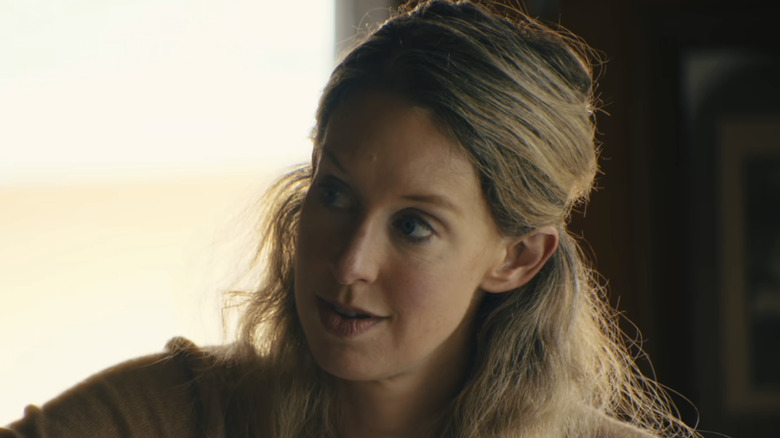
Ever since Lance Oppenheim and Nathan Fielder's documentary "You Can See Everything" made a surprise debut at the Telluride Film Festival, the buzz has been through the roof for the latest chapter in the chronicle of fraudster Elizabeth Holmes. From a viral meme to sheer curiosity, audiences are hankering to find out what the film uncovers about the woman behind Theranos, the company that promised to revolutionize diagnostics with a device (the Edison) that could supposedly perform many tests using only a single finger‑prick of blood.
"You Can See Everything" catches up with Holmes as she has just 34 days before she reports to federal prison to serve an 11-year sentence after being convicted of wire fraud and conspiracy. No longer with her former business partner and significant other Ramesh "Sunny" Balwani, Holmes is living in a rented San Diego beach house with her new boyfriend Billy Evans, a hotel heir and entrepreneur who is now working with Holmes to help launch a new version of Theranos' promised medical marvel, and their two children. Though Holmes will be in prison in a little over a month, they still intend to continue their work and make good on what Theranos originally envisioned.
Holmes and Evans clearly hope to use the documentary to reframe the former's image and reputation, as well as position the launch of Theranos 2.0. But Oppenheim and Fielder are trying to dig deeper with their 174-minute film. For those who just want to cut to the chase, or maybe need some clarification about where the film leaves us, we're here to explain the ending of "You Can See Everything," so buckle up, because it's quite a wild ride.
Before we dig into the final act of "You Can See Everything," here are the important details you need to know.
Here's what you need to know before we get into the ending
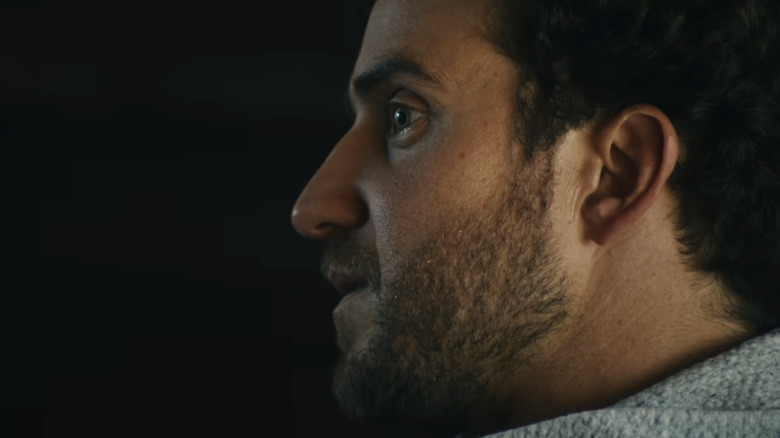
Elizabeth Holmes firmly believes that she's innocent, and she and Billy Evans (above) think that the reason everyone felt deceived is because Holmes' mind works differently from everyone else, and while she delivered exactly what she technically promised, people felt like they were lied to. Holmes says that she and Balwani said that Theranos' proposed Edison device could run hundreds of blood tests from just a few drops of blood, and it fully has the capability to do so, but it's the chemistry behind these tests that isn't up to snuff yet, so the lack of success of the device doesn't fall on them. This prompts a comparison to the literal misunderstanding in Abbott & Costello's "Who's On First?" comedy sketch, which Fielder plays for Holmes and Evans, as he tries to sort through her thought process.
Evans appears controlling and manipulative and scheming. He can't even let Holmes whisk eggs without taking them away to do it better. He gets prickly when Holmes' father visits and talks to Fielder about how Balwani might have taken advantage of Holmes and stops their conversation suddenly. When Holmes goes to prison, he allows free use of an AI model created of her and isn't worried about how it will be utilized. He also gains access to her Twitter account and posts and replies, never clarifying that it's not Holmes who is posting.
But perhaps the biggest deception (and we'll explain why it's only a possibility) is that Evans apparently secretly struck a deal with A24 to receive some of the box office profits when the film is released, something that Holmes doesn't seem to be aware of at all.
You Can See Everything brings The Dropout star Amanda Seyfried into the fray
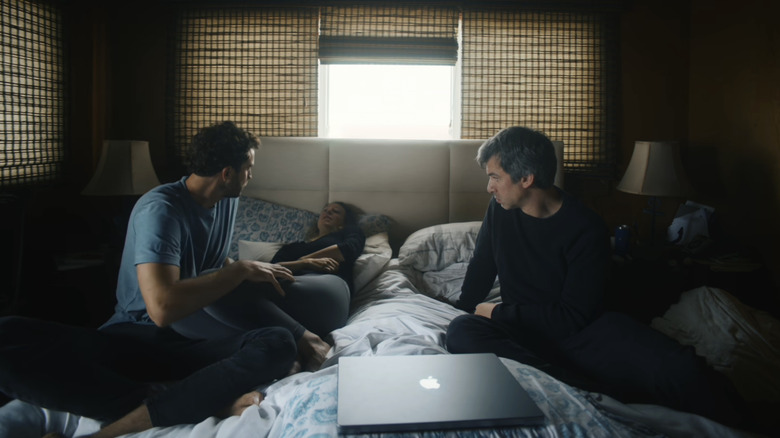
The story of Elizabeth Holmes was previously dramatized in a Hulu series called "The Dropout starring Amanda Seyfried. In the first half of the movie, Fielder attempts to watch "The Dropout" with Holmes and Evans on a laptop in their bed. Holmes admittedly said she would only try to watch but wasn't sure how much she could endure, and when a scene featuring Naveen Andrews as Balwani shows him buttoning up her blouse and saying that she shouldn't look too pretty for a presentation, Holmes immediately pulls back and can't watch anymore.
Once Holmes is sent to prison, Fielder visits the home of Amanda Seyfried and plays the footage they've assembled for the movie including their viewing of "The Dropout." While conversing about the production and her perception of Holmes, Seyfried cautiously says that maybe in the future she'd like to revisit Holmes in a post-trial world.
That's enough for Holmes to start using Seyfried for reenactments, not unlike what Fielder did in his HBO series "The Rehearsal," including acting out the sequence where Billy Evans (played by soon-to-be "X-Men" star Christopher Abbott) asked Fielder, Oppenheim, and A24 executives for some of the box office profits, while Holmes was out of the room tending to their children.
It's not clear if Holmes knew about the deal at this point, and Seyfried volunteers to visit Evans with Fielder in order to find out. That visit turns tense and confrontational, it's where we learn that he's controlling Holmes' Twitter, and he confirms that she does not know about the A24 deal. When asked what he thinks Holmes would say about Evans actions on her behalf, he says something to the effect that she would see it as another piece in the monument of love that they are building together, which really throws Seyfried and Fielder for a loop.
After all this and a couple other heated interviews, Evans is not keen on Fielder talking to or attempting to visit Holmes in prison.
Nathan Fielder plans a visit to Elizabeth Holmes in prison anyway

Here's where we shift into the final act of the movie. Frustrated by the difficulty of securing a phone call with Holmes, because Evans has become exasperated with Fielder's line of questioning, Fielder decides to arrange a visit to Holmes in prison without Evans knowing. Thanks to his previous exchanges with Evans, Fielder knows when the best time to visit is in order to avoid running into Evans.
This entire sequence almost plays out like a tense heist. The film cuts back and forth between a reenactment of the prison visit and the conversation that Fielder has with Seyfried about planning the sequence, recounting exactly how it played out with the help of a script that they'll use for shooting. Fielder and Seyfried sit in a dark, cozy living room with only the fireplace providing an orange, flickering light on their faces. Seyfried is riveted as Fielder recounts what happened, and they look through the script, talking about how they'll depict the scene.
In the actual prison visit, Fielder intended to reveal all the things Evans has been doing that he believes Holmes is unaware of, such as the use of the AI model and the Twitter profile access. But the biggest thing he wanted to find out is whether she knew about Evans making a deal to receive some of the box office profits from the movie. If she didn't, it would feed into the narrative that maybe she's not as much of a master manipulator as it seems. If she did, we all know what that means.
The prison visit yields mystifying results

After a suspenseful waiting period that makes Fielder's visit cut close to when Evans might be due to arrive for his routine visit with the children, the reenactment reveals the conversation that he had with Holmes.
When Fielder informs Holmes about Evans use of her Twitter and his lack of concern for the potential use of an AI model of her likeness and voice, she's not even a little upset. She merely says that Evans has his own way of doing things, and while it's not how she might handle them, she basically trusts him to make decisions like that on her behalf.
Then, when Fielder asks whether she knew that Evans had asked to secure a deal for some of the box office profits for the documentary, what she actually said and how she said it comes into question. When initially explained by Fielder, the answer makes it sounds like that she knew he was going to ask about something while she was not in the room, but that she didn't know what. But when Seyfried sees that as her being complicit in the proposal, Fielder pulls back and says she might have said it a different way, which would absolve her of any knowledge of the situation. It ties directly back into the same semantics game that Holmes played with Fielder about Theranos.
On top of that, when Fielder asks whether any of these decisions feel deceptive or make Evans seem like he's doing things only for his own benefit, she says almost the exact same thing that Evans predicted she would, about how it's all part of the monument of love that they have. This is where you think that maybe Holmes and Evans are maybe just the perfectly different brands of crazy to actually have built what they see as a genuinely loving relationship to each other. Either that, or they're both master manipulators working together. There is no way to know the real answer.
Has Nathan Fielder been duped by Elizabeth Holmes?
But hang on a second, let's go back to that semantics issue, where Fielder corrected how Holmes answered his question about her knowledge of the A24 deal proposal. Seyfried picks up on this and wonders if Fielder maybe changed the wording because he's come to care about Holmes throughout the course of shooting the documentary. Perhaps he's become sympathetic to her situation. Maybe he sees a little bit of himself in her. There's at least one indication that he even came to trust her in some capacity.
Earlier in the movie, while everyone is still staying at the San Diego beach house, Holmes asks Fielder if she wants to join him for a swim in the ocean. Fielder declines, saying that he has a fear of cold ocean water. Later in the movie, a shot appears to show Evans swimming with Holmes in the sea. But when Seyfried brings up the fact that maybe Fielder came to care for Holmes, we revisit the shot, and we suddenly see much more clearly that it's Fielder who is swimming with Holmes. It takes our perception of Fielder's feelings about Holmes into an entirely different direction.
Has Fielder been duped by a brilliant fraudster now too? Is he intentionally trying to protect Holmes? Or do people possibly genuinely misunderstand Holmes? Is she maybe more innocent in all of this than it seemed? Has she maybe been taken advantage of by two rich, manipulative, controlling, gaslighting men that got her into deep trouble? Or is Holmes just that good of a manipulator?
These are all the questions we're left to ponder, as the final shot of the movie shows Holmes in the prison's outdoor visitation area sitting with Evans and her children. Some text then reveals that sometime later, Billy chose not to accept any box office profits from A24, in case you needed something else to throw a wrench in your thoughts.