

5 Years Ago Today: Ridley Scott Directed An Epic Medieval Movie With An All-Star Cast
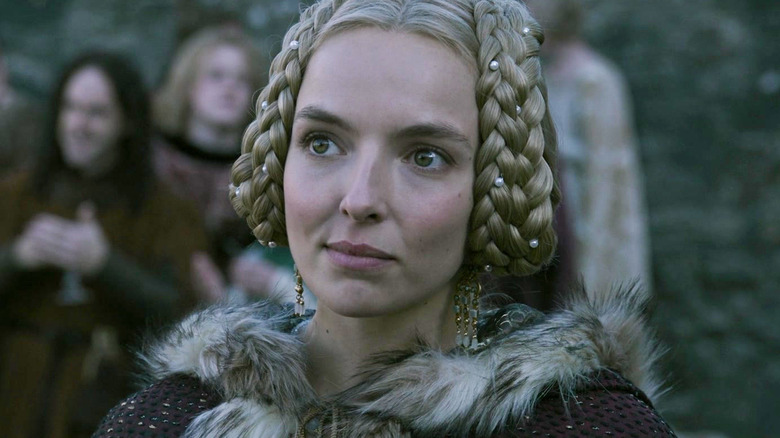
Ridley Scott, who will turn 89 years old in 2026, has the work ethic of a much younger man. In 2021, he released not one but two star-studded movies mere months apart: "House of Gucci" and "The Last Duel."
Set in feudal France during the 14th century, "The Last Duel" adapts a true story, but its triptych structure underlines how different people can see different versions of the same events as "the truth." The titular duel is a trial by combat waged by former friends Sir Jean de Carrouges (Matt Damon) and Jacques le Gris (Adam Driver). The two grew apart after le Gris gained the favor of their venal lord, Count Pierre d'Alençon (Ben Affleck), who also disdained Carrouges. The challenge to the death came, though, after le Gris raped Carrouges' wife, Marguerite (Jodie Comer).
"The Last Duel" was co-written by Damon and Affleck alongside filmmaker Nicole Holofcener, who contributed the vital perspective that the film couldn't neglect: a woman's. As a Damon-Affleck joint, the movie is a ways away from "Good Will Hunting," but it's excellent still. "The Last Duel" flopped upon reaching theaters on October 15, 2021, but that should not be taken as a summary judgment of its quality. As with many other great historical dramas, it draws lines from its story to the issues of today. In this case, how women are rarely believed when men (especially powerful men) assault them, and how coming forth with the truth can harm the victim all over again.
It's an especially awkward five year anniversary for "The Last Duel." A month prior, an anonymous "Jane Doe" came forth and accused seven Cornell University students of having raped her in 2024, sparking a media firestorm. "The Last Duel" shows how little has changed in almost 700 years.
The Last Duel is all about how selfish memory is
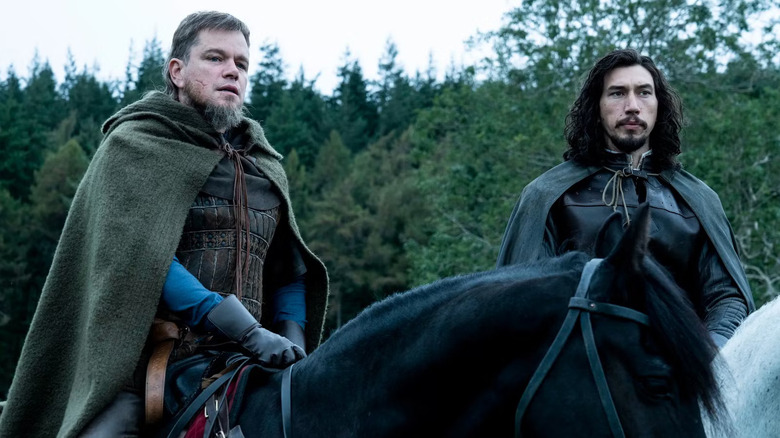
"The Last Duel" has been described as a spiritual remake of Akira Kurosawa's 1950 historical drama "Rashomon" (and it's not the only remake of Kurosawa's classic out there). That film, set in feudal Japan, follows a trial to discover the truth of a samurai's murder. Different witnesses give mutually exclusive testimonies that play out onscreen. The audience has to decide which, if any, is true.
Ridley Scott, his editor Claire Simpson, and the film's screenwriters give "The Last Duel" a similar structure. Act 1 is labeled with the title card "The Truth According to Jean de Carrouges," followed by "The Truth According to Jacques le Gris," and then "The Truth According to Marguerite de Carrouges." Only the actual duel at the end is an objective account.
The differences in "The Last Duel" are more subtle than in "Rashomon." Overlapping scenes from Jean's perspective portray him in a more flattering light than ones from Jacques', and vice versa. The real Jean is a hothead with a persecution complex, but he sees himself as a noble hero and Marguerite as his dutiful wife — when really, she's just trying to survive between two men she thinks little of.
Carrouges and le Gris aren't consciously misremembering, their memories are just influenced by their competing senses of self-importance. Probably the most grim example of that is le Gris' rape of Marguarite. In Jacques' memory, her screams are barely audible.
Therein is the final difference from the ambiguous "Rashomon." There's no doubt le Gris is guilty, and "The Last Duel" explicitly labels Marguerite's account as "the Truth." Ambiguity would only dilute the message to believe women. Before its arrival, there was concern "The Last Duel" would neglect Marguerite's perspective, but the film itself rose above it.