

The Babadook Director's Follow-Up Movie Was A Controversial Western
While Westerns are largely synonymous with the United States and its frontier, other countries do have their own Western filmmaking traditions. Remember, some of the most famous Western films ever made (i.e. so-called "Spaghetti Westerns") were shot in Italy. Meanwhile, Australia, known for its enormous "outback" region, has produced so many Westerns that "Australian Western" is its own genre niche.
That niche is home to one of the most unrelenting and harrowing films you'll ever see: "The Nightingale," the second feature by "The Babadook" director Jennifer Kent. "The Nightingale" is not officially a horror film like "The Babadook" is, but between its graphic violence and hopeless atmosphere, it might as well be!
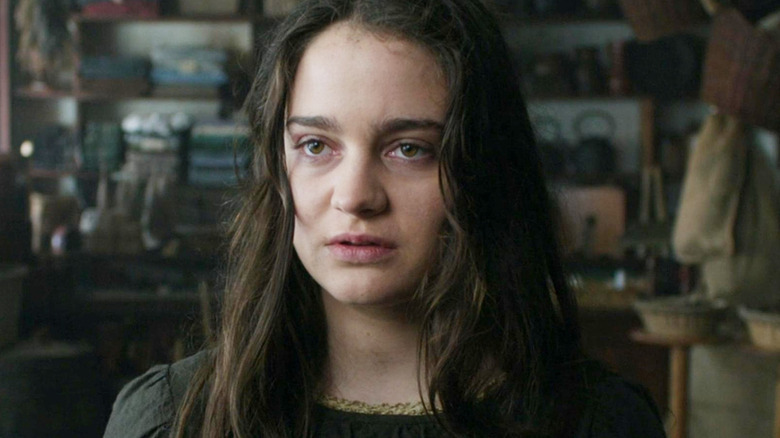
"The Nightingale" stars Aisling Franciosi as Clare Carroll, an Irish convict working as an indentured servant in 19th century Tasmania (then under British occupation). She's nicknamed after the titular bird because of her beautiful singing voice, with which Major Hawkins (Sam Claflin) forces her to entertain his men. But it's not an endearing nickname: Hawkins keeps her as a comfort woman long after her sentence should've ended.
One night, Hawkins and two of his men break into Clare's home to rape her while also killing both her husband Aidan (Michael Sheasby) and her infant daughter Bridget when the baby won't stay quiet. It's hard to not look away during this horrible scene, especially since the camera refuses to avert itself. Clare, determined to get revenge, then sets out to follow Hawkins and his men through the Tasmanian bush alongside an Aboriginal tracker, Mangana (Baykali Ganambarr).
So, yeah, "The Nightingale" has a woman raped and a baby murdered in the same scene. That's probably the least commercial combination imaginable (well, I suppose the British soldiers could've shot a puppy, too), so it's little surprise that "The Nightingale" courted controversy.
'Brutal' undersells Jennifer Kent's The Nightingale
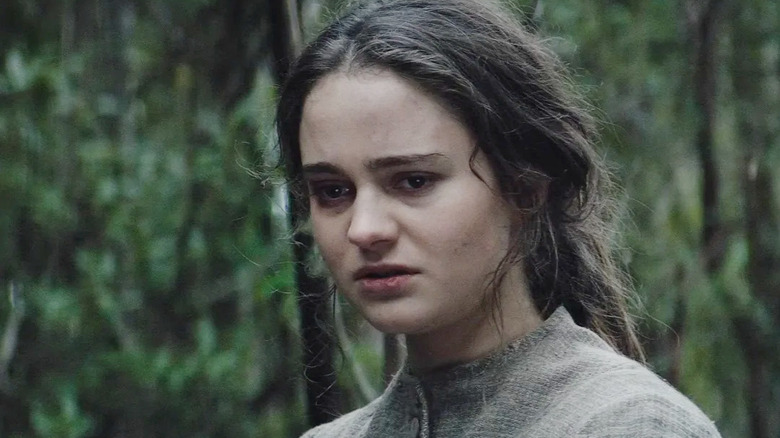
"The Nightingale" runs over two two hours long, and while the endurance test never gets quite as trying as during Clare's family massacre, don't think it lets up. It's a grim, violent film with completely un-cinematic violence, rendered with a washed out color palette inside a boxy 1.37:1 aspect ratio. Most of the film is set inside deep Tasmanian forests, and Jennifer Kent and cinematographer Radek Ladczuk shoot them like a wooded labyrinth of dead trees and misty fog.
When "The Nightingale" screened at the Sydney Film Festival in 2019, numerous audience members reportedly walked out. The ones who stayed gave Kent some harsh questioning once the movie had ended. It shouldn't be surprising "The Nightingale" hardly made a dent at the box office, either — but then again, it's not the kind of film that was ever meant to.
Many contemporary reviewers, including /Film's Chris Evangelista, praised "The Nightingale" because of its unflinching violence. Kent herself has also defended the graphic content of the movie, saying in a statement that:
"Whilst 'The Nightingale' contains historically accurate depictions of colonial violence and racism towards our Indigenous people, the film is not 'about' violence. It's about the need for love, compassion, and kindness in dark times."
"The Nightingale" is about colonial victims finding catharsis in each other, not revenge. The watershed moment in Clare and Mangana's relationship is about an hour in, as they both sit by a campfire. Thus far, Clare has treated him like a "savage" because of his dark skin. Mangana, whose own family was wiped out by the British, assumes Clare, as another white settler, is English too and holds her just as responsible for his people's oppression and displacement.
Jennifer Kent spares no historical horror in The Nightingale
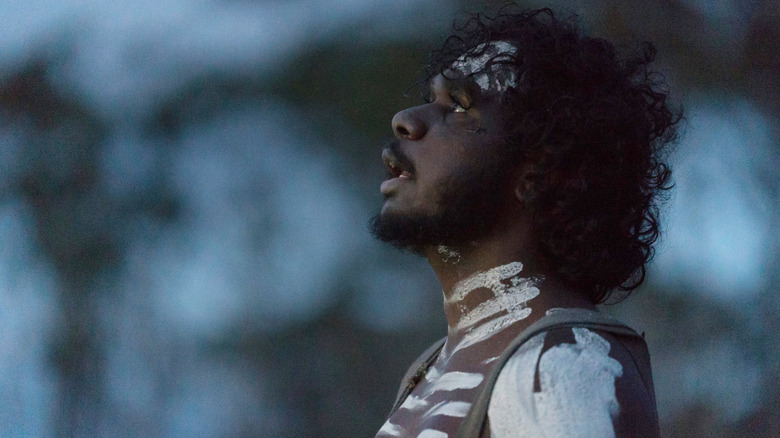
Clare, naturally, responds with fury that she's not English, but Irish, and curses out the English in her mother tongue. By the time she proclaims "Erin go bragh!" ("Ireland forever!"), you feel a lifetime of hatred — and the specific hatred of the colonized — leaping from her mouth. Clare and Mangana both come from colonized people, and in realizing that kinship, they understand they share an enemy. But can a bond like that end in anything but blood and tragedy?
Jennifer Kent has not directed a feature film since "The Nightingale." (Though she helmed an episode of the Netflix horror anthology series "Guillermo del Toro's Cabinet of Curiosities," and she's reportedly developing a sci-fi film titled "The Girl Who Was Plugged In" with actor Sophie Thatcher.) "The Babadook" maintains a reputation as a modern horror classic, but unlike what's basically a ghost story, the historical violence shown in "The Nightingale" is too real to be scary and broadly appealing at the same time.
Still, if you think you might have the stomach for it, I'd recommend giving the still-haunting trailer for "The Nightingale" a peek. Condensing the movie's mood and revenge narrative, the trailer includes Clare singing a pained version of the Irish song "Siúil a Rúin" about a woman mourning her lover, gone to fight in a war and almost certain to never come back. "I wish I had my heart again," the song goes, the purest expression of the pain driving Clare through the rural Tasmanian bush across "The Nightingale."