

A Beloved '90s Sci-Fi Series Has The Best Space Battle In TV History

The 1990s sci-fi series "Babylon 5" remains a tad underrated. It doesn't help that it's been largely dormant in the past couple decades, barring an animated movie in 2023 and a reboot attempt that fell through (despite "Babylon 5" fans rallying). But sci-fi fans recognize it as a gold standard space opera.
The series' chief rival upon airing was "Star Trek: Deep Space Nine," because both shows were set on space stations that wind up at the center of galactic conflict. "B5" fans, and even series creator J. Michael Straczynski, have even lobbied plagiarism accusations at "DS9" (though nothing's ever been legally settled). But truthfully, "Babylon 5" is a different animal than "Star Trek." It's a more cynical, some might say more likely, depiction of the future than even a darker "Star Trek" show like "DS9." Unlike the future as foreseen by Gene Roddenberry, people in Straczynski's 23rd century still work for profit, while inequality and prejudice still dominate human civilization.
By "Babylon 5" Season 3, the show heads into territory a "Star Trek" series never could: a civil war at home. Over the first half of the show, the Earth Alliance's government turns increasingly xenophobic and authoritarian. The series' heroes, stationed in deep space, are distant observers who can only take small, slow steps to try and beat back the tide. That is, until Season 3, Episode 10, "Severed Dreams," when Earth sends a fleet of destroyers to seize Babylon 5. The station, alongside rebel ships the Alexander and Churchill, makes its stand.
Directed by David Eagle, "Severed Dreams" is a television masterpiece that even earned a Hugo Award for Best Dramatic Presentation. Indeed, the climax of once friendly ships firing on each other is the best, most suspenseful space battle I've seen in a TV series.
Severed Dreams climaxes a whole series of build-up
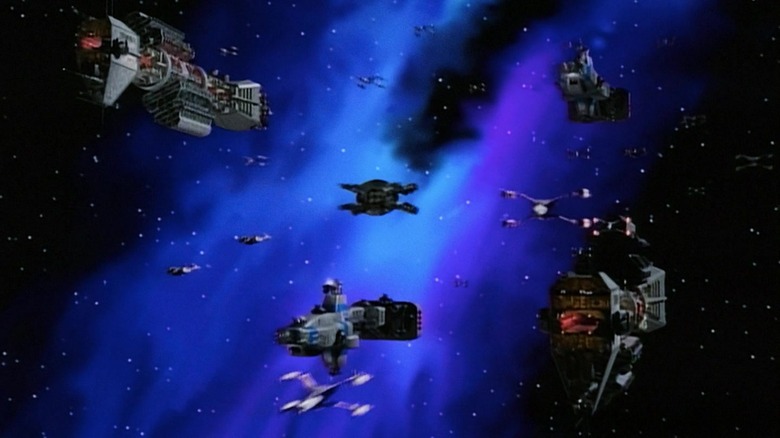
Instead of miniature model spaceships, "Babylon 5" employed CGI to create its starships. The effects undeniably show their age, but the drama remains impeccable. The CGI wasn't the only innovative technique on the show, either.
J. Michael Straczynski wrote out a five-season arc for "Babylon 5" in advance. That's standard TV writing now. (Later shows like "Lost" even modeled themselves on "Babylon 5.") But in the 1990s, in a world before "The Sopranos," "Breaking Bad," etc., it was novel. (Pun intended, because "Babylon 5" episodes are structured like chapters in a book.)
"Severed Dreams" hits the way it does because we've dreaded a moment like this coming since at least the Season 1 finale, when the Earth Alliance's previous president is assassinated (by, Season 2 reveals, his own VP). On a micro level, the conflict with Earth finally becomes unavoidable across three episodes: "Messages of Earth," "Point of No Return," and then "Severed Dreams." I can say from personal experience that watching those three episodes back to back and hitting "Severed Dreams" is an unbeatable TV-viewing high.
Money shots of spaceships firing lasers and exploding are great spectacle, sure, but a space battle with a strong story behind it is even better. What's a more powerful conflict than allies turned enemies? In "Severed Dreams," Captain John Sheridan (Bruce Boxleitner) and his crew have to decide if their consciences are strong enough to make them rebel against their own government.
If they fight and lose, they're traitors and sure to be executed with legacies worth less than mud. Those consequences mean the Babylon 5 crew still feel like the underdogs, even though, technically, it's a fair match — they're making a lonely stand against a force with a whole army behind it.
Severed Dreams makes the pain of war feel real
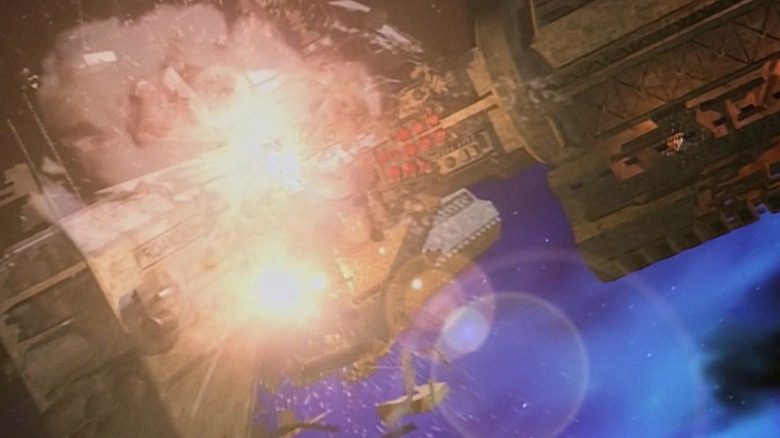
As Sheridan's ally Major Ryan (Bruce McGill) solemnly observes, this isn't a normal war: "This time, we know everyone we kill." That's the burden the heroes have to carry as they fight for Babylon 5.
I've highlighted the writing strength of "Severed Dreams," so let me pivot and clarify the visuals and pure action of it are great, too. The show even pulls a trick outside its usual filmmaking language, a dolly zoom (like in "Vertigo" or "Jaws"), when Sheridan learns the Earth ships are coming to attack Babylon 5. It shows a man who's just had the weight of a planet dropped onto him. But once the firing begins, he doesn't blink.
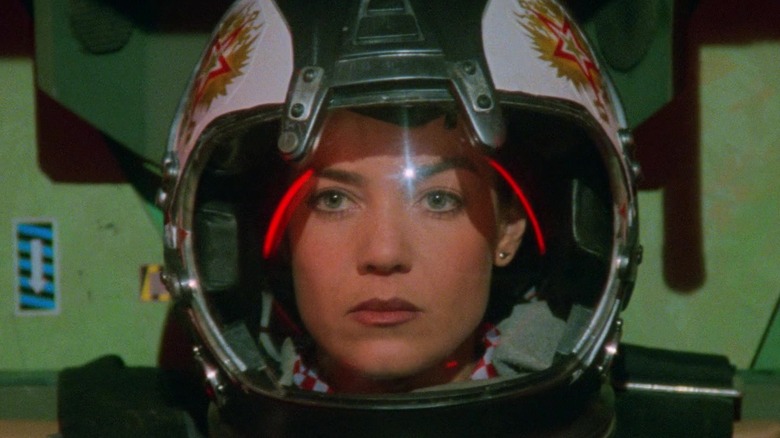
The choreography of the battle is strong and legible, which sounds like pretty basic craft until you remember its two sides of identical ships firing at each other. Except, you can always tell which ships, both destroyers and one-pilot fighters, are the rebels and which ships are the loyalists. The scene is also sure to put Sheridan's right hand, Susan Ivanova (Claudia Christian), in one of those fighters to give a frontline, human-sized view of the battle that the huge destroyers can't quite offer.
Even the spectacle doesn't elide the battle's cost. The turning point, and most exciting effect shot, of the showdown is a sacrificial play. The critically damaged Churchill rams one of the loyalist destroyers, the Roanoke, in a death run. It's even more harrowing because Captain Sandra Hiroshi (Kim Miyori) is only heard over comms as she makes her decision. Her signal fizzles out, and then the episode cuts to the fiery death of two destroyers at once. It's both a heroic sacrifice and the most blatant symbol of how self-destructive this whole conflict is.
The constraints that made Severed Dreams
"Severed Dreams" is a beautiful crescendo that's even more impressive if you know what a scramble it took to pull it off. Before production, the episode had to make do with a last-minute casting switch. Originally, the commander of the Alexander was a returning guest character, General Hague (Robert Foxworth), Sheridan's superior and the established leader of a counter-conspiracy to keep Earth from going fascist. Except, Foxworth was double-booked (amazingly enough, on "Star Trek: Deep Space Nine").
So, Hague is killed offscreen in an attack on the Alexander, replaced by Bruce McGill as Major Ryan. But I'd honestly call that change serendipity. Hague dying ups the dire stakes and makes Sheridan feel like more of a leader. More generally, "Babylon 5" never had the most generous budget. The ambition of "Severed Dreams," including its CGI-heavy space battle climax, tightened those constraints. The episode reportedly needed an extra $100,000 to pull off the battle.
In a "Severed Dreams" commentary track recorded for his Patreon, Straczynski claimed the standard "Babylon 5" episode had between 70 to 80 shots. "Severed Dreams" had about 140, which is much more demanding and one reason why the episode feels so quick-footed yet jam-packed. According to Straczynski, the time needed to complete the episode also came to the very edge of the wire. The audio mix was done before every effect shot was complete, and the final cut was finished mere hours before broadcast.
That means some mistakes slipped through, including one noted continuity error. The Churchill kamikazes the Roanoke, and then Babylon 5 and the Alexander together destroy the other loyalist ship, the Agrippa. Except, when Sheridan then hails the imploding ship, he calls it the Roanoke. Was that a dialogue or CGI error?
Severed Dreams showed change came with consequences on Babylon 5

In his Patreon commentary, J. Michael Straczynski copped to "some glitches" in "Severed Dreams," especially with the inconsistent ship names, but added, "I try to ignore those and just focus on everything else." Good call! The episode as a whole is so good that slight snafus hardly diminish it, and they're especially forgivable if you know how time-pressed the "Babylon 5" crew was with finishing the episode. They're not the only ones who cut it last minute, either.
The nadir of the battle is when, after the Agrippa and Roanoke are destroyed, a second wave of loyalist Earth destroyers jumps in and demands the now-softened-up Babylon 5's surrender. Game over, right? Nope, because Sheridan's ally Delenn (Mira Furlan), ambassador of the alien Minbari, arrives with ships to defend Babylon 5. When the loyalist Earth captain tells her to back off, she counters:
"Only one human captain [Sheridan] has survived battle with a Minbari fleet. He is behind me. You are in front of me. If you value your lives, be somewhere else."
As the kids say, aura.
The battle ends there, but not the war. The ramifications of "Severed Dreams" last until the end of the series, and the previous status quo stays unrestored. Babylon 5 formally declares independence, and Sheridan discards his Earthforce uniform in discomfort over both what it now represents and because he took up arms against that uniform.
"If B5 was a dream given form, and the [Earth Alliance] had the potential to be something more than it has become, and the two part ways, then you have severed dreams," explained Straczynski regarding the episode's title. The episode may depict those dreams dying in explosive fire and cold space, but they couldn't have been severed more spectacularly.