

Horror Legend Robert Englund Explains Just How Much The Genre Has Changed In 40 Years
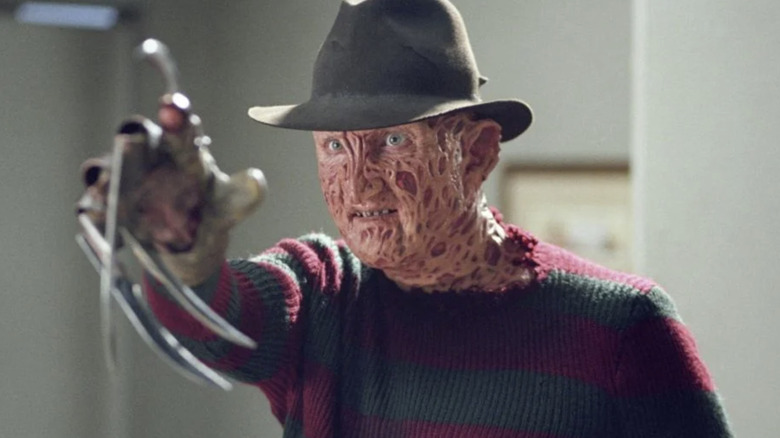
Horror movies, and the horror genre in general, have become inextricable from the pop culture landscape in 2026. Of course, any horror fan or student of media history will tell you that horror has never not been popular, especially in the cinema. Horror has always had a place in Hollywood, helping filmmakers, studios, and everyone in between be both creatively and financially fulfilled. For audiences and the arts in general, horror is a endless well of material, a genre that I'd argue is the most necessary of all genres in order to help humans process the myriad issues we're plagued with from womb to tomb.
It's this latter aspect which made horror (in conjunction with other genres like sci-fi and fantasy) a scapegoat for too many years by a repressed, conservative culture. Despite horror's long and rich history within literature and other mediums, there was a period when the genre was looked upon as lowbrow trash. There are too many factors as to why this happened to go into here, but suffice to say that while the horror movie never really stopped thriving, it was rarely celebrated and respected for its artistry and cultural legitimacy. This is why my attendance at the opening of the new exhibition "The Horror Show" at the Academy Museum of Motion Pictures in Los Angeles was such a special occasion, as it confirms the cultural shift of the genre into one that's not just tolerated, but embraced. These feelings were echoed by the opening remarks given by special guest Robert Englund, the actor most famous for portraying Freddy Krueger from the "A Nightmare on Elm Street" films. Englund succinctly explained just how much the genre's reputation has changed for the better in the last 40 years alone, something which is as eye-opening as it is heartening.
Robert Englund remembers a time when horror filmmakers were ostracized
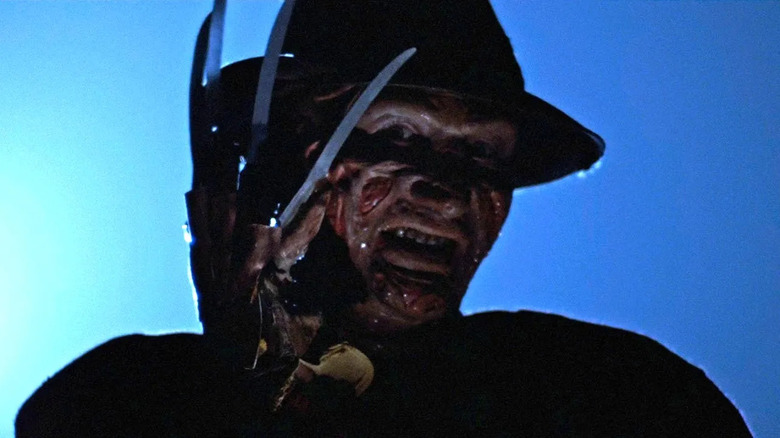
In contrast to the studio system of the Golden Age of Hollywood, Robert Englund owes his career to the permissiveness of the New Hollywood wave of the 1970s. His first screen role was in the 1974 neo-noir "Buster and Billie," which he mentioned as he walked into the Academy Museum's Ted Mann theater to give his remarks, as that film was one of several produced by Ted Mann, who was primarily a theater chain owner. After his debut, Englund appeared in various thrillers and TV series like "St. Ives," "Eaten Alive," and "Police Woman," mostly as thugs or heavies. As Englund reminisced during his speech at the museum, his love of cinema and acting was tethered to a fascination with horror from an early age, remembering how he and his school friends would watch old Universal monster movies on TV. More than that, Englund remembered poring over a coffee table book his uncle owned called "The Movies," and was particularly fascinated by a section all about Lon Chaney Sr., known as "The Man of a Thousand Faces" thanks to his penchant for elaborate character makeup. As Englund continued:
"All those different makeups and images, they must have burrowed into my brain, and made me say yes to Wes Craven all those years later."
Yet during the time when Englund was building his career, the horror movie was still treated as something dirty within the industry. Englund recalled the attitude on studio lots toward himself and others working in the genre:
"I remember back when I started ... [the horror folks] would sort of get the lousy table in the commissary, by the kitchen door."
Robert Englund sees The Horror Show exhibit as proof that horror has 'finally arrived'
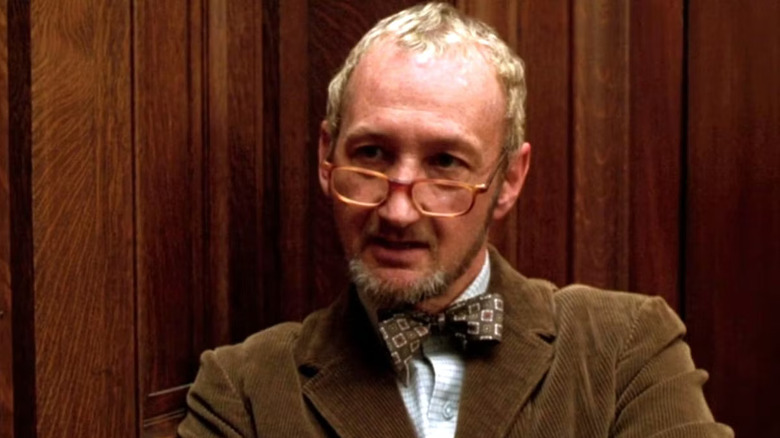
Thankfully, the days of horror filmmakers like Robert Englund finding themselves treated poorly or viewed with suspicion are almost completely gone, and there's no better proof of that than "The Horror Show" exhibit at the Academy Museum. There's bigger proof, to be sure, not least of which is Amy Madigan winning Best Supporting Actress at this year's Academy Awards for her portrayal of Gladys in Zach Cregger's "Weapons." But there are also the things Englund cited during his remarks about the current state of horror in Hollywood:
"I believe, in fact, now [the horror film] probably has taken the place of the Western and the gangster film in the cycle of film genres that we see released all the time. And practically every other week, there's a horror film, or horror/sci-fi, or fantasy film in the top ten films. So, I think that we finally arrived [...] I think we're getting some respect, and I'm so grateful."
Englund is, of course, right on the money in citing horror as the biggest pillar holding up the film industry at the moment. For me, touring "The Horror Show" exhibit and seeing the care with which it's been curated was revelatory and vindicating all at once. Being someone who's made a career out of analyzing and celebrating this genre, the exhibit isn't just a pat on the back for horror being financially successful, but is instead a proper academic show of respect for and understanding of it. It's proof that not only is horror not going anywhere, but that its status in the industry has risen, giving folks like Robert Englund the place of honor he deserves rather than a lousy table by the kitchen door.