

Robert Vaughn Played A Small Part In One Of The Worst Superhero Movies Ever Made
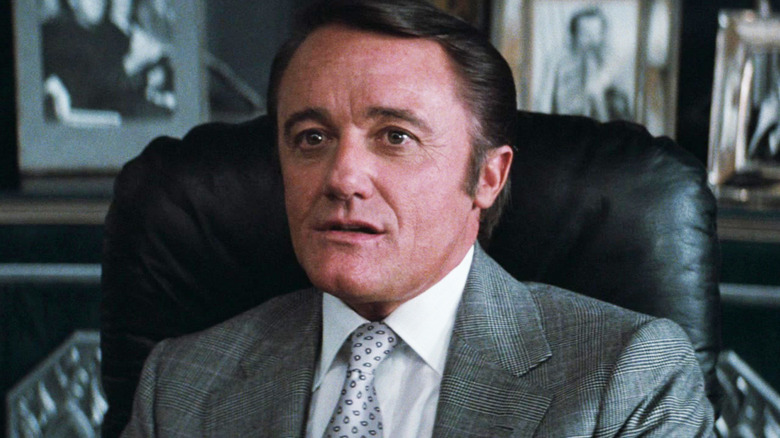
Everyone knows Robert Vaughn as the suave secret agent Napoleon Solo from the 1960s NBC series "The Man from U.N.C.L.E." But in 1983, he played the kind of villain Solo would have taken down with a wry smile and a cool insouciance. Indeed, the actor's character, Ross Webster, was a scheming industrialist who faced off against the Man of Steel in 1983's "Superman III." In retrospect, Vaughn probably would have preferred for Webster to be a quickly forgotten villain on his spy series, though, as "Superman III" turned out to be a bit of a dud, and that's putting it lightly.
Vaughn's film career got off to an auspicious start when he appeared in Cecil B. DeMille's 1956 biblical epic "The Ten Commandments," which is a pretty spectacular way to make your big screen debut. Soon after, he played the role of Robert Ford, the infamous killer of Jesse James, in "Hell's Crossroads" before portraying tortured veteran Chet Gwynn in 1959's "The Young Philadelphians." The latter proved to be his breakthrough role, drawing the attention of John Sturges as he was preparing to direct "The Magnificent Seven." Vaughn ended up starring as a tortured gunslinger in that genre-defining Western — not bad, considering he'd only started his film career four years prior.
Of course, he wouldn't become a household name until he debuted as Solo in "The Man from U.N.C.L.E." Running from September 1964 to January 1968, the show remains Vaughn's most popular project, though he did see continued success in the years after, winning an Emmy for his role in the 1977 TV miniseries "Washington Behind Closed Doors." "Superman III," however, came at a less successful time for both Vaughn and the "Superman" movie franchise itself.
Robert Vaughn joined the Superman franchise at a bad time
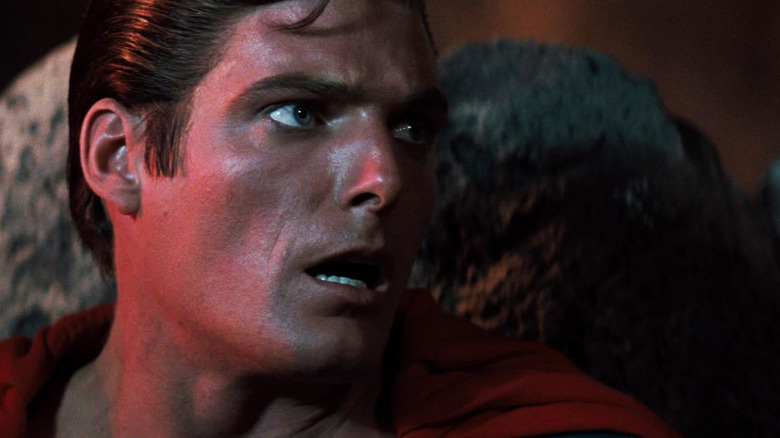
According to The New York Times, Robert Vaughn described his later roles as "not quality." One such role was that of Ross Webster in "Superman III," a movie that came along at a time when Vaughn's Hollywood standing wasn't what it once was. But that was true of the franchise to which the film belonged, too.
James Gunn's charming crowd-pleaser "Superman" may have been a hit in 2025, but 1978's "Superman" remains the gold standard, not only for movies based on the Man of Steel but arguably for comic book films in general. Director Richard Donner treated his source material with the kind of respect that would make Zack Snyder self-implode, presenting Christopher Reeve's Supes as every bit the paragon of super-heroism he was. "Superman" '78 was a major success.
As was 1980's "Superman II," for which Richard Lester was given a directing credit despite the fact Donner had shot most of the movie before being replaced. Regardless, "Superman II" was an even bigger commercial success than its predecessor. But the real test came when Lester was handed full creative control for 1983's "Superman III." It was a test he failed.
The third movie saw Reeve's Superman doing battle with Vaughn's corrupt CEO Ross Webster, whose company hires Richard Pryor's tech genius Gus Gorman. After Webster discovers his new hire is using computer wizardry to embezzle funds, he blackmails him into using his hacking skills to help Webster dominate the global economy, eventually building a supercomputer that becomes self-aware and almost manages to kill Superman. At one point, Reeve's hero even separates into two entities, one of which is evil. It was all a bit of a mess, and audiences weren't having it.
Superman III was a super dud at a time when Robert Vaughn needed a hit
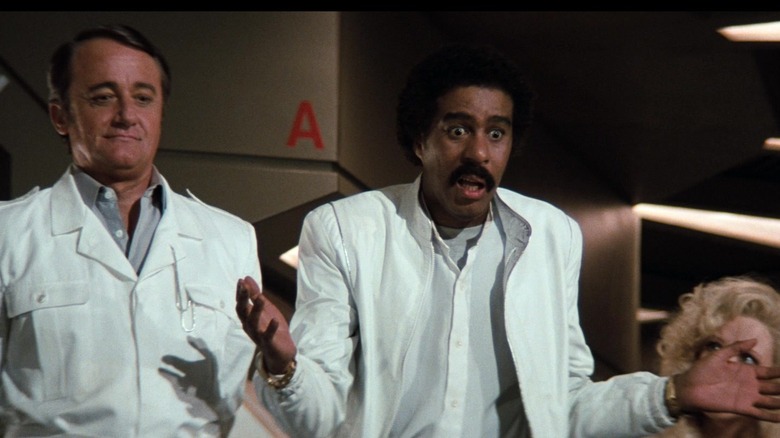
Christopher Reeve thought Richard Pryor's casting was to blame for the relative failure of "Superman III," but it was more about what Pryor represented: a greater comedic sensibility that sacrificed the reverence of Richard Donner's "Superman" for a parodic, tongue-in-cheek tone that was too low even for an episode of "The Man from U.N.C.L.E." Then, there was Robert Vaughn, who had the unenviable job of essentially replacing Gene Hackman's Lex Luthor from the first two movies as the villain. Ross Webster was a poor substitute, and though Vaughn did his best in a role that very much qualified as "not quality" (to use the actor's own phrasing), it was never going to be enough.
It's not surprising, then, given the abrupt tonal shift, lack of Hackman's star power, and a story that was messy at best, that "Superman III" ended up making significantly less money that the previous two installments. Whereas "Superman" made $134.2 million at the worldwide box office and its sequel brought in $216.3 million, "Superman III" made just $80.2 million. Still, Vaughn did at least have fun working with Pryor, having told Bobby Wygant he was "a fine actor" and "a pleasure to work with" due to his "improvisatory" approach on-set. What's more, Vaughn managed to get in and out of the "Superman" franchise before 1987's "Superman IV: The Quest for Peace," which remains one of the worst DC comics movies ever made and was essentially disowned by Reeve.
Unfortunately, Vaughn's career wasn't exactly thriving at the time, either, as the late-1980s found him fronting a series of infomercials for a balding "cure." Thankfully, things picked back eventually, but Vaughn never again found "The Man from U.N.C.L.E."-level success.