

How Spock Led Isaac Asimov To A Major Star Trek And Personal Breakthrough
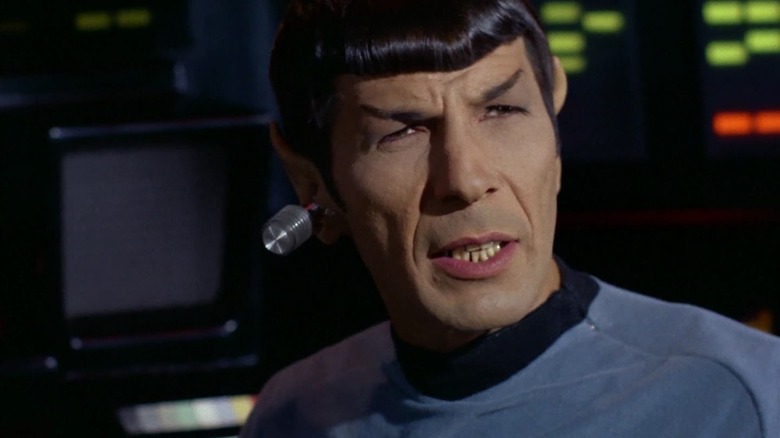
Talk to any Trekkie, and they will happily regale you with literary theories about the appeal of "Star Trek: The Original Series" and the greater "Star Trek" franchise's tenacity in the pop consciousness. Particularly, they may mention the well-balanced trinity formed by the three central characters on "The Original Series."
On one side, you have Dr. McCoy (DeForest Kelley), a passionate, emotional man who thinks with his heart and is quick to express outrage. He is pure body. Opposite him, you have Spock (Leonard Nimoy), a being of intellect and logic who has actively jettisoned emotions from his experience. He is pure mind. Between them, synthesizing the passions of the body and the logic of the brain, is Captain Kirk (William Shatner), their commanding officer. He is pure soul. Some have even argued that this core character dynamic is what made "Star Trek" popular to begin with.
That and the fact that Trekkies developed crushes on the cast. The above character dynamic was most definitely made sexual in the minds of fans, and one can go all the way back to the late 1960s to find romantic Kirk/Spock fan fiction. Indeed, the "slash" in "Kirk/Spock" helped inspire the term "slash fiction," and plenty of people find Spock to be overwhelmingly sexy (which is somewhat odd, given that he represents the "mind" in the above-described dynamic).
Of course, smart is sexy, and the fact that folks were lusting after Spock was something that famed sci-fi author Isaac Asimov found totally mind-blowing. In a 1967 editorial for TV Guide, he pondered Spock's allure and how this made him realize that thoughtful characters were the new sex symbols.
Isaac Asimov was thunderstruck to learn that people find Spock sexy
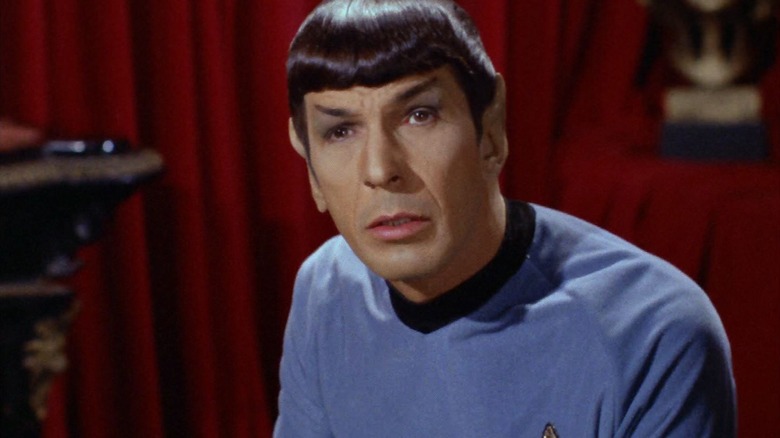
In his essay, Isaac Asimov portrayed Spock as being representative of a whole new cultural trend that he — as a professional writer — found quite appealing. His journey began, Asimov wrote, when his 12-year-old daughter, while watching an episode of "Star Trek," let slip, "I think Mr. Spock is dreamy." Startled, Asimov asked his daughter why Spock is dreamy. "Because he's so smart," she replied. "Star Trek," Asimov surmised, was tapping into something that his generation didn't have access to: the idea that intelligent individuals can be sex symbols.
Asimov then went on a tear about the male archetypes from the books he had grown up reading. Mark Twain's Tom Sawyer, for instance, was irascible, rebellious, sneaky, and actively avoided school. Meanwhile, the "villain" kids from those same stories tended to be well-off, well-groomed, and well-educated prigs. For Asimov, signs of masculine heroism came from a devil-may-care attitude, while intellect was associated with prudishness and villainy. Asimov was crestfallen to realize that he always did well in school.
Then, he cited cinema (although he didn't provide any specific movies) as having introduced new masculine ideals into his consciousness as an adolescent. Asimov was born in 1920, so these would have been films from the mid-to-late '30s. He generally recalled movies featuring taciturn, non-speaking heroes, i.e. physically large galoots that women would describe as "lovable big lugs." Big, shallow guys were attractive, the movies told him. Look at Tarzan.
And then, when he started to watch television, Asimov was exposed to sitcoms featuring clownish men and their sharp-witted wives (see: Jackie Gleason in "The Honeymooners"). The archetype was well-cemented. Un-thoughtful men, he internalized, were more desirable than considerate ones.
Spock stands in defiance of the male archetypes that preceded him
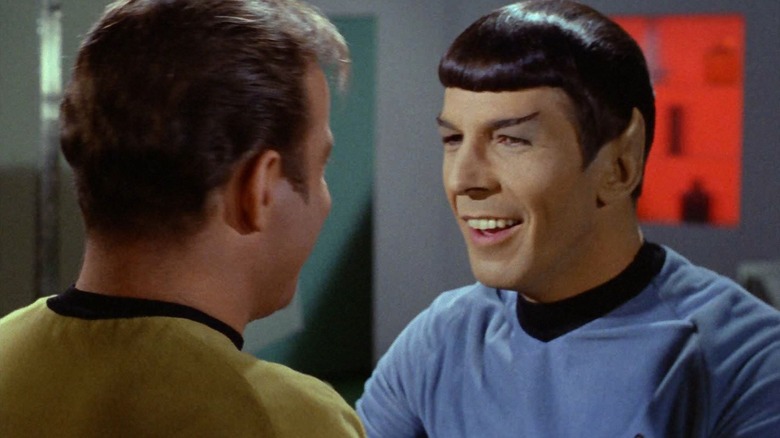
Isaac Asimov even admitted that he had internalized the images that pop media had been feeding him. He assumed that his intelligence made him less desirable as a mate and, so, he was insecure about his own marriage. His wife assured him that she loved him, but he felt he wasn't enough of a "lovable galoot," having an undeniable interest in literature, history, religion, science, and sci-fi TV.
Then came his daughter's comment about Spock. Asimov admitted that he never saw Spock as sexy and found the very notion was unthinkable. But a 12-year-old girl wouldn't lie about her TV crushes, so it must be true. Spock is sexy. And not just because he's played by Leonard Nimoy, a tall man with striking features. No, he's sexy because he's a deep thinker. He wraps up his ideas by addressing the eggheads, book-learners, and scientists reading. "Relax and be your natural selves," he tells them. "It's sexy to be smart!"
Decades later, sometime in the early 2000s, I had a discussion with a co-worker of mine — a fellow Trekkie — and she admitted the same thing as Isaac Asimov's daughter: She always had a crush on Spock. Not Nimoy, but Spock, the fictional half-alien with a powerful intellect. Smart, cool, and emotionless, Spock is approachable, confident, and skilled. Hence, there's the alluring aspect of potentially seducing him. Flirt, make innuendos, break down his Vulcan emotionlessness, and enjoy the sensual and romantic passions that (we assume in our fantasies) are bubbling up underneath.
So, take a lesson. If you want to be alluring, you should read more, see plays, and enjoy the world. And you should definitely, definitely engage more with the "Star Trek" franchise.