

5 Years Ago, Disney Released A Star-Studded Fantasy Movie Flop That Deserved Better
Disney had a hard time turning its Jungle Cruise theme park attraction into a movie, which maybe isn't so surprising. After all, the Mouse House's original ride is a deeply "uncool" affair in which parkgoers are taken on a slow, simulated, 1930s-era riverboat tour across Africa, Asia, and South America. Add in a guide who cracks non-stop cheesy jokes and bad puns (not to mention the uncomfortably Eurocentric whiff of the whole thing), and it's not necessarily prime source material for an adaptation.
At the same time, the ride's inherent kitchiness is part of its charm, excluding the cringe-inducing racist and xenophobic elements that Disney finally removed from Jungle Cruise in 2021. (That it took so long to happen is not a good look.) This was also the same year that the Mouse House unveiled its "Jungle Cruise" film, a South America-based adventure comedy it had spent the better part of two decades developing
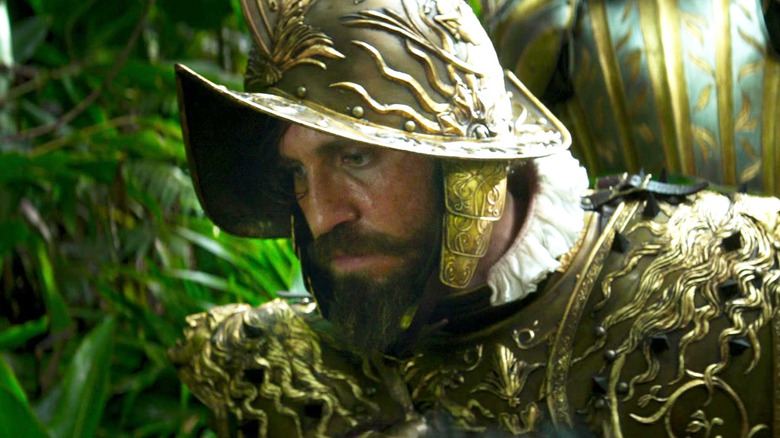
In its finished form, "Jungle Cruise" is a potpourri of elements patently lifted from other, cherished movies. For starters, there's the enemies-to-lovers romance between a posh English woman and a coarse, World War I-era steamboat captain of "The African Queen," with Emily Blunt and Dwayne Johnson filling the roles played by Katharine Hepburn and Humphrey Bogart in John Huston's classic adventure film. Then you have the "Indiana Jones"-style plot, in which the heroes race to locate a long-lost supernatural MacGuffin before a troupe of wicked German military types do. And, of course, the movie features a pack of undead villains not unlike the cursed buccaneers in Disney's own "Pirates of the Caribbean: The Curse of the Black Pearl."
Ultimately, borrowing from the best wasn't enough to make "Jungle Cruise" a hit, but it deserved better ... or, more accurately, the Jungle Cruise ride did.
Disney's Jungle Cruise movie wasn't the success the studio wanted
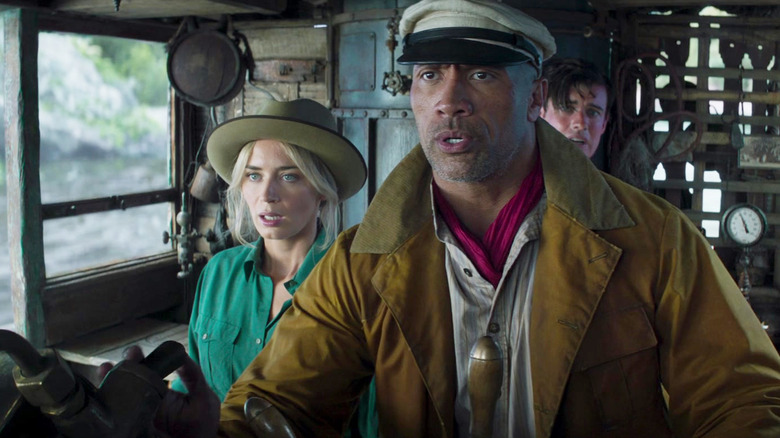
As much as "Jungle Cruise" has in common with the movies listed above, it clearly wants to be Stephen Sommers' 1999 version of "The Mummy." So much so, the film outright steals specific elements from Sommers' blockbuster, like a sequence involving slapstick action in a library and giving its plucky heroine a comic relief brother (Jack Whitehall as one of Disney's many "first" gay characters). It also, to its credit, mostly dispenses with that movie's exoticism and has an unmistakably anti-colonialist message.
Honestly, I would be perfectly fine with "Jungle Cruise" filching from "The Mummy" if it was able to be genuinely romantic, funny, and thrilling the way that film is. The problem is that Dwayne Johnson and Emily Blunt have decent buddy chemistry but little amorous spark, the movie's humor often falls flat, and director Jaume Collet-Serra's filmmaking lacks the stylishly hard-edge that he's brought to his many enjoyably shlocky mid-budget efforts ("Orphan," "Non-Stop," "The Shallows," etc.). What you end up with is a tentpole that has all the right components, but they've been sanded down to the point of being ineffectual.
It's possible the follow-up could've course-corrected by being more ambitious and willing to take actual risks. (Say what you will against them, but the first two "Pirates of the Caribbean" sequels at least did that right.) Unfortunately, "Jungle Cruise" was released in theaters and on Disney+ Premier Access simultaneously after being delayed a year by the COVID-19 pandemic, and it didn't make anywhere near enough money to qualify as a success against its $200 million price tag, even grading on a curve. Hence, no one was shocked when Disney eventually abandoned the "Jungle Cruise" sequel it had announced shortly after the film's initial debut.
What went wrong with Disney's Jungle Cruise film adaptation
Despite all the hardships it encountered, Disney wasn't, per se, wrong to stick with "Jungle Cruise." Adventure movies of this kind haven't fared all that well lately, but that's generally because they've either failed to capture what makes their source material interesting (see: Sony's "Uncharted" video game feature adaptation) or been, frankly, narratively and aesthetically uninspired (see: Guy Ritchie's Apple TV flick "Fountain of Youth"). With its relatively progressive outlook, though, "Jungle Cruise" had the right idea about how to revitalize this old-fashioned form of Hollywood spectacle for our current century.
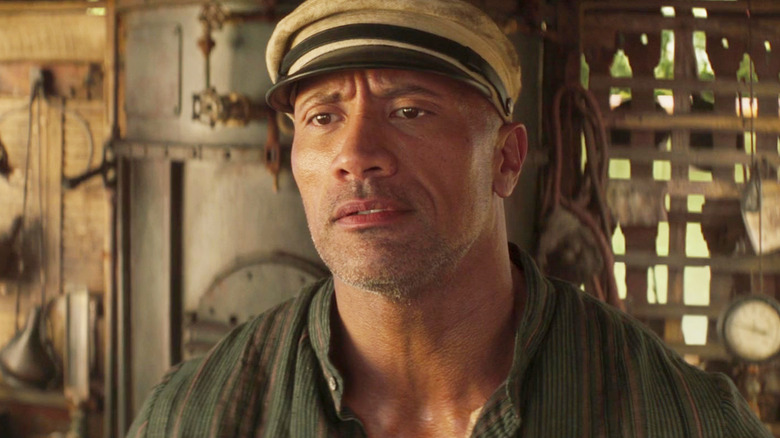
Obviously, COVID-19 didn't help its cause, but the main problem with "Jungle Cruise" might have been Dwayne Johnson. As he enjoyed more and more success in the 2010s, The Rock began to increasingly tailor his projects to fit the commercial brand he had cultivated for himself. And while the ensuing movies spanned distinctly different genres (2015's "San Andreas" was a natural disaster thriller, 2018's "Skyscraper" was an action flick in the vein of "Die Hard," and so forth), most of them felt and even looked the same, all the while tweaking old formulas just enough to make them seem more inventive. This was a good thing in some ways (Johnson's characters were more sensitive and caring than the macho heroes that came before them, as one example), but it was overall a case of filmmaking being approached too much as a business and not enough as an artistic endeavor.
This trend only continued with "Jungle Cruise": It had no real personality, and folks were clearly quick to take notice. Roll your eyes at its Dad Jokes all you want, that's never been an issue with the original Jungle Cruise park attraction.