

15 Years Ago Today: CBS Quietly Launched One Of The Best Sci-Fi Shows Of The 2010s

Jonathan Nolan is an unsung hero of cinema. Sure, his brother Christopher Nolan gets most if not all of the credit for his movies, but it's easy to forget that Jonathan co-wrote some of his best films, like "The Dark Knight," "The Prestige" and "Interstellar." Since then, Jonathan Nolan has truly shined on television, creating or helping produce truly incredible sci-fi shows including "Fallout," "Westworld," and also one of the best sci-fi shows of the 2010s — "Person of Interest."
The show premiered 15 years ago on CBS, not exactly a network known for genre television. And yet, at first, "Person of Interest" didn't look much different from other CBS shows. This is a cop procedural about a reclusive billionaire who created a machine that spies on people every hour of every day. Meant to predict acts of terror in the wake of 9/11, the machine can actually predict all sorts of crime. Now, together with a former special forces soldier, the duo become a Batman and Alfred vigilante team who fight to stop crime before it happens. What started as a crime-fighting show with a heavy focus on a case-of-the-week format quickly evolved into something more. At the same time, a cold war between two artificial intelligences brews. By the end, "Person of Interest" was a thrilling sci-fi crime show with a deep mythology, and some truly thought-provoking and prescient thoughts on AI.
Unfortunately, CBS canceled "Person of Interest" after five seasons, but this is still a fantastic piece of television that is still worth watching today.
Sneaking a high concept show in case-of-the-week formula
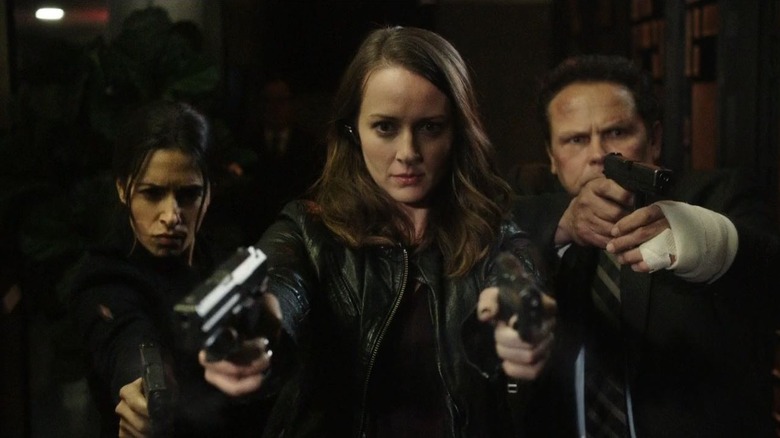
It's hard to imagine CBS, the network that gave us a billion "CSI" and "NCIS" spin-offs, also giving us one of the best sci-fi shows of the 2010s. And at first, there wasn't that much separating those shows from "Person of Interest." It was a case-of-the-week procedural with a little bit more tech than a cop show, but not much else. Sure, the show felt like Batman — in no small part due to Nolan being inspired by his frustration with being unable to show Batman stopping small crime in "The Dark Knight" (via CBR) — but not really sci-fi at first.
But that's the beauty of "Person of Interest," that it manages to slow-burn itself into a genre show, letting its mythology slowly reveal itself over time. In a way, this show does for sci-fi what "Hannibal" did to horror in procedural TV, using the format in order to appeal to the largest audience possible while introducing them to concepts and genre storytelling they weren't used to seeing.
Indeed, "Person of Interest" is an anomaly in television because it feels of two eras. Its case-of-the-week formula echoes to a time when shows were able to find their footing, to experiment, to make mistakes, to establish a formula they could then break in memorable special episodes. At the same time, the show has the kind of serialized worldbuilding we're now used to in the era of streaming, with great call-backs, foreshadowing, and a deep mythology that rewards you paying attention.
An AI cold war
"Person of Interest" ended up being a show about the rise of AI and an ensuing cold war when a rival AI is created by the government. Though the show still followed its procedural format, it combined it with notions of free will, of control, of our relationship with technology, as well as morality and privacy. These are all themes Jonathan Nolan would then expand in "Westworld," particularly its astonishing third season, with the predictive artificial intelligence Rehoboam being very similar to the way AI plays out in "Person of Interest" with predictive AI lowering crime but also destroying society as we know it.
"Person of Interest" was more than just a "we must destroy machines" show, as it instead found immense fun and thrills in having machines wage war against each other through human proxies.The show becomes about the different approaches of the two AIs, finding humanity in technology — the ghost in the shell, if you will.
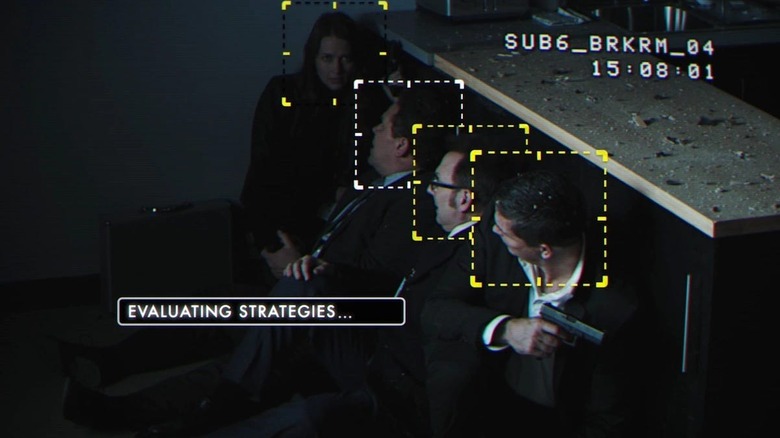
The best example of this is in the Season 4 episode, "If-Then-Else," which takes the point of view of The Machine as it evaluates a list of possible strategies to help the team succeed a mission. Watching The Machine run endless scenarios and failing to save the team is both thrilling and heartbreaking. It's an example of "Person of Interest" playing with its established format, which can only really happen in a show with as many episodes as this one.