

Star Trek Legend Leonard Nimoy Guest-Starred As 3 Different Characters In This Western Series
The 1956 TV series "Broken Arrow" began with the 1947 novel "Blood Brothers," written by Elliott Arnold. The novel tells the highly fictionalized story of Tom Jeffords, the real-life Indigenous agent who became close friends with famed Apache leader Cochise in the 1870s. Their friendship had real-life benefits to the wars in the region at the time, and peace was declared as a result of the two men working together. "Blood Brothers" was adapted into a feature film called "Broken Arrow" in 1950. "Broken Arrow" was directed by Delmer Daves and starred Jimmy Stewart as Jeffords and Jeff Chandler as Cochise. Chandler was born in New York, the son of Jewish parents, but it was painfully, racistly common at the time to cast anyone but First Nations actors in First Nations roles.
"Broken Arrow" was considered quietly revolutionary at the time, as it gave humanity and sympathy to the First Nations character, standing in the face of decades of depictions of First Nations people as uncivilized monsters. Never mind that it's still a broad, Hollywood melodrama without a whit of actual realism to it.
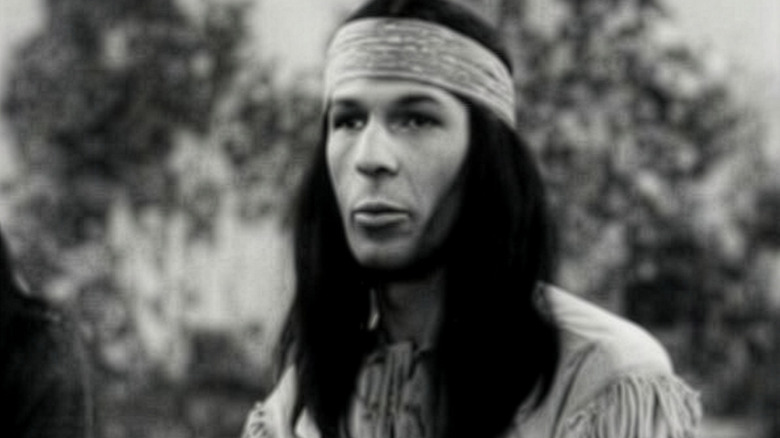
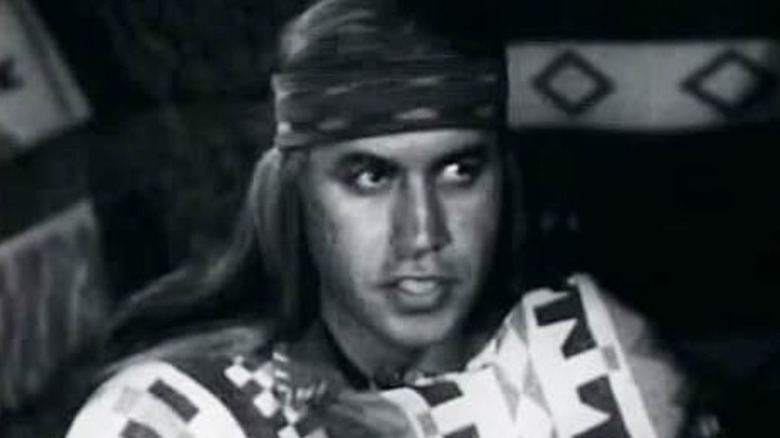
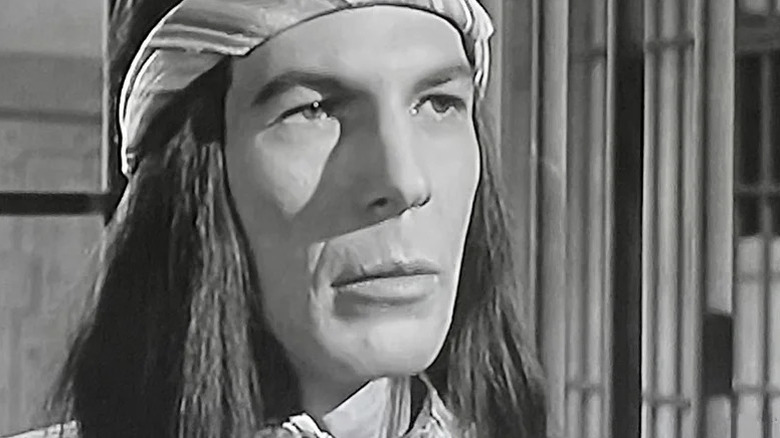
The film was a hit, however, and warranted a TV spinoff in 1957. In the "Broken Arrow" TV series, John Lupton played Jeffords, and Michael Ansara, a Syrian-American actor, played Cochise. The series ran for 72 episodes over two seasons and features early writing by Sam Peckinpah. For the purposes of this article, we will also point out that the late Leonard Nimoy, pre-"Star Trek," played three different roles in three different episodes of "Broken Arrow." Although born in Boston to Ukrainian Jewish parents, Nimoy played First Nations characters.
Leonard Nimoy was in the friendship-based Western Broken Arrow
"Broken Arrow" was essentially a buddy series, albeit with a dramatic tone, that paired Jeffords and Cochise as equals. This was unusual at the time, as First Nations characters were often seen as sidekicks at best (see: "The Lone Ranger" and many others). Reviews from the time note that it was a great series, affording Cochise more dignity than some contemporary entertainment. It also carefully depicted the white invaders as villains. The casting was still culturally insensitive, but for the late 1950s, the series was still seen as a step forward.
Leonard Nimoy appeared in the first-season episode "The Trial," wherein a guest villain accuses some of Cochise's Apache compatriots of ill-doing, but as a ruse to distract from his own crimes and from the actual culprit that he's in league with. Nimoy only plays a supporting role. Nimoy also turned up in the second-season episode "Conquistador," which involves racial blackmail (!) and a rancher who won't allow Cochise to move water and cattle onto his property. Nimoy's third appearance was in "The Iron Maiden," which is about a Modoc woman (Marya Stevens) who brings up a jurisdictional dispute. In that episode, Leonard Nimoy is only credited as "Apache."
In a fun "Star Trek" coincidence, the 1956 pilot episode for "Broken Arrow" features Mexican superstar Ricardo Montalbán as Cochise. Montalbán and Nimoy both appeared in the "Star Trek" episode "Space Seed," where Montalbán plays the genetically advanced dictator Khan, a role he reprised in the feature film "Star Trek II: The Wrath of Khan." The two actors did not have any scenes together in "Broken Arrow," however. It seems that it was just another gig for both actors.
Leonard Nimoy's long career in Westerns
Nimoy's earliest credit came in 1951 when he appeared in the comedy anthology "Queen for a Day." Nimoy was only 19 or 20 then. He was also in the hit 1952 comedy "Francis Goes to West Point," the third of the Francis the Talking Mule pictures. Nimoy was also in the Commando Cody serial "Zombies of the Stratosphere," so even his earliest credits were exciting. His first major TV credit came in 1954 when he appeared on an episode of "Dragnet." He was also in the little-known series "West Point Story" and in two episodes of "Highway Patrol" before landing the gig on "Broken Arrow." As noted, it was just one step in an ongoing career.
Westerns, it should be recalled, were massive at the time, having dominated Hollywood for decades. Prior to playing the half-Vulcan Spock on "Star Trek," Nimoy racked up several Western credits, as did every working actor at the time. He played a First Nation character in the Western "Tombstone Territory" in 1959, and later appeared in four episodes of "Wagon Train," an episode of "Bonanza," and single episodes of "Gunsmoke," "Rawhide," and "Death Valley Days." He played three different roles in three different episodes of "The Virginian," a massively popular show at the time.
"Star Trek," as Trekkies will tell you, wasn't a bowl-'em-over success during its 1966 to 1969 run, but it found a huge audience when it entered reruns in the early 1970s. Nimoy had already moved on to "Mission: Impossible" by then, appearing in 49 episodes of the series. By then, though, Westerns had fallen out of popular favor, and Nimoy's resume diversified greatly. "Star Trek" put him in the public eye in perpetuity.