

Braveheart's Forgotten 'Sequel' Is Streaming For Free
Film history is littered with unauthorized movie sequels. For example, John Howley's 1989 animated film "Happily Ever After" was conceived as an unofficial "Snow White" sequel until Disney forced it to change its title. Heck, no less a classic than "Lawrence of Arabia" got the informal sequel treatment with the release of Christopher Menaul's "A Dangerous Man: Lawrence After Arabia," a 1990 TV movie starring none other than Ralph Fiennes.
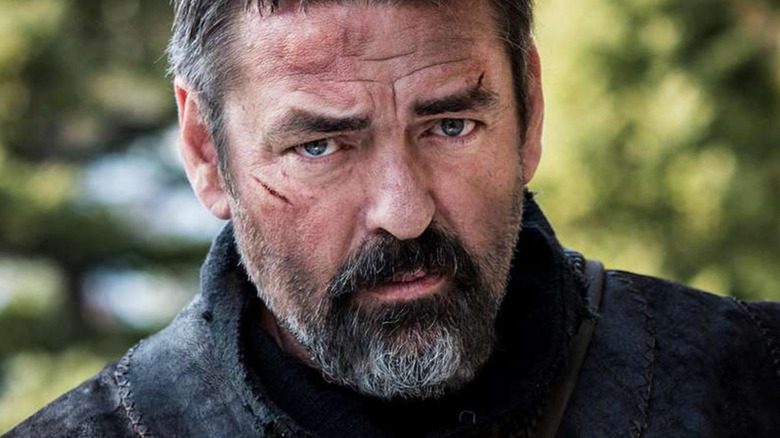
I share all of this to reveal that some of your favorite movies likely have sequels, often unauthorized, elsewhere in the world. Case in point: Did you know that Mel Gibson's 1995 Best Picture Oscar winner "Braveheart" also has a follow-up? And, in this case, it's more legit than "Happily Ever After" in that it includes an actor who appeared in Gibson's period piece and follows the same historical timeline. As it so happens, Australian director Richard Gray helmed "Robert the Bruce," a 2019 movie that follows the post-"Braveheart" adventures of the titular Robert, as depicted by Angus Macfadyen. The actor, as some may recall, portrayed a younger Robert the Bruce in Gibson's flick, so Gray's picture more or less counts as a sequel.
Gibson's film primarily focuses on the Scottish warrior William Wallace (as played by Gibson), with "Braveheart" serving as a wholly historically inaccurate but narratively satisfying dramatization of Wallace's rebellion against the British crown. Wallace is executed in 1305 in the movie, at which point "Braveheart" flashes forward to 1314. There, Robert finishes Wallace's quest for Scottish freedom. The "Robert the Bruce" film, in turn, bridges the gap between Wallace's execution and the events glimpsed in the epilogue of "Braveheart." You can currently stream it for free on Pluto and see for yourself.
Robert the Bruce is the somewhat-official sequel to Breaveheart
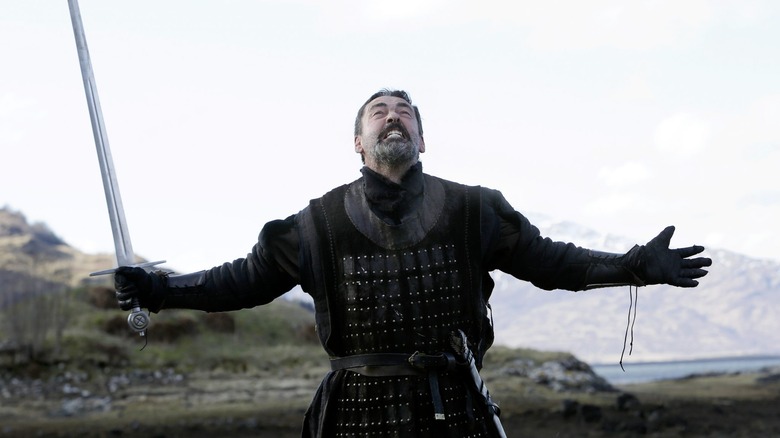
It should be noted that neither Mel Gibson nor "Braveheart" screenwriter Randall Wallace participated in the making of "Robert the Bruce." Likewise, the movie wasn't overseen by Paramount, which distributed "Braveheart" in theaters. However, since Robert the Bruce is a real-life historical figure, there's no legal obstacle preventing other studios from making historical sequels to "Braveheart." It's also clear that "Robert the Bruce" was a passion project for Angus Macfadyen, as he both produced and co-wrote the film in addition to starring in it.
"Robert the Bruce" picks up in 1306 with a meeting between Robert and John Comyn (Jared Harris), a real-life Scottish ruler at the time. It then flashes forward to 1313 and shows Robert is on the cusp of abandoning his cause when some soldiers capture him, hoping to exchange him for the bounty on his head. Thinking quickly, Robert gives his captors the slip, runs into a few more violent characters, and settles into a cave about halfway through the movie. You see, there's a legend about Robert the Bruce being convinced to re-up his revolutionary efforts by watching a tenacious spider in a cave. That tall tale is dramatized here.
While "Robert the Bruce" may be about an important figure in Scottish history, like "Braveheart," its actors are from all over the world. Robert, for instance, is taken in by a woman named Morag, who is played by Kiwi actor Anna Hutchison. Other cast members are American, including notable stars like Melora Walters and Patrick Fugit. Indeed, the actual film was mainly shot in Montana since it scurries about in frozen woods for the bulk of its runtime. On the whole, then, it lacks the huge battles that "Braveheart" is known for.
Is Robert the Bruce any good?
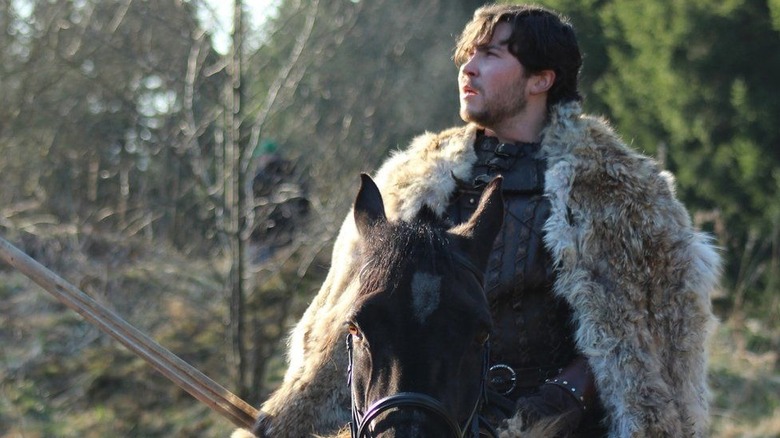
Overall, "Robert the Bruce" is a much, much smaller film than "Braveheart," and that extends to both its runtime (124 minutes vs. 170 minutes) and especially its box office returns. Prior to the movie's release, there was a note of incredulity from certain outlets about the whole affair. For example, the Forbes contributor Erik Kain, couldn't believe that someone had actually deigned to sequelize one of his personal favorite films.
As one might imagine, "Robert the Bruce" also wasn't as critically acclaimed as "Braveheart." Writing for Variety, Owen Gleiberman argued that the film is a little full of itself. "If you watched this movie and played a drinking game where you had to take a slurp of ale every time someone says 'Robert the Bruce,'" he wrote, "there'd be no one sober left." He continued:
"[Dialogue from the movie dictates] 'To be a good soldier, first you have to be a good brother, a good friend, and a good son.' You also have to endure extreme pain; like, for example, sitting through dialogue like that while trying to prop your eyelids open. Directed by Richard Gray, 'Robert the Bruce' feels like a producer's movie — a somber package, with elements all lined up that don't fully come to life."
It should also be noted that "Robert the Bruce" was released a year after the higher-profile 2018 Netflix drama "Outlaw King," which starred Chris Pine as Robert the Bruce and covered a lot of the same historical period. "Outlaw King" wasn't stellar, but it was an A-production with more ambition. This lackluster "Braveheart" sequel, on the other hand, didn't seem to please anyone. No franchise dies. But not every franchise really lives.