

Dolly Parton's Acting Debut Proved She Was More Than A Country Music Star
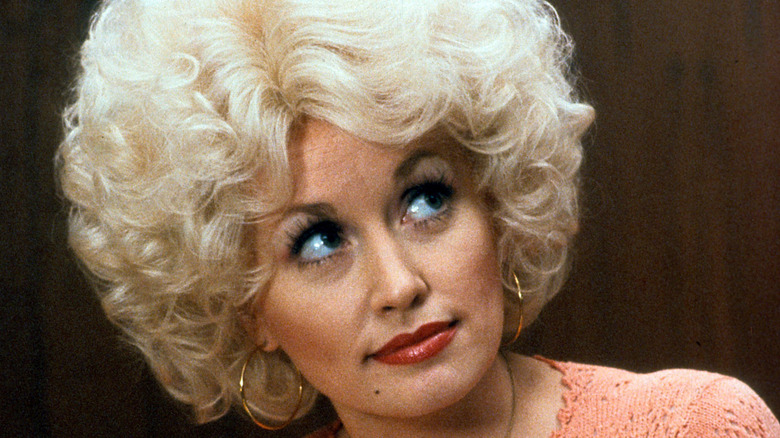
I've been alive for 52 years, and Dolly Parton has always been a given. She wasn't going anywhere. She was the queen. Dolly. A pop icon on par with Mick Jagger, David Bowie, and Prince. She was a brilliant mainstream country performer who took her poor upbringing as a mission to make sure children had access to literature. This was because she watched her father, a decent man, struggle to advance in life because he could not read.
Dolly Parton was an American saint.
At a time when cruelty is the coin of the realm in the United States, it is hard to bid farewell to a beacon of kindness like Dolly. She could be political, but mostly she focused on enlightenment. She believed education would cancel out ignorance. And I learned her lesson by watching Colin Higgins' "9 to 5."
Parton was a country music superstar when she was cast aside two powerhouse actors in Jane Fonda and Lily Tomlin. She was arguably a bigger name than either at the time, but she came on like a seasoned acting veteran as Doreen, the consistently harassed secretary to grope-happy vice president Franklin Hart (Dabney Coleman in full-on sexist mode). Though Doreen fends off his clumsy advances with southern aplomb, the power imbalance remains. He can treat her like a piece of meat and get away with it because this was 1980, the corporate workplaces were still controlled by men.
By shining a satirical light on Hart's putrid behavior, workers gradually became more empowered to stand up for themselves. That's a damn fine legacy for broad comedy. But Hart's treatment of Doreen taught me a lesson that, for whatever reason, doesn't land for lots of men.
9 to 5 established Dolly Parton as a hard-working woman not to be messed with
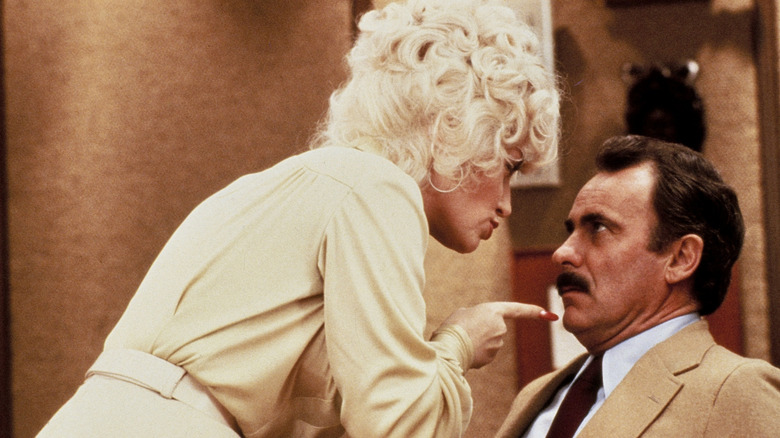
As a seven-year-old, "9 to 5" sent a clear message to me that you never, ever want to be a Franklin Hart. Movies and television shows were full of likeable cads, and there's obviously nothing wrong with a little verbal sparring/flirting. But Hart's disgustingly aggressive come-ons to Doreen were mean and pathetic. He didn't care that she was a capable secretary; he just wanted to use her as a sex toy.
That he was doing this to Dolly freakin' Parton absolutely appalled me. And while Parton's playing a character very close to her own persona, she masterfully gets across the stress and outrage one feels when they're viewed as a sexual conquest. So when Doreen has a pot-fueled fantasy of hog-tying Hard and roasting him over a fire, you can't help but cheer.
"9 to 5" launched Parton to movie stardom, and even when the films failed her (like "Rhinestone," and "Straight Talk"), she was a reliably effervescent presence. Spending time with Dolly in any medium was a joy, and it breaks my heart that her brilliant run has come to a close. To echo many people's reactions to her death, Dolly Parton wasn't supposed to die.