

Val Kilmer And A Former Punisher Actor Teamed Up For This Forgotten Mob Movie
We may receive a commission on purchases made from links.
If you were to ask cinephiles for their favorite mob movies, odds are that very few would answer 2011's "Kill the Irishman." (This should not be confused with Martin Scorsese and Robert De Niro's superlative gangster swan song "The Irishman," which follows a totally different part of organized crime history.) Does the film deserve that meager reputation?
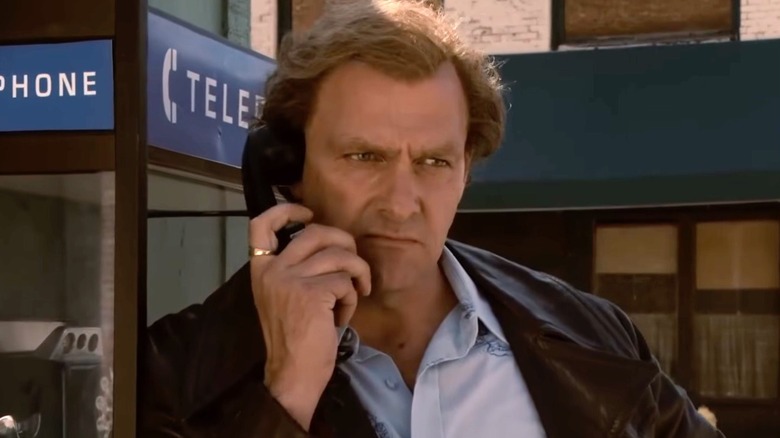
The titular Irishman is Danny Greene (Ray Stevenson), a dock worker who rose, fell, and then rose again as a corrupt union president then a crime boss in 1960s-70s Cleveland. In his final years, Greene waged war with the Italian mob. After a car bombing campaign throughout Cleveland in the late 1970s, he was finally assassinated in October 1977. As both the film and its source material (the 1998 nonfiction book "To Kill The Irishman" by former Cleveland police officer Rick Porello) argue, this war of attrition helped speed along the decline of the American mafia.
To tell this story, "Kill the Irishman" assembled a rather stacked cast. Stevenson (who sadly passed in 2023 at only age 58) was known best for his roles on HBO's "Rome" as Roman Centurion Titus Pullo and as Frank Castle in "The Punisher: War Zone" (a role Stevenson wished he could've played more). Amusingly, that's not the only Punisher connection in the film: "Kill the Irishman" was also directed by Jonathan Hensleigh, who helmed the 2004 "Punisher" film starring Thomas Jane as Frank Castle.
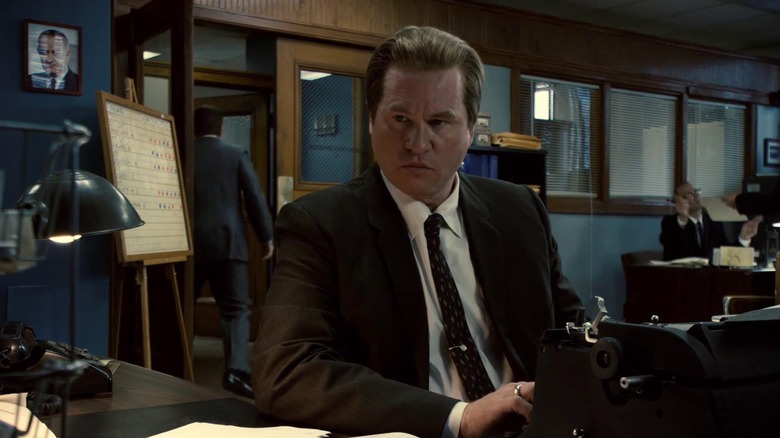
Standing opposite Stevenson, and Greene, is Val Kilmer as Cleveland PD Detective Joe Manditski, a fictionalized character with a backstory of having known Greene during his childhood. It's a small neighborhood, after all, and one Greene tried to make his own kingdom.
Kill the Irishman is a footnote in the mob movie canon
Besides Ray Stevenson and Val Kilmer, "Kill the Irishman" co-stars Christopher Walken as Shondor Birns, a loan shark who employs Greene as muscle, and Vincent D'Onofrio as John Nardi, a Cleveland mob capo and Greene's ally.
As in practically every mob movie or TV show released since 1990, "Goodfellas" actors show up in small roles. The biggest one is Paul Sorvino as Tony Salerno, the real-life underboss of New York's Genovese crime family. "Kill the Irishman" also iterates on this tradition. "The Sopranos" featured many, many "Goodfellas" actors, and "Kill the Irishman" brings in one of that show's leads: Steve "Bobby Bacala" Schirripa as mob-connected garbageman Mike Frato. Yet, as critic Scott Tobias noted in a contemporary review of "Kill the Irishman" for the A.V. Club, these allusions are "unflattering" — seeing those familiar faces only reminds you that you could be watching "Goodfellas" or "The Sopranos" instead.
Compared to Martin Scorsese's moral clarity, "Kill the Irishman" feels enamored (or rather, suckered) by Greene's larger-than-life folk hero posturing. His embrace of his Irish heritage includes fashioning himself a modern Celtic warrior, and he approaches crime with the prideful attitude of one. Both "Goodfellas" and "Kill the Irishman" close with voiceover, but while Henry Hill (Ray Liotta) laments the loss of a gangster's luxury, no-rules life, "Kill the Irishman" has Joe Manditski musing the Cleveland mob has never recovered from its war with Greene, as if to suggest Danny did good in the end.
"Kill the Irishman" did not get a wide theatrical release and barely made a dent at the box office. Danny Greene's real story may be incredible, but for most audiences, this Irish outlaw's song remains unheard.