

47 Years Ago Today: A Comedy Banned As 'Blasphemous' Opened — And Became A Classic
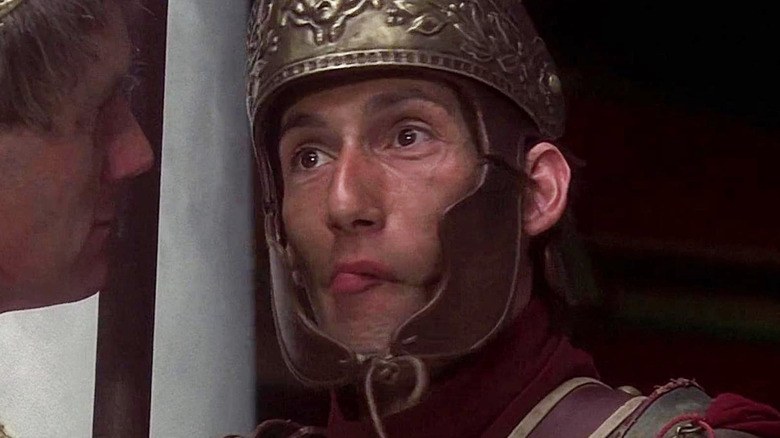
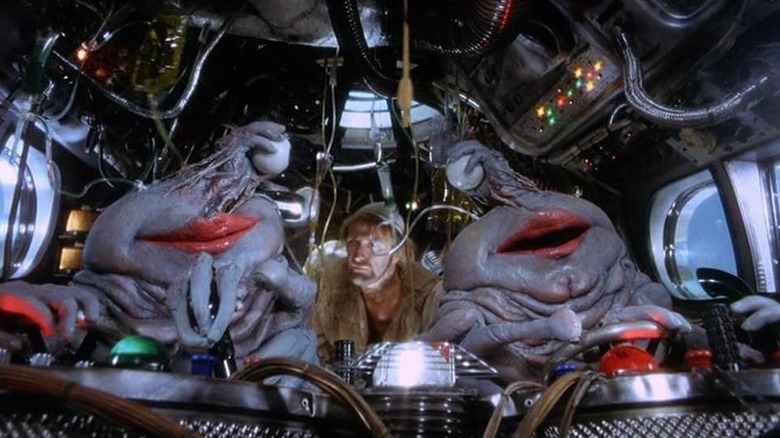
Despite its reputation, Monty Python's "Life of Brian" isn't particularly blasphemous. In fact, it's entirely canon-compliant with the Bible, with the traditional story of Jesus' birth, life, and death shown playing out in the margins. The film itself never even really takes a side on the question of whether or not God exists (though it does take a firm stance on the question of whether or not aliens exist). Likewise, the titular Brian (Graham Chapman) is merely a guy who happens to have been born next door to the messiah, while the film's humor takes just as many potshots at ineffectual protest groups, overbearing mothers, and people with lisps as it does at religion. If anything, "Life of Brian" is regarded with fondness by many Christians these days.
In the lead-up to its theatrical release on August 17, 1979, however, "Life of Brian" was seemingly the devil itself, with a full-on cultural war raging around it. Screenings of the film were banned on scales ranging from individual towns to entire countries. It was "a crime against religion," "produced in hell," and the mere act of watching it "could result in serious violence," according to one of its critics.
For the comedy troupe behind "Life of Brian," this outrage was the best promotion that money couldn't buy. Monty Python member John Cleese joked that the film's fiercest enemies had "made me rich" and that "we should send them a crate of champagne." The movie remains the biggest hit out of Monty Python's four theatrical releases, grossing $20.7 million at the global box office. On the 47th anniversary of its release, let's look back at how the controversy over "Life of Brian" helped it become a comedy classic.
Why Life of Brian was banned for its 'blasphemy'
The outrage against "Life of Brian" began before it was even filmed. Mere days before the cast and crew were due to fly out to Tunisia to begin shooting, the production company backing the film, EMI, pulled out. ("It was because they read the script... finally," as Terry Gilliam once told The Guardian.) Fortunately, Monty Python had a friend and wealthy patron in former Beatles member George Harrison, who casually offered to front the $4 million production budget out of his own pocket.
EMI did have reason to be cautious, since a recently-established legal precedent made the film a risky prospect. In 1977, the outlet Gay News had been convicted of blasphemous libel for publishing a poem imagining Jesus to have homosexual tendencies. The paper was fined and its editor was handed a suspended prison sentence (later overturned). After barrister and screenwriter John Mortimer viewed "Life of Brian," he told Monty Python member Michael Palin that "the chances of a jury convicting Python of blasphemy on the basis of this film are very remote ... but not impossible."
Following its debut in New York and Los Angeles theaters on August 17, 1979, the media made a meal out of the backlash from religious and conservative corners. As is so often the case with these culture wars, though, many of the quoted ringleaders didn't appear to have actually seen "Life of Brian." Rev. Eugene V. Clark, representing the Roman Catholic Archdiocese of New York, told the New York Times that the film "holds the person of Christ up to comic ridicule" (again, Jesus is barely in it). In another Times article, Presbyterian minister Rev. William Solomon expressed how "upset" he was by the movie, even though he'd only listened to the soundtrack.
Getting banned made Life of Brian box office gold
By the late 1970s, the counterculture of the 1960s had gone mainstream, and there was no better way to get people to watch something than by trying to ban it. The Hays Code had been defunct since 1968, and the new boundaries of bad taste were explored by a wave of exploitation movies. Religion was a particularly lucrative taboo; in 1973, "The Exorcist" rode its salacious reputation to $430 million at the box office. Warner Bros. correlated news coverage of religious backlash with boosted ticket sales, and director William Friedkin famously commented, "One of the best things that could happen is if the Pope denounces it."
"Life of Brian" similarly capitalized on every nugget of outrage. After it was banned from release in Norway, director Terry Jones recalled that "there were advertisements in Sweden calling it, 'The film that is so funny that it was banned in Norway.'" In the UK, where individual towns were banning the "Life of Brian" from being shown, similar tactics were used ,and it was marketed as "The film that's banned in Harrogate."
The backlash was both exaggerated and fueled by a press hungry for controversy. A New York Times headline proclaimed that "Three Jewish Groups" had condemned the film, though the condemnation was actually voiced by just one man, Rabbi Abraham Hecht, on behalf of three Jewish groups that he represented. In South Carolina, 50 people gathered to picket a theater where "Life of Brain" was showing; when further showings were canceled following pressure from Senator Strom Thurmond, 150 people gathered at the same theater to protest the cancellation.
47 years later, the furore that surrounded "Life of Brian" is almost as legendary as the movie itself.